What should you check before buying?
For savoury biscuits served on a Friday, start with the nutrition information per 100 g, then adjust your comparison to suit the portion and your guests. According to the DGCCRF, giving this information per 100 g makes it easier to compare prepacked foods.
| Priority |
What to check |
Who is this for? |
| Energy in your serving |
Compare the kcal per 100 g in products of the same type, then check the kcal for the amount you plan to serve. |
If I want to offer biscuits without leaving the whole packet on the table, the amount served matters just as much as the figure per 100 g. Around 39% of consumers put keeping energy intake in check first. |
| Salt and nutrition guides |
Check the ‘salt’ line per 100 g. If a Nutri-Score is shown, use it as an additional guide when comparing products for the same occasion. |
When other salty foods are already on the menu, I want to compare the salt in the biscuits before adding them to the spread. This is a priority for around 38% of consumers. |
| Allergens and sharing |
Check the ingredients and allergen information on the exact pack, then decide how much to put out for your guests. |
If someone I’ve invited needs to avoid certain ingredients, I need to check the recipe before thinking about what size pack to share. Around 23% of consumers prioritise these checks and planning how to serve the food. |
Nutrition figures can change the way an apparently simple choice looks. For two specific products, Auchan lists 483 kcal and 1.7 g of salt per 100 g for its peanut-flavoured puffed snacks, compared with 480 kcal and 2.3 g of salt per 100 g for Pouce cheese-flavoured puffed snacks. So, although the energy difference between these products is small, you can’t assume the difference in salt is small too. These figures apply to these particular recipes, not to all savoury biscuits.
Brands to compare
These brands offer products suited to drinks and nibbles, but the brand name alone won’t tell you the nutrition figures for a particular recipe.
Belin
Auchan’s listings include Croustilles peanut-flavoured snacks and a Belin Monaco cracker selection designed for sharing.
- Different recipes and pack formats to consider, depending on what you’d like to serve.
- If you’re looking for a lower-energy option, compare the labels of specific products rather than the brand as a whole.
Vico
Vico offers several ranges of savoury snacks, including Curly, Monster Munch and lentil crisps.
- The variety makes it easy to start by choosing the type of product you’d like for your drinks spread.
- A claim about the fat content of one product doesn’t show that the others are lower in energy or salt.
Carrefour
Carrefour’s pages feature savoury biscuits and Carrefour Classic’ crackers, among other products.
- You can compare different formats while considering how you plan to serve them.
- Check the nutrition figures and ingredients for each recipe before calling it a lighter option.
Auchan
The Auchan listings reviewed include puffed savoury snacks in different recipes, including a peanut-flavoured option.
- The information given for some products lets you compare energy, salt, portion sizes and ingredients.
- The figures on one product listing don’t apply to other products from the same retailer.
Savoury options on Joybuy
This selection includes a peanut-flavoured puffed snack, savoury shortbread and savoury wafers for Friday drinks. These are different types of product, so if you’re choosing based on energy or salt, compare the nutrition information on the packs and consider how much you plan to serve. Don’t assume they’re ‘low in calories’.
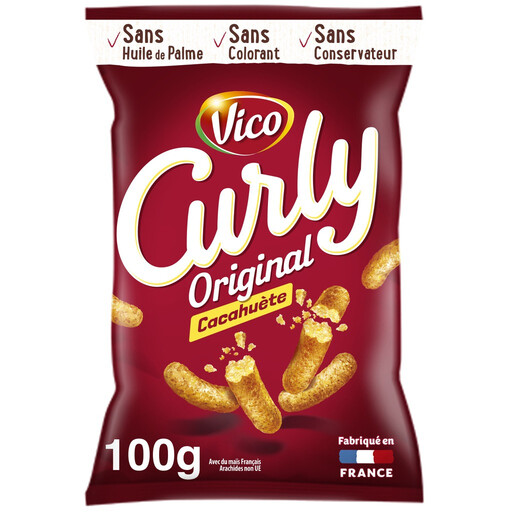 Image unavailable
VICO Curly Original Peanut, 100 g puffed snack
Worth considering if you’d like to serve a peanut-flavoured puffed snack rather than a savoury biscuit in the strictest sense. The bag contains 100 g. Check the energy, salt and allergen information on the label, then decide how much to serve.
View on Joybuy
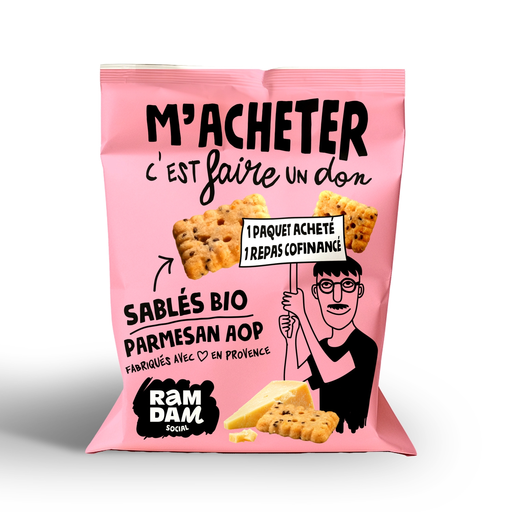 Image unavailable
RAMDAM SOCIAL Organic Parmesan & Chia Seeds, 100 g savoury shortbread
A savoury shortbread option to consider if you’d prefer biscuits to a puffed snack. This variety combines Parmesan and chia seeds in a 100 g pack. Check the ingredients and figures per 100 g before comparing it with other shortbread.
View on Joybuy
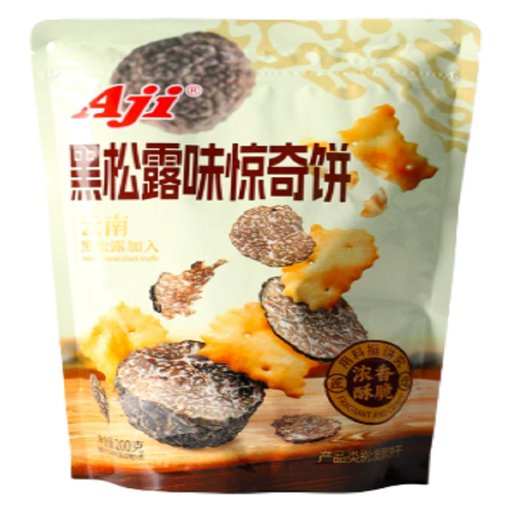 Image unavailable
Aji Surprise Crispy Wafers Black Truffle, 200 g wafers
Worth considering if black truffle-flavoured wafers suit the drinks spread you have in mind better than classic savoury biscuits. The pack contains 200 g. Choose how much to serve and check the nutrition and allergen information for the exact product.
View on Joybuy
Frequently asked questions
Is Nutri-Score compulsory on savoury biscuits in France?
No. According to the Ministry of the Economy, displaying a Nutri-Score is voluntary. It is separate from the nutrition declaration, which is generally compulsory for prepacked foods, as explained by the DGCCRF. So, if there’s no logo, you should still check the nutrition information available.
Can a savoury biscuit be described as ‘low in calories’?
Only if it meets the relevant requirements. Under European Regulation (EC) No 1924/2006, a solid food must contain no more than 40 kcal (170 kJ) per 100 g to be described as having a low energy value, or to use wording with the same meaning. A simple difference in kcal between two biscuits isn’t enough.
What should I compare on two packs of savoury biscuits?
Start by comparing energy and salt per 100 g in products of the same type, then consider how much you plan to serve. The DGCCRF says the nutrition declaration for prepacked foods also includes information such as fat, saturates, sugars and protein. If allergens matter to your choice, check the ingredients list separately.
Is Nutri-Score enough if I mainly want to limit salt?
No. If it’s displayed, it can help you compare similar products, but it doesn’t replace checking the salt content per 100 g. This is particularly useful if other salty foods are already on the menu for drinks.


