If you want savoury biscuits to contribute to a high-protein diet, compare their protein content per 100 g with the portion you plan to serve. Neither a standard biscuit nor a legume snack automatically meets this priority. If you’re mainly choosing biscuits to share, pick a pack size that suits the occasion and plan a separate source of protein for your appetisers. Where displayed, the Nutri-Score doesn’t replace checking the nutritional information.
Who is this guide for?
People keeping an eye on their protein intake
If you want biscuits to contribute towards your protein target, compare the protein content per 100 g with the amount you plan to serve. An ingredient’s name alone doesn’t tell you how much protein the product provides.
People who check the Nutri-Score
The logo can provide an additional point of reference when it appears on the pack. On its own, it doesn’t show the protein content: you’ll find that in the nutritional information.
People planning appetisers to share
The pack weight and the amount you plan to serve per person matter more than choosing a large pack on its own. They also help you distinguish biscuits for sharing from snacks sold in individual portions.
What should you look at first?
For your appetisers, first decide whether the biscuits themselves need to provide protein. Then choose a suitable quantity and check the rest of the nutritional information.
| Criteria |
What to check |
Who is it for? |
| Protein |
The protein content per 100 g and the portion you’re considering; whether the specific product carries a “high in protein” claim. |
I want to know how much protein the biscuits actually add to my appetisers. Around 40% of consumers would put protein contribution at the top of their list of priorities. |
| Pack size |
The net weight and the amount you want to serve. |
If I’m sharing appetisers, I want an amount that suits the number of people. Pack size would be the priority for around 30% of consumers. |
| Nutritional profile |
The salt content and other values per 100 g; the Nutri-Score, if displayed. |
I don’t want to focus on protein alone; I also want to check the salt content. Around 30% of consumers would prioritise the nutritional profile. |
Two common misconceptions to avoid
-
Assuming the Nutri-Score proves a product is high in protein
The Nutri-Score is voluntary in France and summarises a product’s overall nutritional profile; it doesn’t replace the protein content. The DGCCRF distinguishes this logo from the nutritional declaration required for the relevant prepacked foods.
If the logo is shown, use it alongside the values per 100 g, particularly for protein and salt.
-
Judging protein content by an ingredient’s name
A product name mentioning lentils, chickpeas, peanuts or cheese doesn’t prove that the product qualifies to carry a “high in protein” claim.
Check the protein content of the specific product, and review its ingredients and allergens to make sure it suits your needs.
Brands and ranges to compare
Belin
Carrefour stocks Belin Croustilles and Monaco crackers, among other products. These are two types of savoury biscuits, so check their labels separately before comparing them.
- Options in bags and boxes let you choose the pack size you want.
- Check the protein content of each product; it can’t be assumed from the brand alone.
Vico
The Natur’ & Bon lentil crisps stocked by Carrefour offer a different ingredient base to compare with standard crackers.
- The range gives you the option of a lentil-based snack for your appetisers.
- The word “lentils” guarantees neither a particular protein content nor that the “high in protein” claim is justified.
Carrefour Classic' et Simpl
These ranges feature in Carrefour’s crackers and savoury biscuits selection; for example, a Simpl cocktail cracker is available in a box.
- The type of biscuit and pack weight can help you choose a size to share.
- You’ll still need to compare the ingredients and nutritional values of each product.
Auchan
Auchan’s appetiser range includes a variety of biscuits and snacks, which you can compare by category and ingredients.
- The range of product types lets you compare standard biscuits with legume-based options.
- This distinction alone doesn’t tell you how much protein a specific product provides.
Legume-based options on Joybuy
These options include a chickpea cracker and two legume snacks for your appetisers. The roasted chickpeas and pea snack aren’t biscuits, so choose them if that difference in category suits what you want to serve.
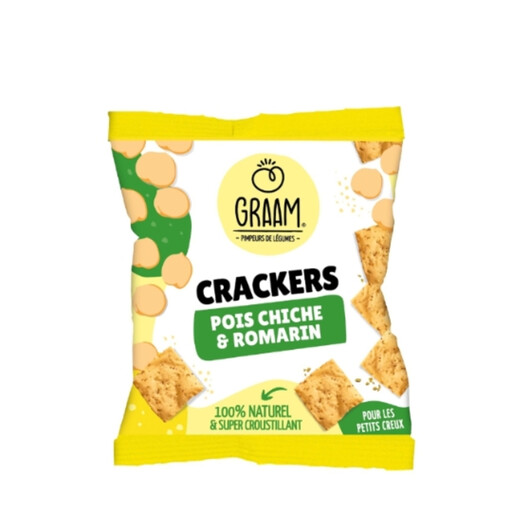 Image unavailable
Gram Chickpea Cracker, 30 g
Worth considering if you’re specifically looking for a chickpea-based cracker to serve with your appetisers. The pack contains 30 g; check the product’s nutritional information and allergens before choosing it.
View on Joybuy
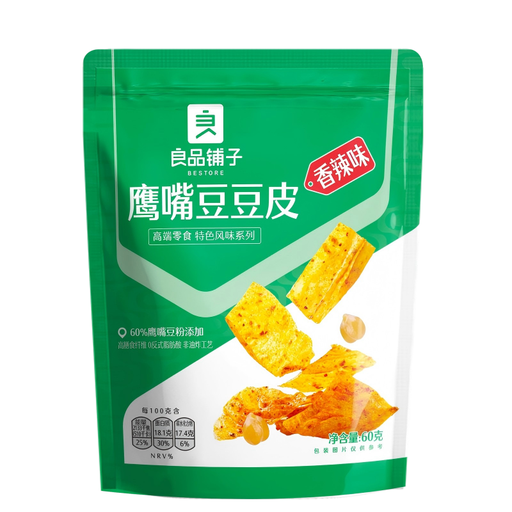 Image unavailable
Bestore Roasted Chickpeas Snack, Spicy, 60 g
Consider these if you’d rather serve spicy roasted chickpeas than savoury biscuits. The pack contains 60 g; check the product label for protein, salt and allergen information.
View on Joybuy
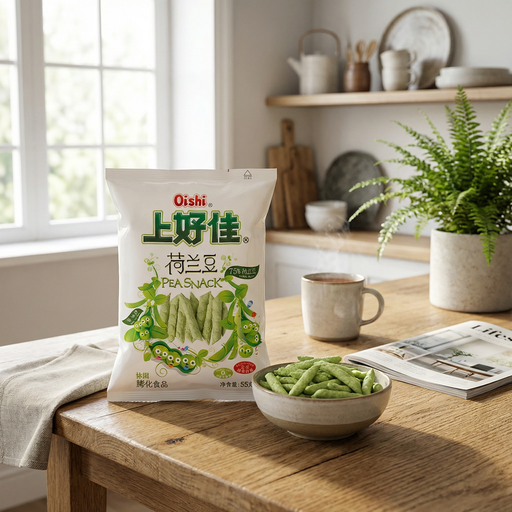 Image unavailable
Oishi Pea Snack, 55 g
Consider this if you’re happy to serve a pea snack instead of a cracker. The pack contains 55 g; check the product’s nutritional values to assess its protein contribution and salt content.
View on Joybuy
Frequently asked questions
Is the Nutri-Score compulsory on savoury biscuits in France?
No. According to the French Ministry of the Economy, displaying it is voluntary. The DGCCRF states that the relevant prepacked foods must carry a nutritional declaration, where you can check protein and salt content in particular.
What does “high in protein” mean on a pack?
Under the EU regulation on nutrition claims published on EUR-Lex, at least 20% of a product’s energy value must come from protein for it to carry this claim. On its own, the claim doesn’t tell you the product’s salt content or whether it contains allergens.
How do you compare two packs of different sizes?
Compare the protein and salt content per 100 g to keep the measurements consistent, then check the pack weight and the amount you plan to serve. The nutritional declaration described by the DGCCRF makes it possible to compare different recipes and pack sizes.
Are lentil crisps always high in protein?
No: their name alone doesn’t prove that they qualify for this claim. Check the protein content listed for the specific product and see whether “high in protein” actually appears on its packaging.


