Anyone looking for a savoury post-workout snack
If protein content matters to you, check the amount on the label rather than relying on the biscuit’s name. A flavour or highlighted ingredient alone doesn’t tell you what’s in the finished product.


When choosing a savoury biscuit for a post-workout coffee break, compare the protein content per 100 g, then work out how much that amounts to for the portion you plan to eat. Check the salt, fat and allergens too: a recipe made with chickpeas or cheese does not necessarily contain much protein or make the product a recovery snack. If a Nutri-Score is shown, it can help round out your assessment, but it is optional in France, as the DGCCRF explains.
If protein content matters to you, check the amount on the label rather than relying on the biscuit’s name. A flavour or highlighted ingredient alone doesn’t tell you what’s in the finished product.
Compare the nutritional values per 100 g, then adjust them to your portion. This lets you assess the protein content without overlooking salt, fat and energy.
Check the ingredients, declared allergens and any ‘may contain’ warnings on the exact pack. Don’t rely on information for a different flavour or pack size.
For a post-workout coffee break, start with the amount you’ll eat: values per 100 g make products easier to compare, but may not reflect your portion.
| Criteria | What to check | Who is it for? |
|---|---|---|
| Protein | Check the grams per 100 g and calculate the amount in your portion. | After exercise, I want to know how much protein I’ll get from the biscuit I’m eating, rather than guessing from its flavour. Around 42% of consumers would prioritise a verifiable protein content. |
| Nutritional balance | Compare salt, fat and energy on the same basis; check the Nutri-Score if it appears on the packaging. | If I’m looking for more protein, I also want to weigh up the other nutritional values. Around 33% of consumers would prioritise balance across these criteria. |
| Allergens | Check the ingredients, declared allergens and any ‘may contain’ warnings for the exact product. | If I need to avoid an ingredient, the composition of my chosen flavour and pack size comes before its protein content. Around 25% of consumers would put suitability first. |
Cheese, peanuts or lentils don’t tell you how much protein is in the finished biscuit. For example, Auchan’s product listing for Belin Emmental Croustilles gives 7.3 g of protein and 1.5 g of salt per 100 g.
Compare the nutritional information for each product, not just its name or flavour.
In France, the DGCCRF describes the Nutri-Score as a voluntary label. Its absence isn’t enough to judge a biscuit; the nutrition declaration on relevant prepacked foods remains the basis for comparison.
If the logo is shown, use it as additional information, then check the nutritional values and ingredients.
Ingredients and ‘may contain’ warnings can vary by recipe, flavour or pack size. An appealing protein content doesn’t make a product suitable for someone avoiding certain foods.
Check the label on the exact pack again before you choose.
A classic savoury biscuit brand. Its Emmental-flavoured Croustilles offer a useful point of comparison, backed by product information.
Its range includes products such as mini Parmesan savoury biscuits.
Its savoury snacks range includes products made with chickpea flour, as well as Emmental and pumpkin seed crackers.
The brand features in the savoury snacks aisle, including with lentil crisps, which aren’t the same as savoury biscuits.
These two chickpea-based products offer a savoury option in the form of crackers or crisps. Compare their labels based on how much you plan to eat, without assuming that either one alone will meet your recovery needs.
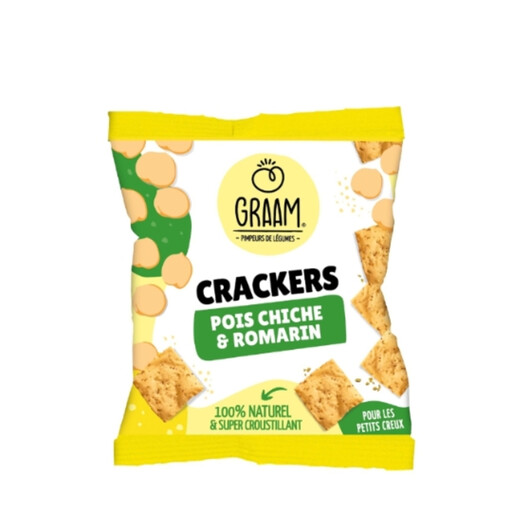 Image unavailable
A 30 g pack of chickpea crackers for a savoury break. If you’re comparing protein content, adjust the per-100 g values to the amount you eat; check the salt and fat too. Check the label for wheat and any ‘may contain’ warnings if this information is relevant to you.
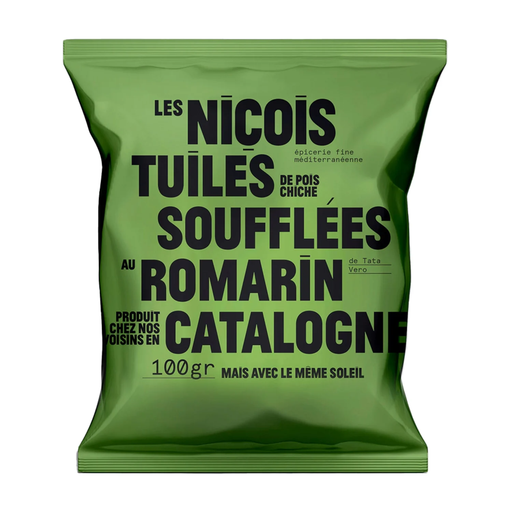 Image unavailable
A 100 g pack of chickpea and rosemary crisps for a savoury snack. The pack size won’t necessarily be the amount you eat, so decide on your portion before interpreting the nutritional values. Check the exact packaging for allergens and any ‘may contain’ warnings too.
No. The DGCCRF explains that the Nutri-Score is optional in France, unlike the nutrition declaration required for relevant prepacked foods. You can take the logo into account when it’s shown, but its absence alone doesn’t tell you anything.
Check the grams of protein per 100 g on each nutrition declaration, then work out how much that is for the amount you plan to eat. Compare salt, fat and energy too: a cheesy flavour or the presence of chickpeas doesn’t replace these figures.
Check the ingredients, declared allergens and any ‘may contain’ warnings on the packaging for the exact product. Information for one flavour or pack size doesn’t automatically apply to another.
The product name alone doesn’t mean it should be considered a recovery snack. If you’re looking at its protein content, take the portion you’ll actually eat and the other nutritional values into account. Don’t assume the biscuit alone will meet your needs.