People who eat on the go
A compact pack or individual sachets mean you don’t have to take a large, already-opened pack with you. Check the weight of each sachet before deciding how many to take.


For a quick breakfast on the go, first choose between a compact pack and several individual sachets, depending on how much you want to take with you each time. Then compare the nutritional values per 100 g and the allergens in the exact recipe. A small sachet does not necessarily count as an individual portion, and the absence of a Nutri-Score does not tell you whether a product is a good choice.
A compact pack or individual sachets mean you don’t have to take a large, already-opened pack with you. Check the weight of each sachet before deciding how many to take.
If the Nutri-Score is important to you, use it when it’s displayed, then check the nutritional information per 100 g. Santé publique France explains that displaying the logo is voluntary.
Ingredients vary by recipe. The DGCCRF points out that allergenic ingredients must be emphasised in the ingredients list, so check the label on the pack you plan to eat.
Start with the packaging and how much you’ll take with you, then compare the labels of each recipe you’re considering.
| What to consider | What to check | Who is this for? |
|---|---|---|
| Portability and quantity | Number of sachets and the weight of each one; whether you can reseal the pack if you don’t finish it. | When I’m travelling, I want to take a chosen amount without carrying a large, open pack. Around 42% of consumers prioritise portability and the quantity they take with them. |
| Nutritional information | Values per 100 g, especially sugars, fat and salt; the Nutri-Score, if it appears on the product. | To choose between two recipes, I need to compare their labels on the same basis. Around 33% of consumers say nutritional comparison is their main criterion. |
| Allergens | Allergenic ingredients highlighted in the list and any “may contain” statements for the exact recipe. | If I need to avoid an allergen, the biscuit’s name or flavour isn’t enough to make my choice. Around 25% of consumers make this check a priority. |
An individual sachet is convenient to carry, but its weight alone doesn’t determine how much you’ll want to eat. For example, Auchan lists TUC Original in three 100 g sachets.
Check the weight of each sachet and the number of portions shown on the packaging, rather than relying on the word “mini”.
According to Santé publique France, displaying the Nutri-Score is voluntary. The DGCCRF distinguishes this logo from the nutritional declaration required for pre-packed foods.
Don’t draw conclusions from the logo being absent: compare the nutritional information per 100 g.
Two recipes in the same range may list different allergens. So the label for one flavour won’t necessarily describe the one you’re buying.
Check the ingredients list and allergen information on the pack of the product you’ve chosen.
The Chips de Lentilles range may appeal if you’re looking for lentil-based puffed snacks.
Belin Minizza tomato and herbs of Provence are mini crackers sold in a 95 g pack, according to the Joybuy listing for this product.
Carrefour’s savoury biscuit range lets you compare several types of product, including crackers and breadsticks.
Auchan’s range of savoury biscuits includes crackers sold in several individual sachets.
These products include a 30 g pack, a 95 g pack and a 100 g pack divided into four small sachets. Choose according to how much you want to take with you, and check the label for the recipe you’re interested in.
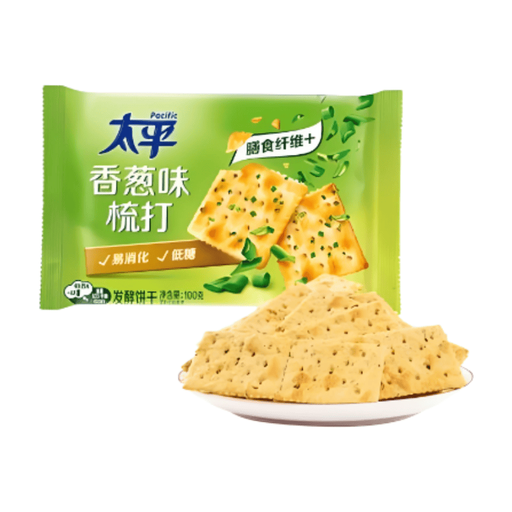 Image unavailable
The individual sachets mean you can take just part of the pack with you on a journey. If the amount you take is your main consideration, check the weight of each sachet. Also check the ingredients list if you need to avoid an allergen.
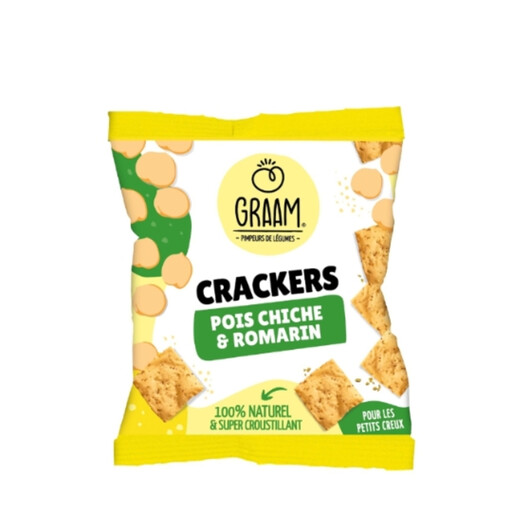 Image unavailable
The 30 g pack is a good choice if you’re looking for a compact format to take with you. If you plan to keep some for later after opening, check whether the packaging can be resealed. Also check the ingredients list for allergens.
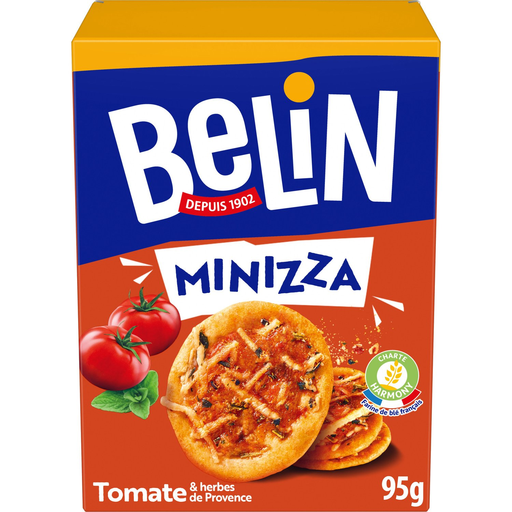 Image unavailable
This 95 g pack is a compact option if you prefer mini savoury crackers. The listing for this recipe states that it contains 2 g of salt per 100 g, lists wheat, soya and milk, and notes possible traces of egg and sesame. Check this information on the packaging you buy.
No. Santé publique France says displaying it is voluntary, while the DGCCRF explains that a nutritional declaration is compulsory for pre-packed foods. To compare two recipes, check their values per 100 g, whether or not they display the logo.
Not necessarily: “individual sachet” describes the packaging, not how much you should eat. Auchan’s TUC Original comes in three 100 g sachets; check the weight of each sachet and the portions stated by the manufacturer.
First check its weight and, if it’s a multipack, the number and weight of the sachets. Then check the ingredients list, highlighted allergens and nutritional information per 100 g on the packaging.
Read the ingredients list and any “may contain” statements on the pack you’ve chosen, rather than relying on the label for another flavour. The DGCCRF explains that allergenic ingredients must be highlighted; the recipes mentioned here list different allergens.