Parents preparing lunch boxes
If you’re dividing savoury biscuits between several lunch boxes, check whether the pack contains separate bags and how much each one weighs. A multipack of larger bags may not be suited to the same purpose.


For lunch boxes, choose a pack with inner bags and weights that suit the portions you want to take with you. For entertaining at home, an assortment or larger bags may be a better fit: check the actual pack format before choosing. In either case, compare the ingredients, allergens and nutritional information for the specific product.
If you’re dividing savoury biscuits between several lunch boxes, check whether the pack contains separate bags and how much each one weighs. A multipack of larger bags may not be suited to the same purpose.
When serving several people, the total weight and the contents of an assortment may matter more than having small portions to take with you.
The ingredients list, allergens and nutritional information can help you compare recipes. According to the DGCCRF and Santé publique France, Nutri-Score can be a useful addition when displayed, but its use is voluntary in France.
Start by thinking about how you’ll use the pack: separate bags to take with you, or a format for sharing at home. Then check the label of each recipe you’re considering.
| What to consider | What to check | Who it matters to |
|---|---|---|
| Portions to take with you | Number of inner bags and the weight of each one. | If I’m preparing several lunch boxes, I want to be able to take a portion without opening the whole pack. Around 31% of consumers prioritise portions that are easy to take with them. |
| Sharing at home | Total weight and how the assortment or bags are presented. | For a snack with others, I’m mainly looking for a format that’s easy to serve and keep for another occasion. This is the priority for around 31% of consumers. |
| Nutritional comparison | Nutritional information per 100 g and the ingredients list; Nutri-Score if it appears on the packs being compared. | Before choosing between two recipes, I want to compare their nutritional values on the same basis. Around 23% of consumers prioritise this comparison. |
| Allergens | Allergens highlighted in the ingredients list and any ‘may contain’ warnings on the specific product. | If someone in my household needs to avoid an ingredient, the specific recipe matters more than the pack format. This is the top priority for around 15% of consumers. |
A pack containing several 100 g bags and a box of small bags won’t divide up in the same way for lunch boxes.
Check how many inner packs there are, how much each one weighs and whether you can take each bag separately.
A multipack made up of larger bags may require extra containers to prepare portions to take with you.
In France, Nutri-Score is voluntary, as the DGCCRF and Santé publique France explain. The nutrition declaration required for relevant prepacked foods is a separate requirement.
If the logo isn’t there, compare the nutritional information per 100 g and the ingredients list rather than ruling out the product for that reason alone.
Ingredients and ‘may contain’ warnings vary between products. Vico, for example, lists peanuts in one recipe and milk in the ingredients of another.
If you have an allergy, check the label on the exact pack and format you’re buying, even when purchasing it again.
These brands and retailers offer examples of pack formats to distinguish between. The name alone doesn’t tell you the portion size or the ingredients of a particular product.
Carrefour lists products including Chipster in a 150 g bag and Croustilles peanut-flavoured in a 260 g bag.
Vico offers a multipack of Barbecue crisps x6; Auchan also lists Vico La Classique crisps in 6 bags of 27,5 g.
The Carrefour range includes Carrefour Classic’ crackers in 3 x 100 g packs, as well as 380 g cracker assortments.
E.Leclerc offers TOKAPI crackers in 3 x 100 g packs and a 380 g TOKAPI assortment.
Auchan offers, among other products, its own-brand salted crackers in three 100 g bags.
This Joybuy selection includes two crackers to consider for dividing into portions, plus an assortment for sharing. For a lunch box, the number and weight of the inner packs are key.
 Image unavailable
Worth considering if you want to divide crackers between several lunch boxes: check the inner packaging and the weight of each portion on the pack. This 100 g product lists wheat, barley and sesame as allergens; if you have an allergy, check the label on the pack you choose.
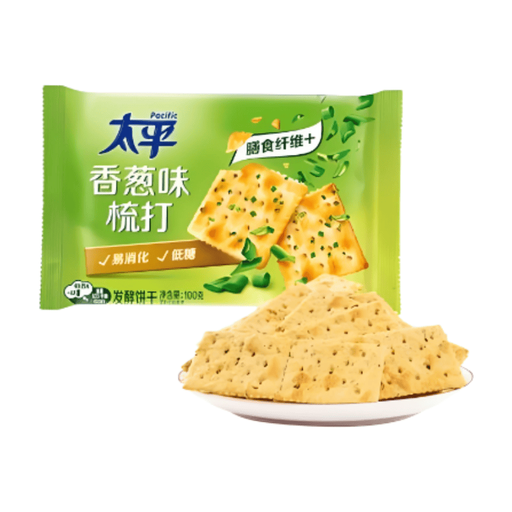 Image unavailable
The four small bags make it easy to take one with you or open them one at a time. Check the weight of each bag to see if it suits your needs. Wheat and barley are listed as allergens for this product, so check the label if you have an allergy.
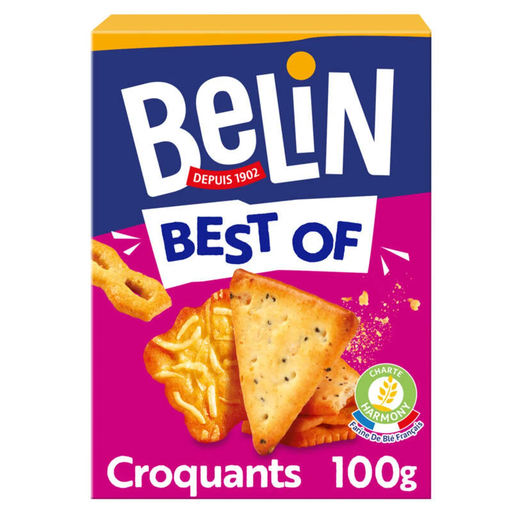 Image unavailable
This cracker assortment is worth considering for serving at home. If you also want to prepare lunch boxes, first check whether it contains separate bags. Several allergens are listed for this product, including gluten, milk, sesame, soya and celery; it may also contain egg. Check the label on the pack if you have an allergy.
No. The DGCCRF and Santé publique France explain that its use is voluntary. To compare relevant prepacked foods, you can also check their nutrition declarations and ingredients lists, even if the logo isn’t displayed.
No. It could contain small bags or several larger ones. Check how many there are, the weight of each one and whether you can take them separately. A pack of crackers in 3 x 100 g may not suit the same needs as smaller portions.
Check the ingredients, allergens, net quantity and nutritional information. The DGCCRF states that this information is part of the labelling requirements for relevant prepacked foods. To compare the nutritional value of different biscuits, use the same basis, such as per 100 g.
Before buying, check the label for the exact recipe and format, including allergens highlighted in the ingredients list and any ‘may contain’ warnings. You can’t assume that another product from the same brand has the same ingredients.