
Livraison le jour même ou le lendemain

Qualité garantie

Débloquez vos offres de bienvenue: Livraison GRATUITE | Jusqu'à -80 % | 30 jours d'essai gratuits à JoyPlus
Téléchargez l'application
A saucepan can be used every day to prepare a sauce, heat milk, cook pasta or simmer a soup. Yet two models with the same diameter can offer a very different experience. A coating that wears out quickly, a handle that isn’t oven-safe, a base that heats unevenly or a poorly suited capacity – some details only become problematic after just a few uses.
Before buying a non-stick saucepan, an induction-compatible model or a complete cookware set, it’s worth checking the technical specifications rather than relying solely on appearance or marketing promises.
A saucepan that works on gas and electric hobs won’t necessarily work on induction. This technology generally requires a magnetic base. An aluminium or ceramic model may therefore be incompatible with an induction hob, unless the manufacturer explicitly states otherwise or you use a suitable adapter.
A non-stick surface makes cleaning easier, but it does require some care. Metal utensils, abrasive sponges and heating the pan when empty can all speed up deterioration. Even when a saucepan is advertised as dishwasher-safe, hand washing is often still preferable to preserve the coating.
A small saucepan of 1.5 to 2.5 litres is fine for one or two portions, a sauce or a side dish. It will be far less practical for cooking for the whole family. Conversely, a stockpot or casserole dish of 5 to 6 litres takes up more space and can become heavy once filled. The diameter, height and weight should suit both your kitchen and your cooking habits.
The material alone isn’t enough to judge the quality of a utensil. The thickness of the base, stability on the hob and the finish of the handle also play an important role.
For a saucepan that’s easy to clean, a non-stick coating can help prevent food from sticking. Product listings may mention the absence of certain substances, such as PFAS, PFOA, PFOS, lead or cadmium. This information should be treated as declared product features, not as a medical guarantee.
Choose utensils made from wood, silicone or heat-resistant plastic. Avoid heating an empty saucepan on a high setting, and replace it if the coating peels or shows visible signs of wear.
A saucepan with a lid reduces splashes and helps retain moisture during cooking. A glass lid lets you keep an eye on your food without lifting it, but it is still vulnerable to knocks.
For induction, look for a clear compatibility statement. For the oven, check the maximum temperature allowed and remove the detachable handle if the instructions advise it. A saucepan with a removable handle can free up space in a small cupboard, but the locking mechanism must be properly secured before lifting a hot pan.
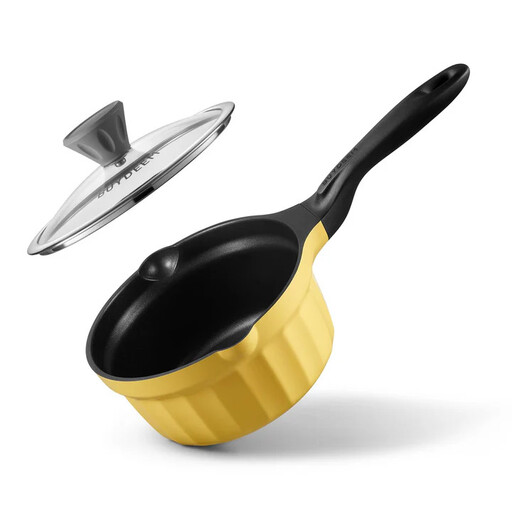
Why this suits this profile: Its 1.9 qt size is ideal for single portions or meals for two. The integrated pouring lip makes serving sauces and soups easier.
The listing states compatibility with all hob types. However, it is still essential to check the instructions and dimensions before purchasing.
Cast aluminium, rapid heat-up, multi-layer non-stick coating and pouring lip.
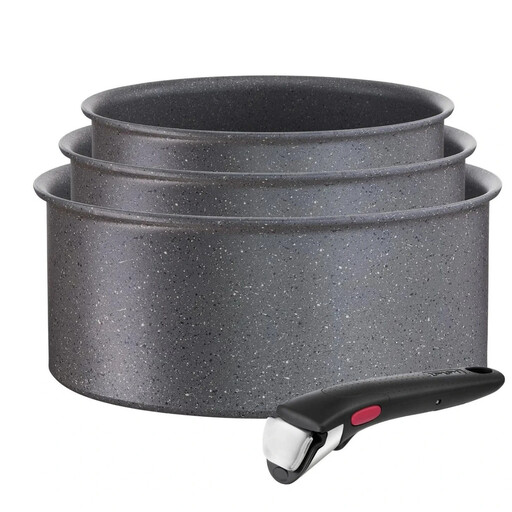
Why this suits this profile: This stackable range with a removable handle is designed for kitchens where space-saving and versatility come first. It works on induction and can go in the oven without the handle, up to 250°C according to the product listing.
Induction compatibility is explicitly stated, unlike some Ingenio sets intended only for gas, electric or ceramic hobs.
Removable handle, stackable storage, temperature indicator and a stated 10-year guarantee on the handle.
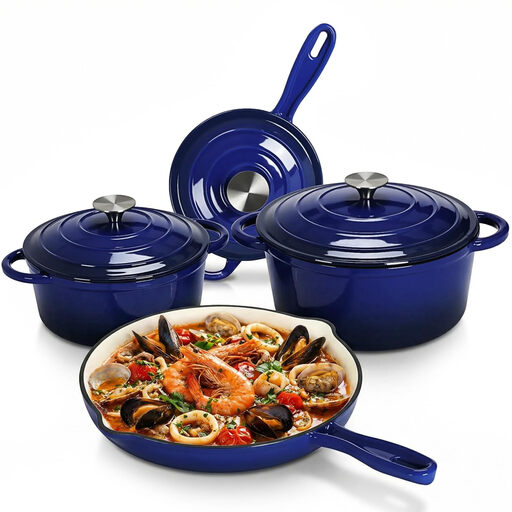
Why this suits this profile: This enamel-coated cast iron set is designed for households that regularly cook stews, soups or casseroles and need several different capacities.
The different capacities mean you don’t have to make do with a single pot that’s either too small or too large. The listing does, however, state that it is not suitable for microwave use.
Seven-piece set, enamel-coated cast iron, three stated capacities and compatibility with several hob types.
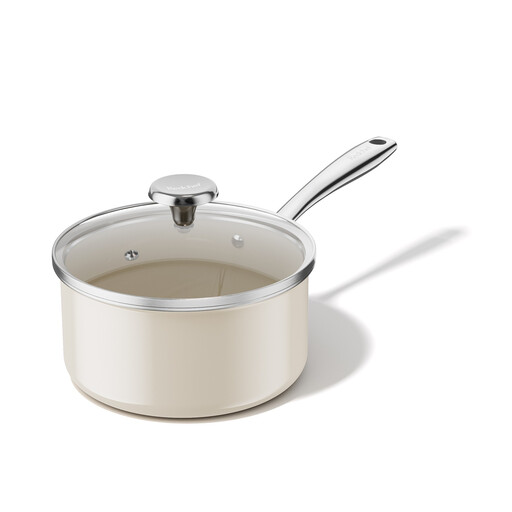
Why this suits this profile: Its 18 cm diameter and 2.5 qt capacity are ideal for sauces, soups, porridge or small amounts of pasta, even in a compact kitchen.
The glass lid with a vent lets you monitor cooking. The listing states compatibility with all hob types and oven resistance up to 450°C, which should be confirmed in the supplied instructions.
Thickened aluminium core, ceramic coating stated to be PFAS and PFOA-free, vented lid and stated dishwasher compatibility.
We’ve put together a comprehensive, up-to-date selection of products that meet these exacting criteria, in line with European safety regulations.
A capacity of between 1.5 and 2.5 litres is generally suitable for sauces, soups, side dishes and portions for one or two people. For a family or larger quantities, a stockpot of 3 to 5 litres will be more practical.
Look for the words “induction compatible” in the technical specifications. A magnetic base is essential. A multi-layer stainless steel pan, an enamel-coated cast iron model or certain aluminium pans with a suitable base can work on an induction hob.
Its lifespan depends on the coating, how often you use it and how you care for it. Avoid metal utensils, abrasive products and overheating. Hand washing and storing pans so they don’t rub against each other can help preserve the surface.