
Livraison le jour même ou le lendemain

Qualité garantie

Débloquez vos offres de bienvenue: Livraison GRATUITE | Jusqu'à -80 % | 30 jours d'essai gratuits à JoyPlus
Téléchargez l'application
A good saucepan is the cornerstone of any successful home kitchen. Yet, when faced with overwhelming store shelves, it's easy to make a mistake: ruined meals, storage nightmares, and doubts about material safety... As product experts, our mission is to help you see things more clearly. Forget the marketing jargon; let's focus on what truly matters for a useful and long-lasting purchase.
Before you dive in, let's review the three classic mistakes that often lead to disappointment:
Fortunately, avoiding these setbacks is simple: just focus on a few key criteria that make all the difference.
Choosing a saucepan shouldn't be a headache. Here are the three points to check to ensure your purchase fits your cooking habits and your equipment.
The material of your saucepan directly impacts heat distribution, ease of maintenance, and its lifespan.
Before any purchase, check the saucepan's compatibility with your heat source. The "all hobs" pictogram is a good start, but the "induction" label (often a coil-shaped symbol) is absolutely crucial if you have this type of hob. To work, an induction saucepan must have a ferromagnetic base.
Editor's Tip: In the store, hold a small magnet to the bottom of the saucepan. If it sticks firmly, you're good to go: it's induction-compatible!
Everyday practicality often comes down to thoughtful design details.
To illustrate these criteria in action, here are a few models that meet specific needs.
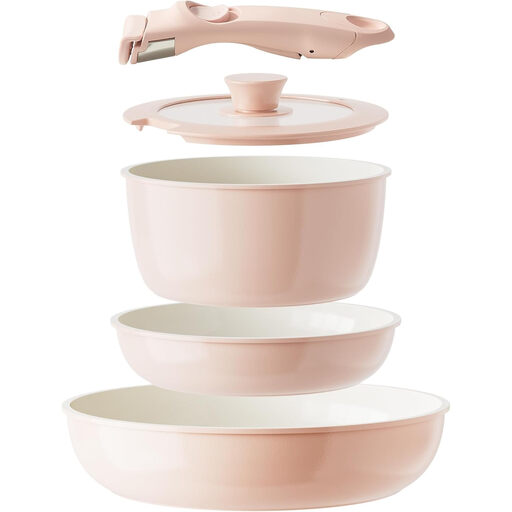
Why we love it: This set checks all the boxes for versatility and space-saving design. Its removable handle and stackable design are a godsend for kitchens where every square inch counts, while offering the flexibility to go from hob to oven.
It solves the clutter problem with its removable handle and perfect stackability. Compatible with all hobs (including induction) and featuring a PFAS/PFOA-free ceramic coating, it brilliantly avoids the other two classic mistakes.
Ultimate versatility: one set to cook, bake in the oven, serve at the table, and store in the fridge. Its ceramic coating is a real plus for healthy everyday cooking.
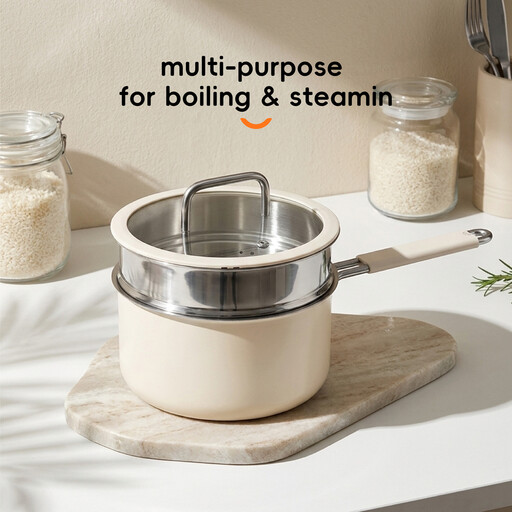
Why we love it: For fans of raw materials and unbeatable durability. 316 stainless steel is the gold standard for resistance and food safety. This is a lifetime utensil, designed to last for years without issue.
By definition, it sidesteps the fragile coating trap: it doesn't have one! Its high-quality stainless steel construction guarantees maximum durability and compatibility with all hobs, including induction.
A virtually indestructible and perfectly safe material (316 stainless steel). Its tri-ply base ensures perfect heat distribution, and the included steamer basket is a very welcome bonus.
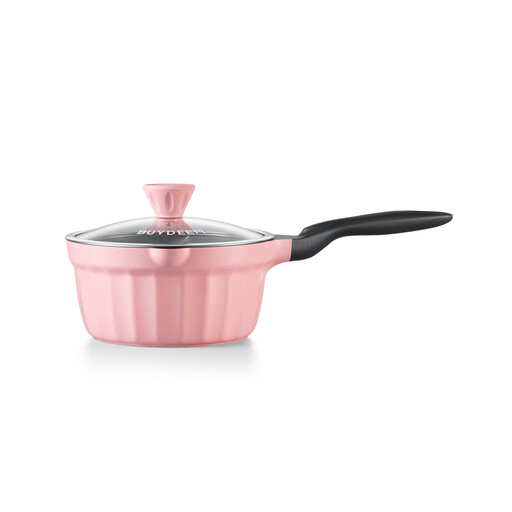
Why we love it: Perfect for single-person households, new parents preparing baby food, or for whipping up a quick sauce. Its 20 cm (2.5 L) size is very versatile. Its healthy coating and rapid heating make it an excellent everyday ally.
Its guaranteed PFOA/PFAS-free ceramic coating checks the safety box. Its all-hob compatibility (including induction) prevents unpleasant surprises. The little extra? The pouring spout, which is very practical for serving without making a mess.
Heats up quickly and evenly thanks to the cast aluminium. Its coating makes both cooking and cleaning easy. Compatible with all hobs.
Explore our complete selection of saucepans, all tested and approved according to our quality standards and current regulations.
To wrap up, let's answer the questions you ask us most often.
A few simple steps are all it takes to preserve the coating. Avoid metal utensils in favour of wood, silicone, or nylon. Cook over low to medium heat: excessive heat is the number one enemy of non-stick coatings. Finally, preferably wash it by hand with a soft sponge, and always wait for it to cool down before running it under cold water (thermal shock is fatal!).
Yes, as long as you know the right technique! The secret is preheating. Heat your dry pan over medium heat. To know if it's at the right temperature, do the water drop test: if a drop of water beads up and glides across the surface (the Leidenfrost effect), it's perfect. You can then lower the heat, add your fat or oil, and then your food. This method creates a thin layer of steam that prevents food from sticking.
These acronyms cause confusion, and for good reason. Just remember this: PFAS refers to a large family of chemical compounds (the infamous "forever chemicals"). PFOA is a type of PFAS that was once used to manufacture PTFE (the base component of Teflon-style coatings). Due to health concerns, the use of PFOA is now highly regulated. A modern coating can therefore be made of PTFE, but manufactured without PFOA. To keep it simple when you're buying, a "PFOA-free" or, even better, "PFAS-free" label guarantees that the manufacturer has eliminated these controversial substances.