For a university lunch, “reduced sugar” is not the first thing to look for. The plain sardines from Connétable and Pêche Océan reviewed here contain 0 to 0.5 g of sugars per 100 g, but the amount depends on which tin you choose. Also compare the drained weight, salt, ingredients and whether the sardines have bones. A seasoned recipe can make lunch easier to put together, but its ingredients may differ from those of a plain recipe.
Who might these sardines suit?
For putting together a quick cold lunch
If you’re looking for a lightly seasoned recipe, plain sardines are a good starting point. The Connétable and Pêche Océan products reviewed here list 0 g and 0.5 g of sugars per 100 g respectively. Check the label on the tin you’re considering.
If you’d rather not remove the bones
If you want to add sardines to bread or a salad without having to prepare them first, look for a clear statement on the packaging. Connétable, for example, offers a plain variety labelled “skinless and boneless”.
If you prefer a ready-seasoned recipe
Lemon and basil, tomato, olive oil or chilli may suit the flavours you’re after for a cold meal. Check the ingredients and the sugars, fat and salt per 100 g for the specific product.
What should you look for in a lunch option?
First choose between a plain and a seasoned recipe. Then check how much fish you’ll get and how easy the tin will be to eat.
| What to compare |
What to check |
Who it matters to |
| Sugars and ingredients |
Compare the “of which sugars” figures per 100 g and the ingredients for the specific recipe. |
If I want a simple ingredient list, I’d rather see what the sauce or seasoning adds to the fish. Around 33% of consumers would make this their top priority. |
| Bones and amount of fish |
Look for a clear statement about bones and compare the drained net weight. |
Between lectures, I want to eat my sardines without removing bones and know how much I’ll have for my meal. Avoiding this preparation would be the top priority for around 25% of consumers. |
| Seasoned recipe |
Check the ingredients, fat and salt per 100 g. |
For a cold lunch, I’d prefer a recipe with seasoning I enjoy, so I don’t have to make a sauce. Nearly 25% of consumers would prioritise this aspect. |
| How it fits into your meal |
Consider the portion you’ll eat and what you plan to serve with the sardines. |
I want the tin to be part of a varied lunch, rather than choosing based on just one nutritional figure. Around 17% of consumers would put this way of planning a meal first. |
Label-reading and storage mistakes to avoid
-
Confusing low sugar with reduced sugar
A low figure on the “of which sugars” line does not, by itself, prove that the product contains less sugar than a comparable one. The EU regulation set out on EUR-Lex requires a reduction of at least 30% compared with a similar product for a “reduced” claim.
When choosing a tin, check its “of which sugars” figure per 100 g and the ingredients. Don’t assume it has reduced sugar based on the product name alone.
-
Comparing only the total weight
When sardines are packed in liquid, the tin’s total weight alone won’t tell you how much fish you’ll have for lunch.
If the amount of fish matters for your meal, compare the drained net weight shown on the packaging.
-
Assuming a flavoured recipe is the same as a plain one
Tomato, lemon and basil, oil and chilli varieties won’t necessarily have the same ingredients or nutritional values.
Before choosing a recipe for its seasoning, check its ingredients and the sugars, fat and salt figures.
-
Forgetting about allergens and storing an opened tin
Fish is an allergen, so check the label. For its whole sardines with chilli, Saupiquet says to refrigerate the product after opening and eat it within two days. Follow the instructions for the tin you buy.
Check the label before buying and, if you don’t finish the tin, make sure you can store the leftovers as instructed.
If you can’t refrigerate the leftovers, opening a tin you won’t finish may make it less practical for lunch.
Sardine brands to consider by recipe
Connétable
The range includes plain sardines, including a skinless and boneless variety, as well as recipes with oil or tomato.
- According to Connétable, its plain skinless and boneless sardines contain sardines, water and salt. The product lists 0 g of sugars and 22 g of protein per 100 g drained.
- The Connétable tomato recipe without oil reviewed here lists 1.0 g of sugars per 100 g. Figures for one recipe don’t apply to the whole range.
Saupiquet
The range includes whole sardines and fillets, with plain, oil-packed, grilled and spicy recipes among the options.
- The Saupiquet whole sardines with chilli reviewed here list 0 g of sugars per 100 g.
- This variety contains sunflower oil and chilli, so check that the seasoning suits the lunch you have in mind. Saupiquet also says to refrigerate it after opening.
Auchan
The products reviewed include lemon and basil sardines without oil, and sardines in extra virgin olive oil.
- Auchan’s product information lists less than 0.5 g of sugars per 100 g for both varieties.
- Auchan notes that the composition of its olive oil variety may vary depending on where and when you buy it. Check the label on the tin you choose.
E.Leclerc : Pêche Océan et ECO+
The products reviewed are Pêche Océan plain sardines and ECO+ sardines in tomato sauce.
- E.Leclerc’s product information lists 0.5 g of sugars and 0.6 g of salt per 100 g for Pêche Océan, compared with 0.8 g of sugars and 0.7 g of salt for ECO+.
- These figures relate to two different recipes, so check the label on the one you buy.
Sardines to compare on Joybuy
These tins, packed in water or oil, can be used to put together a cold lunch. The format, recipe and information about bones vary, so compare the specific product before choosing.
 Image unavailable
Connétable Sardines in extra virgin olive oil 140 g
An olive oil recipe to consider if you’d like to serve sardines on bread or in a salad.
The description says the backbone has been removed. If you need to avoid all bones, check this on the packaging. The stated pack size is 140 g.
View on Joybuy
 Image unavailable
Connétable Sardines in water, without the backbone 98 g
Worth considering if you prefer sardines in water for a cold meal.
The description says the backbone has been removed, but doesn’t state that all bones have been removed. The stated pack size is 98 g. Check the drained net weight on the packaging to compare the amount of fish.
View on Joybuy
 Image unavailable
EL TATO Sardine fillets in olive oil 115/81 g
Fillets to consider if you’d like to put together a salad or another cold lunch with an olive oil recipe.
The pack size is given as 115/81 g. Check the packaging to see what the two figures refer to, and whether the fillets may contain bones. The instructions for this product say to eat it within 24 hours of opening. Also check the label if crustaceans or molluscs are a concern for you.
View on Joybuy
 Image unavailable
Connétable Sardines in extra virgin olive oil 135 g
Another tin of sardines in extra virgin olive oil for a cold meal. Note that this is different from the 140 g Connétable variety.
The stated pack size is 135 g. If the amount of fish or the presence of bones will influence your choice, check the drained net weight and the information on the packaging.
View on Joybuy
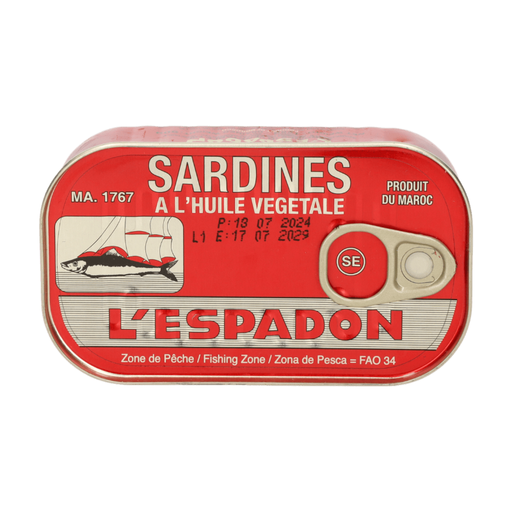 Image unavailable
L'Espadon Sardines in oil 125 g
An oil-packed recipe to compare if you’re planning to add sardines to bread or a salad.
The stated pack size is 125 g. Check the type of oil, allergens, drained net weight and information about bones if these details affect your choice. The instructions for this product say to keep it chilled and eat it within 48 hours of opening.
View on Joybuy
Frequently asked questions
Should you look for “reduced sugar” sardines for a university lunch?
No, you don’t need to look for this claim to compare tins. The EU regulation set out on EUR-Lex requires a reduction of at least 30% compared with a similar product for a “reduced” claim. Instead, check the “of which sugars” figure per 100 g and the ingredients for the product you’re interested in.
What should you check on the label before taking a tin with you?
Check the recipe, allergens, nutritional information per 100 g and drained net weight to compare the amount of fish. The DGCCRF reminds shoppers that allergenic ingredients must be highlighted on the label. Also check the storage instructions if you might not finish the tin.
What should you do if you don’t finish the tin at lunch?
Follow the storage instructions for that product and make sure you can refrigerate the leftovers if the label says to. For its whole sardines with chilli, Saupiquet says to eat them within two days of opening. Other tins may have different instructions.
Can sardines count towards your weekly fish intake?
Yes. Anses includes sardines among the oily fish in its advice on eating fish. When putting together your lunch, choose the other foods to go with it according to your preferences, rather than judging the tin on its sugar content alone.


