Parents preparing a quick dinner
You’re looking for a fish that’s easy to add to a meal. Choosing a product labelled ‘boneless’ means less work removing bones, but you should still check the fish and adjust its texture for your child.


For a quick dinner, a tin explicitly labelled ‘boneless’ saves some of the work involved in preparing whole frozen sardines. If you choose whole sardines, cook them thoroughly and remove the bones carefully. Either way, check the recipe and adjust the texture to suit what your child can manage.
You’re looking for a fish that’s easy to add to a meal. Choosing a product labelled ‘boneless’ means less work removing bones, but you should still check the fish and adjust its texture for your child.
You may be considering either a large bag of frozen sardines or small tins. The amount of whole fish or the net weight of a tin won’t necessarily match the amount you can serve in the end.
You need to prepare the fish to suit your child’s current ability to chew and swallow. Whole sardines need a more thorough check for bones than products explicitly labelled boneless.
Worth considering: if you want to prepare a larger pack of whole fish yourself.
Bear in mind: raw products need to be cooked thoroughly, then carefully checked and deboned before serving to your child.
Worth considering: if preparation time matters and you’re looking for a product that’s explicitly labelled as boneless.
Check: this claim applies to the specific product, and doesn’t remove the need to check the fish and adjust its texture.
| What to consider | What to check | Who is it for? |
|---|---|---|
| Bones and texture | Look for an explicit ‘boneless’ label. Check the fish and prepare it to suit your child’s abilities. | If my child can’t yet manage certain pieces, I want to be able to check exactly what I’m serving. This would be a priority for around 36% of consumers. |
| Usable quantity | Distinguish the weight of whole fish from the drained weight of a tin, and allow for any preparation needed. | When choosing between a large bag and several tins, I want to know how much will end up on the plate. Around 29% of consumers would put this question first. |
| Preparation time | Look for ready-to-eat tinned products. Raw frozen sardines need to be cooked thoroughly. | In the evening, I need to keep the steps to a minimum before preparing my child’s portion. Speed would be the main priority for around 21% of consumers. |
| Recipe | Read the ingredients and nutritional information for your chosen variety, especially its salt content and seasoning. | I want to know what’s in the product before adding sardines to a meal. Around 14% of consumers would put the recipe first. |
The whole frozen sardines described by Carrefour and Auchan are not the same as Connétable’s product, which is presented as skinless and boneless.
If you choose raw whole fish, cook it thoroughly, remove the bones carefully and adjust the texture before serving it to your child.
A tin may contain a covering liquid, while whole fish need to be prepared. The weight shown on these two types of product doesn’t represent the same amount of fish ready to serve.
Check the drained weight of the tin, and allow for the preparation needed for whole fish when comparing pack sizes.
Saupiquet offers varieties including plain, in oil and flavoured options. Ingredients and seasoning vary from one product to another.
Check the ingredients of the specific product you’re buying rather than relying on the brand name alone.
Manger Bouger advises against giving raw fish to children up to the age of 6. Anses explains that cooking fish thoroughly means the flesh is cooked right through.
For raw frozen sardines, follow the pack instructions and check that they’re cooked through before preparing your child’s portion.
Connétable offers a tinned sardine product in water that is presented as skinless and boneless.
Saupiquet’s sardine range includes fillets and several recipes, including plain, in oil and lemon and basil varieties.
E.Leclerc stocks tinned Pêche Océan sardines, including multipacks and whole sardines.
Carrefour offers CARAVELA whole Portuguese sardines in a 1 kg bag.
Auchan offers GELUS frozen sardines for cooking, as well as a 1 kg pack of raw whole GELNIC sardines.
These tins are an option if you’re looking for a store-cupboard fish for dinner. To compare them, check the recipe and the information about bones for each product, then prepare the fish to suit your child before serving.
 Image unavailable
A tin to consider for a quick dinner. The description says the backbone has been removed; still, check the fish before serving and look at the drained weight if you’re comparing usable quantities.
 Image unavailable
A tinned option if you’re looking for a product explicitly labelled boneless. The recipe described contains sardines, water, lemon and salt. Check the label on the variety you buy, then check the fish and adjust its texture for your child.
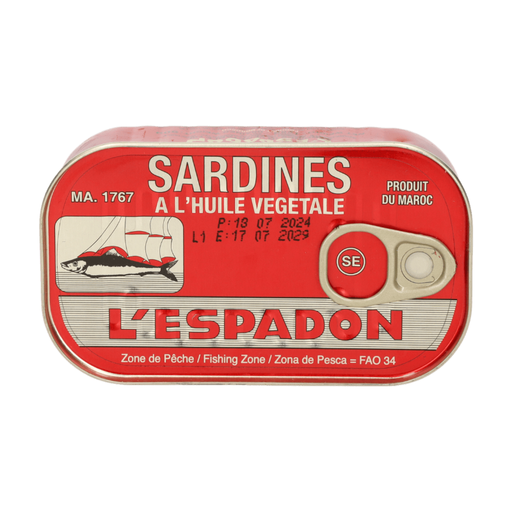 Image unavailable
A tin to consider if a recipe in oil suits the meal you have in mind. Before serving it to a toddler, check the information about bones, inspect the fish and read the label if you need to account for allergens.
Yes. In its dietary advice for children up to the age of 3, Santé publique France lists sardines as an oily fish and recommends serving fish twice a week, including oily fish once a week. The amount and texture should still be suited to your child’s stage of eating.
Not if they’re raw: they need to be cooked before serving. Anses says that cooking fish thoroughly means the flesh is cooked right through. For a toddler, you should also remove the bones carefully and adjust the texture.
No. Manger Bouger advises against giving raw fish to children up to the age of 6. Raw frozen sardines should be cooked thoroughly rather than served after simply thawing.
Check the drained weight of the tin, and bear in mind that a bag of whole sardines contains fish that needs to be prepared. The net weight of a tin and the weight of a bag of whole fish don’t necessarily represent the same amount ready to serve.