Anyone planning a simple Sunday lunch
For a starter, toast or side dish, a tin that’s ready to serve saves you a lengthy preparation. Boneless sardines can also make serving easier.


To choose sardines with little sugar for Sunday lunch, compare the ‘of which sugars’ figure per 100 g and check the ingredients list. A marinade may contain sugar as an ingredient while still showing a low sugar value in the nutrition declaration. Then choose a style that suits how you’ll serve them, opting for boneless sardines if bones may bother some guests. Finally, check the drained weight and storage instructions after opening.
For a starter, toast or side dish, a tin that’s ready to serve saves you a lengthy preparation. Boneless sardines can also make serving easier.
If the ingredients matter to you, check both the nutrition information and the ingredients list, particularly for marinated sardines.
Boneless varieties, sometimes also skinless, can be a good choice if you want to serve sardines easily or make a spread.
If sugar is your priority, start by checking the ingredients. Then choose the style and seasoning to suit how you plan to serve the sardines.
| What to check | What to look for | Who is this for? |
|---|---|---|
| Sugars and ingredients | Compare the ‘of which sugars’ value per 100 g and check the ingredients list separately: ‘no oil’ does not mean ‘no added sugar’. | If I want to limit sugars or certain added ingredients, the marinade alone doesn’t tell me enough. Around 44% of consumers would make this their priority. |
| Bones | Look for the words ‘boneless’ and check the drained weight to help plan how much to serve. | If I’m sharing sardines with guests who find bones bothersome, I’ll choose a style that’s easy to eat. Around 33% of consumers would prioritise this. |
| Recipe and seasoning | Check whether they’re plain, in oil or marinated; compare fat and salt per 100 g across the tins you’re considering. | If I plan to season the sardines myself or serve them as they are, I’ll first choose a recipe that suits the menu. Around 23% of consumers would prioritise this choice. |
The lemon and basil recipes from Connétable, Carrefour and Auchan may list sugar among their ingredients, even though their declared sugar content is low or zero. The ingredients list and nutrition declaration answer two different questions.
To avoid added sugar, check the ingredients; to compare declared sugar values, use the same 100 g basis.
Plain, no-oil and olive-oil recipes don’t necessarily have the same nutritional values. The figures for one product don’t represent every sardine in that category.
Compare the nutrition information per 100 g for the tins you’re interested in, then check their drained weight if you’re serving several people.
Sardines are fish, and storage instructions after opening vary by product. For its whole sardines with chilli, Saupiquet advises keeping them in the fridge and eating them within two days of opening.
Check the allergens and follow the instructions on the tin you’re serving.
The range includes plain sardines, varieties without oil and sardines in olive oil, as well as boneless options.
Saupiquet offers whole sardines and fillets in a range of recipes, including a chilli variety.
The lemon and basil sardine fillets without oil are an option if you want to serve a pre-seasoned recipe.
Auchan offers lemon and basil sardines without oil, as well as sardines in olive oil.
These tinned options let you choose boneless sardines, sardines in oil or sardines in olive oil for Sunday lunch. Before choosing based on sugars and ingredients, check the information on each pack.
 Image unavailable
Worth considering if bones could make serving at the table more difficult. To plan portions, check the drained weight on the pack, then look at the ingredients and the ‘of which sugars’ value.
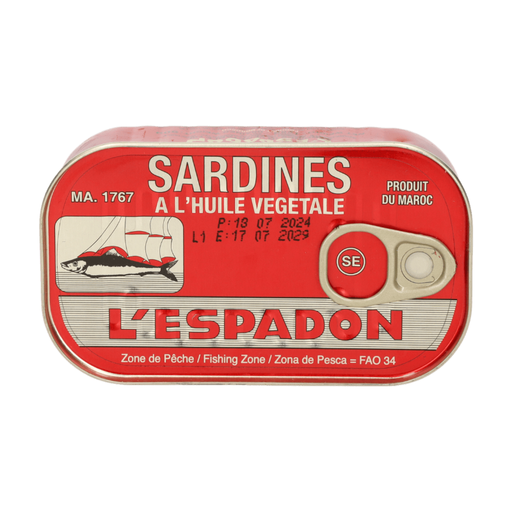 Image unavailable
Worth considering if you’d like to serve sardines in oil on toast or with a salad. Check the pack for the type of oil, ingredients and nutrition information per 100 g.
 Image unavailable
Worth considering if you prefer sardines in olive oil for Sunday lunch. Check the drained weight, fat content and ‘of which sugars’ value on the pack.
No. The recipe name alone doesn’t tell you the sugar content. Connétable and Auchan’s lemon and basil recipes list sugar among their ingredients, while declaring 0 g of sugars per 100 g of drained fish and less than 0.5 g per 100 g respectively. Compare the nutrition declarations and ingredients lists for the products you’re considering.
Check the recipe, whether the sardines contain bones, the drained weight and the nutrition information per 100 g. Also check the ingredients and allergens on the pack, especially if you’re serving marinated sardines to several guests.
Follow the storage instructions on the opened tin. For its whole sardines with chilli, Saupiquet advises refrigerating them and eating them within two days. Check the instructions for any other product you buy.