People keeping an eye on the sugars listed
You want to compare ready-to-eat tins using the ‘of which sugars’ figure, without assuming that sardines in spring water and sardines in sauce have the same sugar content.


For a quick lunch at work, compare the ‘of which sugars’ figure per 100 g and the ingredients in the exact recipe, rather than looking straight away for a ‘reduced in sugars’ claim. Connétable lists 0 g of sugars for some sardines in spring water and 1.0 g for its tomato recipe with no added oil; a figure of 0 g does not, on its own, demonstrate a reduction compared with a reference product. Also check the salt, whether the sardines contain bones and the drained weight, depending on how you plan to put your meal together.
You want to compare ready-to-eat tins using the ‘of which sugars’ figure, without assuming that sardines in spring water and sardines in sauce have the same sugar content.
You’re looking for sardines that are easy to pair with bread, salad or vegetables. A short ingredients list may also influence your choice.
You want the convenience of a tin of sardines, but would prefer a product that is explicitly labelled ‘boneless’ or ‘skinless and boneless’.
Start with the ‘of which sugars’ figure on the exact tin, then check whether its size and preparation suit your lunch at work. To compare the nutritional values of two recipes, use the same 100 g basis and take account of any ‘drained product’ information.
| Criteria | What to check | Who is it for? |
|---|---|---|
| Sugars listed | Check ‘of which sugars’ per 100 g and the ingredients list. A figure of 0 g on the label does not, on its own, amount to a ‘reduced in sugars’ claim. | If my main priority is finding the lowest listed sugar content among the recipes I’m considering, the ingredients in a sauce could affect my choice; around 50% of consumers prioritise listed sugars. |
| Convenience and bones | Look for the specific ‘boneless’ wording and the drained net weight so you can plan what to serve with it. | Without a kitchen at work, I prefer a tin that’s easy to serve, especially if removing bones is a nuisance. Ease of eating comes first for around 30% of consumers. |
| Oil, energy and salt | Compare the energy, fat and salt per 100 g, rather than assuming what they are from the ‘no added oil’ wording alone. | When putting my lunch together with other foods, I want to take the oil and salt in the tin into account; these are the top priorities for around 20% of consumers. |
The nutritional information on a tin does not prove a reduction compared with a similar product. A marinade may even list 0 g of sugars per 100 g while including sugar in its ingredients, as is the case with Connétable’s lemon and basil recipe with no added oil.
Compare the ‘of which sugars’ figure and the ingredients, and use the wording ‘reduced in sugars’ only for products where the claim and the comparison it is based on can be established.
‘No added oil’ describes one aspect of a recipe, not all of its nutritional values. Connétable lists 0 g of sugars per 100 g for its lemon and basil recipe with no added oil, compared with 1.0 g for its tomato recipe with no added oil.
Read the nutritional information for each recipe on the same 100 g basis, paying particular attention to sugars, energy, fat and salt.
According to their product pages, Connétable’s Sardine Nature and its skinless and boneless sardines in spring water both list 0 g of sugars, but also 0.90 g of salt per 100 g.
Check the salt content of the tin alongside that of the other foods you’re planning to have for lunch.
A boneless version is a separate product: the general name ‘sardines’ doesn’t tell you whether you’ll need to deal with bones at work.
If this is important to you, look for the words ‘boneless’ on the exact tin and check its size before choosing.
Its sardines in spring water, boneless options and recipes with no added oil let you compare several preparations using the values listed for each.
Its sardine fillets in spring water and flavoured recipes cater to different preferences when it comes to ingredients and taste.
Its sardines in spring water provide a simple recipe to compare in a 95 g drained format.
These tins of sardines in oil could be part of a quick lunch. They are not presented as ‘reduced in sugars’ products: if sugar content is your top priority, compare the nutritional information for each product before choosing. The sizes shown below match the product titles.
 Image unavailable
If you’d like to put together a lunch with sardines in olive oil, check the ‘of which sugars’ figure and the salt in this product before pairing it with other foods.
Listed size: 140 g. This recipe isn’t suitable if you prefer sardines with no added oil.
 Image unavailable
For a quick meal, compare this size with the amount you need and check its nutritional information.
Listed size: 135 g. The product title specifies a recipe in extra virgin olive oil.
 Image unavailable
If small sardines appeal to you for lunch at work, compare the stated quantity with what you’re serving them with and check which basis is used for the nutritional values.
Size information: 16/20u and 115/81 g. The recipe is in olive oil.
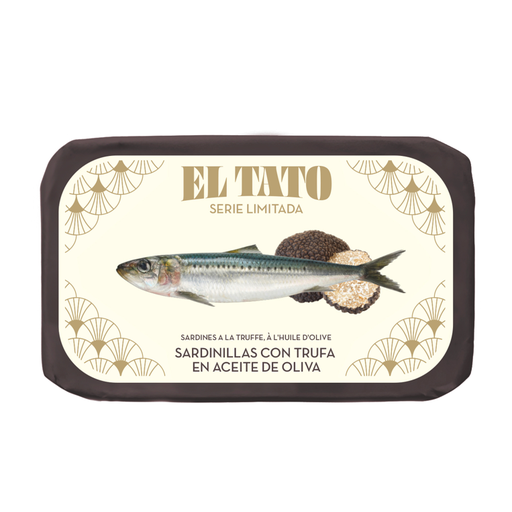 Image unavailable
This flavoured recipe is for anyone looking to add variety to their lunch. Check its ingredients and nutritional values if you’re comparing it with a plain recipe.
Size information: 16/20 and 115/81 g. The product title mentions olive oil and truffle.
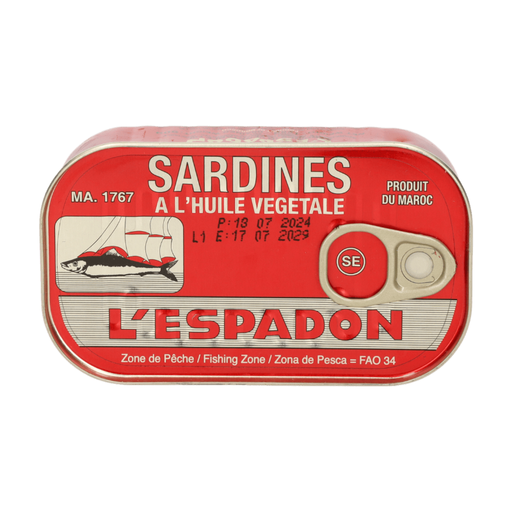 Image unavailable
If you’re making lunch with a tin of sardines in oil, check the ingredients list and the ‘of which sugars’ line when comparing different recipes.
Listed size: 125 g. The product title doesn’t specify the type of oil.
No. A figure of 0 g of sugars per 100 g is a declared value, not proof of a reduction compared with a similar product. Some of Connétable’s recipes in spring water and lemon and basil list this figure. To use the ‘reduced in sugars’ claim, check that it appears on the product and the comparison on which it is based.
Choose a product explicitly labelled ‘boneless’, rather than relying on the word ‘sardines’ alone. Connétable, for example, offers a skinless and boneless version in spring water. Check its drained weight too, so you can plan what to serve with it.
Follow the storage instructions for the product you’ve bought. For its whole sardines with chilli, Saupiquet says to refrigerate the product after opening and eat it within two days. Don’t automatically apply this guidance to other tins.
If you have a known fish allergy, don’t choose a tin containing sardines. Read the ingredients list and allergen information for the specific product, including when its recipe contains a sauce or other ingredients.