Students keeping an eye on the cost of everyday meals
If sardines are a regular feature on your menu, consider the tin size and how much you’ll actually serve. A small tin and a larger one won’t necessarily provide the same amount for a meal.


For a typical student dinner, start with a standard tin that suits your recipe and the amount you need. A Label Rouge option may be worth considering when sardines are the star of a special meal: according to the French National Institute of Origin and Quality, this label identifies products that meet higher-quality specifications. If bones or oil matter more to you, also compare options with the backbone removed and sardines in water.
If sardines are a regular feature on your menu, consider the tin size and how much you’ll actually serve. A small tin and a larger one won’t necessarily provide the same amount for a meal.
If you’re topping bread, a salad, rice or pasta and don’t want to prepare whole sardines, look for clear information about the bones. Having the backbone removed doesn’t, by itself, guarantee that there are no bones at all.
When sardines are the centrepiece of your meal, Label Rouge can be a more specific indication of quality than the word ‘premium’ on its own. Check that the label is shown on the product you’re considering.
When planning a student dinner, think about what part the sardines will play in the meal, then choose between whole sardines, a boneless preparation, or sardines in water or oil. Finally, compare the quantities shown on the tins.
| Factor | What to check | Who this matters to |
|---|---|---|
| Dinner budget | Net weight, drained weight where stated, and how much you need for the meal. | If I often serve sardines with bread or starchy foods, I want to choose a suitable quantity without spending my whole budget on the tin; around 33% of consumers would make budget their top priority. |
| Boneless preparation | ‘Boneless’ wording or details about the backbone being removed; instructions for after opening. | For a quick sandwich or salad topping, I’d rather not prepare whole sardines. Around 27% of consumers would prioritise convenience when it comes to bones. |
| Label Rouge for a special occasion | Whether the label appears on the specific product and the size of the tin. | When sardines are the centrepiece of a special dinner, I’m looking for a clear indication of quality rather than a vague term on the packaging; around 20% of consumers would put this first. |
| Recipe and ingredients | Ingredients list, packing liquid and nutritional values per 100 g. | If I want to season the meal myself, I want to know whether the sardines are packed in water or oil. Around 20% of consumers would put ingredients first. |
Net weight and drained weight don’t describe the same quantity. The difference matters if you want to know how much space the sardines will take up on your plate.
Compare the weight information on the products you’re considering, then choose a size to suit the number of portions you’re making.
These terms don’t describe exactly the same preparation. In particular, a statement about the backbone doesn’t promise that there are no bones at all.
For a quick sandwich or salad, read the details of the specific product rather than relying on a photo or the word ‘fillets’ alone.
Auchan says that the ingredients in its extra virgin olive oil sardines may vary depending on the online grocery service and the date of purchase.
For this product, check the ingredients list and nutritional information on the tin you actually choose.
Fish must be identified as an allergen in the ingredients list. Storage instructions after opening can also vary from one product to another.
If you have an allergy, check the label before eating. If you’ve opened the tin, follow its instructions for refrigeration and how long to keep it.
These brands offer products in different sizes and recipes. Compare the specific tins rather than assuming a product’s features from its brand name.
The products reviewed include whole sardines in extra virgin olive oil, including a tin labelled Label Rouge, as well as a ‘Pêche du jour’ option.
The products reviewed include sardine fillets in water and boneless fillets in olive oil.
The Carrefour Classic’ product reviewed is a 135 g tin of sardines in extra virgin olive oil.
The products reviewed include sardines in extra virgin olive oil and an option described as boneless.
These tins let you compare different recipes and formats for a student dinner: sardines in olive oil, sardines in water and small seasoned sardines. Start by choosing what you plan to serve, then check the information on the tin.
 Image unavailable
Worth considering when sardines in oil are the centrepiece of your dinner. The title states 135 g; if you’re choosing it for the Label Rouge mark, check that it appears on this specific product.
 Image unavailable
Consider these if you’d prefer to season sardines in water yourself. The description says the backbone has been removed, but doesn’t guarantee that there are no bones at all; the title states 98 g.
 Image unavailable
This extra virgin olive oil option could suit a meal where you want to serve the sardines as they are. The title states 140 g; the description says the backbone has been removed, which is not the same as a guarantee that there are no bones at all.
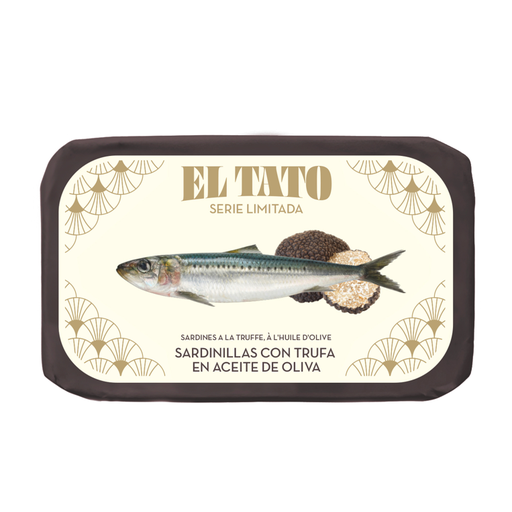 Image unavailable
Consider these if the olive oil and truffle seasoning suits your dinner plans. The title gives the figures 16/20 and 115/81 g: check the packaging to understand the quantities shown and find out about bones to make sure they meet your needs.
No. It can help guide a special-occasion purchase, but it doesn’t make other formats unsuitable for dinner. According to the French National Institute of Origin and Quality, Label Rouge identifies a higher level of quality than that of similar products usually sold; check that the mark appears on the product you’re interested in.
Check the ingredients list on the specific tin before eating it. The French Directorate-General for Competition Policy, Consumer Affairs and Fraud Control says that allergenic ingredients must be clearly highlighted.
Follow the instructions on the product you’ve bought rather than assuming the same storage time applies to every tin. The Auchan product listings for the Saupiquet and Auchan products reviewed say to refrigerate after opening and eat within 48 hours.