People keeping an eye on sugar
You want to compare the sugar content shown on tins without assuming that “in natural juices” or “without oil” means “reduced sugar”.


When choosing sardines to take to the park and keeping an eye on sugar, compare the “of which sugars” value per 100 g and the ingredients in the exact recipe, rather than looking only for the claim “reduced sugar”. Depending on the recipe, sardines in natural juices from Connétable, Saupiquet, E.Leclerc and Auchan list between 0 g and less than 0.5 g of sugars per 100 g. These figures don’t apply to all their recipes. Also choose a format that’s easy to eat and a portion you can finish while you’re there, or make sure you can keep any leftovers chilled after opening.
You want to compare the sugar content shown on tins without assuming that “in natural juices” or “without oil” means “reduced sugar”.
You prefer something easy to serve. Fillets or sardines specifically labelled boneless may matter more to you than a seasoned recipe.
You’re looking for a ready-to-eat marinade or sauce and want to check its ingredients and “of which sugars” value before choosing it.
For a picnic, start by choosing a recipe and comparing its nutritional values per 100 g. Then check whether the format suits you for eating on the go and what the label says about storage after opening.
| What to consider | What to check | Who is it for? |
|---|---|---|
| Sugars and ingredients | Compare the “of which sugars” value per 100 g and the ingredients list for the exact recipe, especially if it contains a sauce. | If I want to limit sugar, the contents of the tin I choose matter more than the recipe name; around 37% of consumers would make this their top priority. |
| Ease of eating | Look for “fillets” or “boneless” on the label and check how the tin opens. | If I’m eating at the park and don’t want to remove the bones, I choose a suitable format; ease of eating would be the top consideration for around 27% of consumers. |
| Seasoning | Read the ingredients in the marinade or sauce, then compare its “of which sugars” value with that of a recipe in natural juices. | When I want a ready-seasoned recipe, I’m happy to compare its ingredients rather than choosing solely by the lowest sugar content; around 18% of consumers would prioritise taste. |
| Salt and storage | Compare the “salt” value per 100 g and read the instructions for storing the tin once it’s open. | If my main concern is salt or storing an opened tin, I check these separately from sugars; around 18% of consumers would put them first. |
A low figure on the label does not, by itself, amount to a claim that the sugar content has been reduced. Under Regulation (EC) No 1924/2006, published on EUR-Lex, “reduced sugar” means a reduction of at least 30% compared with a similar food.
When choosing a tin, first compare the “of which sugars” value per 100 g and its ingredients. Don’t assume a recipe makes this claim unless it says so on the label.
The Pêche Océan pepper and onion marinade described by E.Leclerc contains sugar in its ingredients. Connétable’s tomato and basil recipe lists 1.1 g of sugars per 100 g, according to the brand.
Compare the nutritional information for each seasoning with that of the recipe in natural juices you’re interested in.
An opened tin needs to be stored differently from an unopened one. Auchan’s instructions for one recipe in natural juices say to refrigerate it and consume it within 48 hours of opening.
Plan to finish your portion at the park or take something to keep leftovers chilled, then follow the instructions on the tin you’ve chosen.
“Boneless” tells you how the sardines are prepared, not how much sugar or salt they contain.
Choose this format if it makes your meal easier, then check the nutritional values and ingredients separately.
The range includes fillets in natural juices as well as seasoned recipes, so compare them one product at a time.
The brand offers boneless sardines in natural juices as well as recipes in sauce, with features that should be compared separately.
Carrefour Classic’ sardines in natural juices are a recipe whose ingredients can be checked without confusing them with the brand’s fillets.
The fillets in natural juices and the pepper and onion marinade let you compare two different recipes in this range.
Whole sardines and fillets in natural juices give you two formats to choose between, depending on how you’d like to eat at the park.
These tins of sardines in natural juices or oil come in different formats for a meal at the park. To choose based on sugar content, compare the nutritional information for each product. Also check its size and storage instructions after opening.
 Image unavailable
The boneless format could be a good choice if you want to eat straight from the tin at the park. Compare the “of which sugars” value on the label and make sure you can keep any leftovers chilled.
 Image unavailable
This recipe in olive oil is an option if you prefer a tin that’s already seasoned. Compare its sugar content and ingredients with those of sardines in water; don’t assume the oil affects the sugar content.
 Image unavailable
If you prefer fillets for your picnic, this format is worth comparing with whole sardines. The product name gives the weight as 115/81 g; check the nutritional information and storage instructions for this product before planning to keep any leftovers.
 Image unavailable
This tin of small sardines in olive oil offers another format to compare for a meal at the park. The product name gives the quantity as 16/20u and the weight as 115/81 g; check the nutritional values and instructions for after opening.
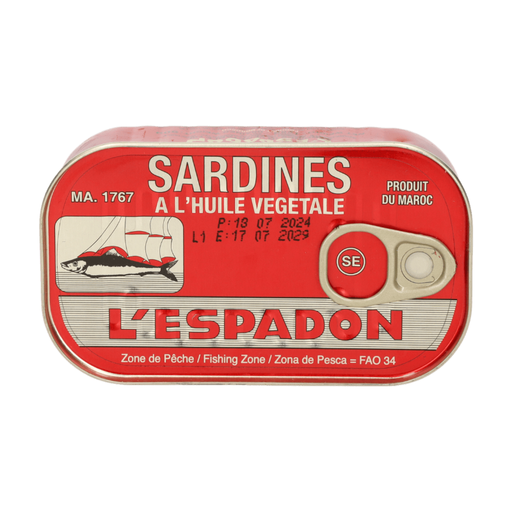 Image unavailable
Compare this 125 g tin with the portion you plan to eat at the park. Check its “of which sugars” value and storage instructions before deciding whether to keep any leftovers.
No. “In natural juices” describes the recipe, while “reduced sugar” is a comparative claim. Under Regulation (EC) No 1924/2006, published on EUR-Lex, the latter requires a reduction of at least 30% compared with a similar food. When choosing a tin, read its “of which sugars” value and ingredients.
Connétable’s boneless sardines in natural juices list 0 g of sugars per 100 g; Saupiquet’s fillets in natural juices list less than 0.2 g; Pêche Océan’s fillets in natural juices list 0.2 g; and Auchan’s fillets in natural juices list less than 0.5 g, according to the brands’ and E.Leclerc’s product information. Always compare the exact variety: these figures don’t describe their other recipes.
It’s best to plan a portion you can finish there or take something to keep leftovers chilled. Auchan’s product information for its sardines in natural juices says to refrigerate them after opening and consume within 48 hours. Anses recommends limiting how long perishable foods are left at room temperature. Follow the instructions on your tin.
No. “Without oil” tells you about the oil, not the sugar content. Connétable’s tomato and basil recipe without oil lists 1.1 g of sugars per 100 g, according to the brand. Compare the ingredients and “of which sugars” value for the recipe you’re interested in.