Which criteria should you check first?
First choose a shape that suits how you’ll serve the sardines, then check the recipe and how much fish you’ll need.
| Criteria |
What to check |
Who it matters to |
| How the sardines are presented |
Check that they’re whole. If you’re looking for a specific mark or claim, check that the tin actually displays the Label Rouge mark or gives a maturation period. |
For a lightly topped galette, I want the sardine to remain recognisable and its presentation to matter when serving; around 33% of consumers would prioritise this aspect. |
| Bones and serving |
Look for “boneless” or “fillets” on the exact product; a photo alone isn’t enough to confirm this feature. |
When topping pancakes quickly, I’d rather not have to remove bones at the table; nearly 27% of consumers would put ease of serving first. |
| Recipe and seasoning |
Read the ingredients list and check the type of oil and the nutritional information, including the salt content. |
If my topping already includes other ingredients, I want to know which oil and seasonings are in the tin; around 20% of consumers would prioritise the recipe. |
| Amount to serve |
Compare the net weight, drained weight and pack size; confirm which product is available in your shop. |
When I’m making several pancakes, I need to plan for enough fish without relying on the number of tins alone; around 20% of consumers would prioritise quantity and pack size. |
Sardines to consider on Joybuy
This selection covers a few ways to serve sardines on pancake night: whole on a galette, fillets to share out, and recipes to compare with your other planned ingredients.
 Image unavailable
Connétable Sardines in Extra Virgin Olive Oil 140 g
Worth considering for a pancake topping if you want to check how easy the product you choose is to serve.
140 g tin in extra virgin olive oil. If the absence of central bones is essential, check this feature on the label.
View on Joybuy
 Image unavailable
Connétable Sardines in Extra Virgin Olive Oil 135 g
Consider these if you’re looking for sardines to serve on a galette rather than a topping that’s already been flaked.
135 g tin in extra virgin olive oil. If you’re choosing it for the Label Rouge mark or because it’s boneless, check that the tin carries the relevant claim.
View on Joybuy
 Image unavailable
EL TATO Sardine Fillets in Olive Oil 115/81 g
Fillets are worth considering if you plan to divide the fish between several pancakes.
The title gives a weight of 115 g and a drained weight of 81 g. Check the label for the exact type of olive oil if this matters for your recipe.
View on Joybuy
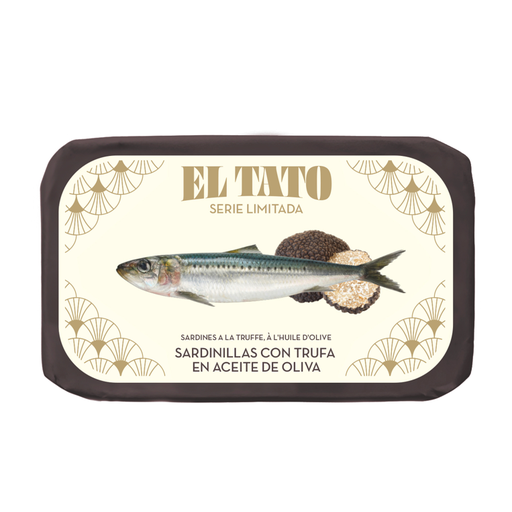 Image unavailable
EL TATO Small Sardines 16/20 in Olive Oil and Truffle 115/81 g
Consider this recipe if truffle will work with the other ingredients in your pancakes, rather than if you’re after a subtle-flavoured topping.
The title gives a size grade of 16/20, a weight of 115 g and a drained weight of 81 g. Read the ingredients list and allergen information on the tin before serving.
View on Joybuy
 Image unavailable
EL TATO Small Sardines 16/20 in Olive Oil 115/81 g
Compare these with the flavoured recipes if you’d rather choose the other ingredients in your topping yourself.
The title gives a size grade of 16/20, a weight of 115 g and a drained weight of 81 g. Check the tin for the type of olive oil and storage instructions after opening.
View on Joybuy
Frequently asked questions
What does the Label Rouge mark mean on a tin of sardines?
Label Rouge is an official mark that applies to products which actually carry it, not to all sardines in olive oil. The French National Institute of Origin and Quality says that the specifications for the sardines concerned include, among other things, “EXTRA” freshness and traditional production methods. Check that the tin you choose displays the mark.
What should you read on the tin before topping pancakes?
Start with the product name, ingredients list and drained weight to find out what type and quantity of fish you’ll be serving. Also check the nutritional information, allergen details and storage instructions on the tin you buy.
How should you store sardines after opening?
Follow the storage instructions and use-by period after opening shown on the tin. Check them before your meal if you’re planning to use only some of the contents.
Which recall should you check for Carrefour Classic’ sardines?
Carrefour’s notice dated 24 September 2026 applies to Carrefour Classic’ sardines in extra virgin olive oil, 135 g, EAN 3245412542831, batch P L26/2194 and best-before date 30/06/2031, due to a potentially undeclared crustacean allergen. Do not eat a tin bearing these details and follow the recall instructions; the notice does not apply to all batches from the brand.


