Quick lunches you can put together
A tin of sardines can be added to a salad, toast or bowl without cooking. Manger Bouger lists a tin of sardines as an example of a portion of fish; however, check the quantity stated on the pack you choose.


When choosing an individual tin of sardines for lunch, start by considering the recipe and how much fish you’ll be serving. Sardines in spring water, in sauce, in oil or boneless each suit different needs. Compare the ingredients and nutritional information per 100 g on a like-for-like basis, then check the drained weight where it’s given. Manger Bouger lists a tin of sardines as an example of a portion of fish, but pack sizes vary.
A tin of sardines can be added to a salad, toast or bowl without cooking. Manger Bouger lists a tin of sardines as an example of a portion of fish; however, check the quantity stated on the pack you choose.
If you’d like to season your food yourself, compare the ingredients, salt and nutritional information rather than relying on a general claim about the meal. The drained weight can also help you gauge how much you’ll be serving.
If you find bones off-putting when eating sardines straight from the tin or mashing them onto bread, look for a product explicitly labelled ‘boneless’. This feature doesn’t replace the need to compare the recipe.
First, choose the recipe you want to serve, then compare the amount of fish and its nutritional information with what you’re planning for lunch. A claim such as ‘no oil’ or ‘boneless’ doesn’t tell you everything about the ingredients.
| Criteria | What to check | Who it’s for |
|---|---|---|
| Recipe and ingredients | Compare the ingredients, salt and fat per 100 g, distinguishing between the product as sold and the drained product. | If I want to season my own salad or compare two ready-to-eat recipes, the ingredients matter more than the recipe name. Around 40% of consumers in this group would prioritise this factor. |
| Portion and convenience | Check the net weight and, where stated, the drained weight to gauge how much fish you’ll be serving. | For a quick lunch, I want to know what’s actually in my tin before adding anything else to my plate. Portion size and ease of preparation would be priorities for around 30% of consumers in this group. |
| Whether it contains bones | Look for the ‘boneless’ label if this matters to you, then compare the exact recipe. | If I’m planning to eat the sardines as they are or mash them onto toast, the bones could determine my choice. This would be the main concern for around 20% of consumers in this group. |
| Availability | Check the pack size of the product you’ve chosen and whether it’s available at your local shop or for online grocery shopping. | When I’m planning my shop for a particular lunch, I need a tin that’s available locally and in a suitable size. Around 10% of consumers in this group would put this first. |
Sardines naturally contain fat: Connétable lists 10 g of fat per 100 g for its tomato recipe made without oil.
Compare the fat and salt in the recipes you’re considering per 100 g. Don’t assume you know what’s in a product based on the claim on the front of the pack alone.
A recipe made with water, sauce or oil may include a covering liquid. So the net weight alone doesn’t always tell you how much you’ll be putting on your plate.
Look for the drained weight where it’s stated, and compare quantities calculated on the same basis.
Carrefour’s listing for a Cocagne sardines in spring water product showed it as unavailable for online grocery shopping; E.Leclerc’s listings also advise checking your chosen store.
Check the product at the shop or online grocery service where you plan to do your shopping.
How long an opened tin can be kept depends on the instructions for that product. Auchan’s listing for Connétable boneless sardines in olive oil says to keep them in the fridge and eat them within two days of opening.
If you’re keeping some for later, follow the instructions printed on the tin you’ve bought.
These product ranges and listings can help you compare recipes and pack sizes; the features of one product don’t necessarily apply to an entire brand.
Saupiquet’s range includes classic, grilled and organic fillets, as well as whole sardines.
The range includes recipes in tomato sauce made without oil, in olive oil and boneless, depending on the texture and seasoning you’re looking for.
Carrefour’s listings can help you compare the ingredients in a product in spring water with those in more heavily seasoned recipes.
The E.Leclerc catalogue includes Pêche Océan sardines in spring water, fillets and marinade, in a range of pack sizes.
Auchan’s listings for Connétable products can help you distinguish between a recipe in olive oil and a boneless option.
These tins offer individual boneless options and recipes in olive oil to consider for a quick lunch. To compare them, start with the recipe and pack size shown, then check the label of the tin you choose.
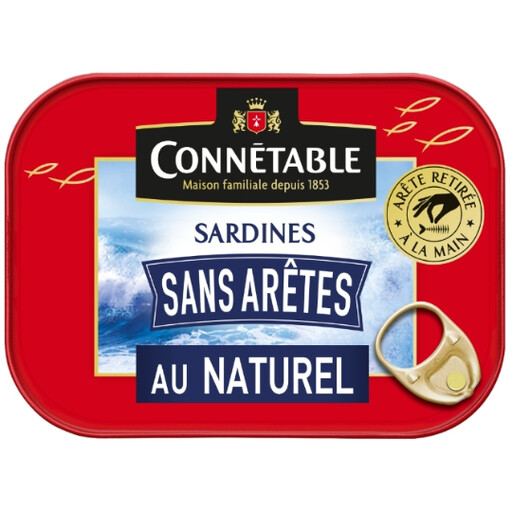 Image unavailable
Worth considering if you find bones off-putting when serving sardines as they are or mashing them onto toast. This product is listed as a 98 g tin of sardines in spring water, with the central bone removed. Check the drained weight to gauge how much you’ll be serving.
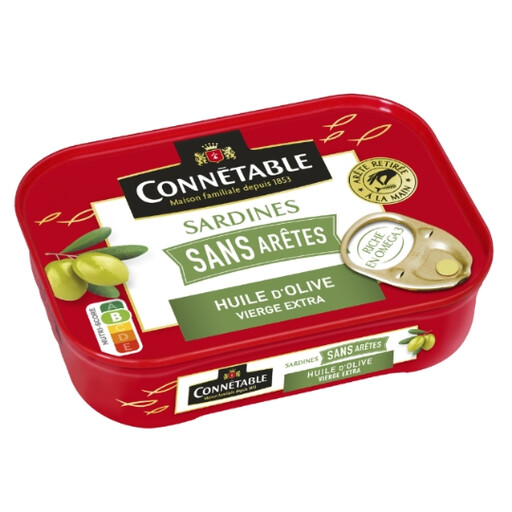 Image unavailable
An option to consider if you’d like a recipe in olive oil to accompany your lunch. The listed pack size is 140 g; compare the drained weight and nutritional information on the same basis as the other tins you’re considering.
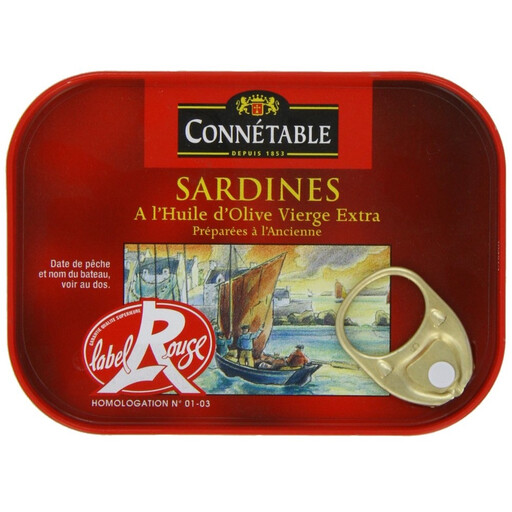 Image unavailable
This 135 g tin could be an option if you’re looking for a recipe in olive oil for a no-cook meal. If you’re comparing it with the 140 g Connétable tin, check the drained weight and nutritional information for each product rather than looking at the stated weight alone.
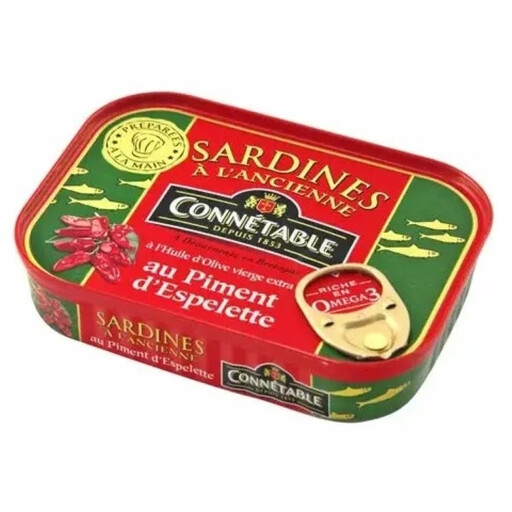 Image unavailable
Worth a look if you prefer a recipe that’s already seasoned for lunch. This 115 g version features olive oil and Espelette pepper in its name. Check the ingredients if you’d prefer a simple recipe in spring water.
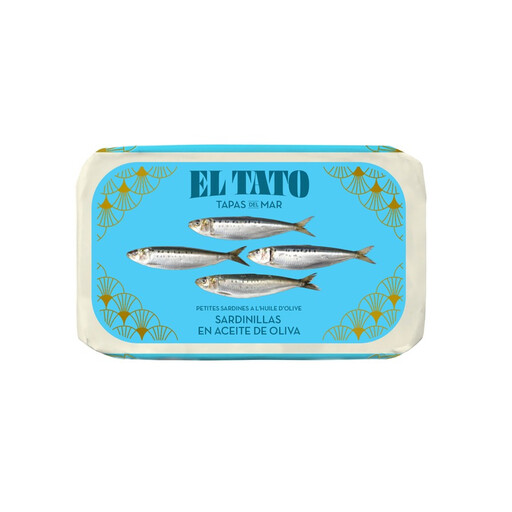 Image unavailable
This pack makes it easier to gauge how much sardine you’ll be serving alongside the rest of your lunch. The product name gives a net weight of 115 g and a drained weight of 81 g; compare nutritional information while bearing in mind the basis it’s calculated on.
Manger Bouger lists a tin of sardines as one example of a portion of fish, alongside 100 g of fish. As tins and their drained weights vary, check the pack size of the product you choose when putting together your lunch.
No. ‘No oil’ doesn’t mean the fish contains no fat. Connétable lists 10 g of fat per 100 g for its tomato sardines made without oil. Check the nutritional information for the recipe you’re thinking of buying.
Check the product name, ingredients, nutritional information, net quantity and date. The DGCCRF lists these details for pre-packed food sold in France. If you need to avoid an allergen, check its declaration on the specific tin, too.
Follow the instructions on the tin you’ve bought rather than assuming the same storage time applies to every recipe. For this product, Auchan’s listing for Connétable boneless sardines in olive oil says to keep them in the fridge and eat them within two days of opening.
No. After opening, you should still follow the product’s storage instructions. For an unopened tin, the DGCCRF says that going past the best-before date doesn’t necessarily mean the product is unfit to eat if the packaging is intact, although its flavour may deteriorate.