What should you compare when stocking your cupboard?
For a family shop, first work out how many meals the tins need to cover, then choose a style and recipe that everyone in your household will actually eat. Auchan’s 3 × 135 g and 4 × 135 g multipacks show why it’s worth checking both the number of tins and the drained weight of each one.
| What to consider | What to check | Who it matters to |
|---|
| Quantity for your meals |
Number of tins in the multipack and the drained weight per tin, excluding the oil or water. |
If I’m preparing several meals without buying tins one by one, I want to know how much fish each tin contains; around 33% of consumers would put this first. |
| Bones and skin |
Look for ‘boneless’ or ‘skinless and boneless’ on the product you choose. |
If bones make serving the meal more difficult, I choose a style that suits the people eating it; this convenience would be the top priority for around 25% of consumers. |
| Recipe and ingredients |
Check the ingredients and nutritional information per 100 g, especially the fat and salt content of the specific recipe. |
If I want to add my own seasoning or choose a recipe in oil, the ingredients matter more than the pack size; around 25% of consumers would prioritise this. |
| Managing your stock |
Best-before date, condition of the tin and storage instructions after opening. |
To use my stock over several meals, I need to check the dates and plan how to use any opened tin; this would be the first consideration for around 17% of consumers. |
Individual tins available on Joybuy
These individual tins include sardines in olive oil and a boneless variety in water. To stock up for your family, work out how many tins you’ll need for your meals and compare the quantities listed for each product.
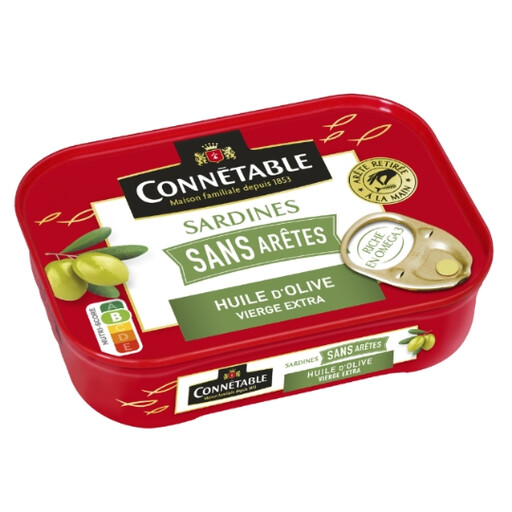 Image unavailable
CONNÉTABLE Sardines in extra virgin olive oil, 140 g
An individual tin to consider for a quick meal; choose the number of tins to suit the portions you have planned.
Size listed: 140 g. Follow the storage instructions on the tin after opening.
View on Joybuy
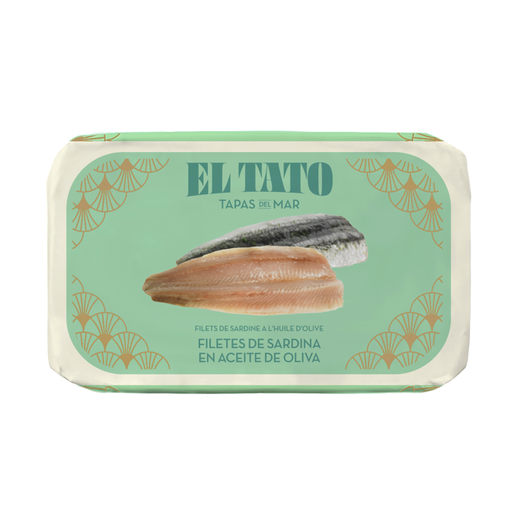 Image unavailable
EL TATO Sardine fillets in olive oil, 115/81 g
This individual pack is a handy addition to your stock if you’d rather serve fillets than whole sardines.
The size is listed as 115/81 g; check how much you’ll need for your meal. Follow the instructions on the tin after opening.
View on Joybuy
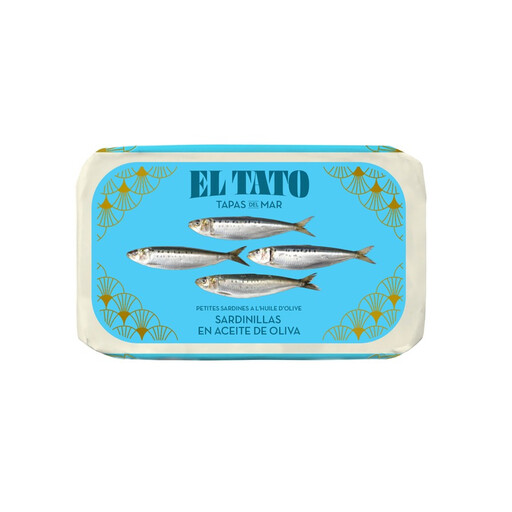 Image unavailable
El Tato Small sardines 16/20u in olive oil, 115/81 g
An individual tin of small sardines to consider if this style suits the meals you have planned.
The title lists 16/20u and 115/81 g. Plan to use additional tins if one won’t provide enough for your portions.
View on Joybuy
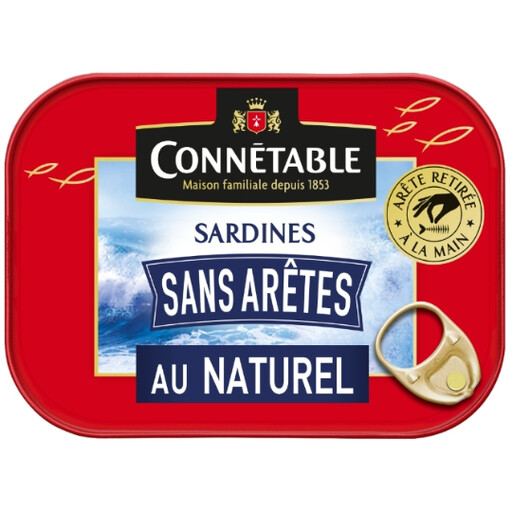 Image unavailable
CONNÉTABLE Boneless sardines in water, 98 g
Worth considering if the backbone is a concern for your guests and you prefer sardines in water to sardines in oil.
The tin weighs 98 g; check the label to compare the drained weight of the sardines with other tinned products.
View on Joybuy
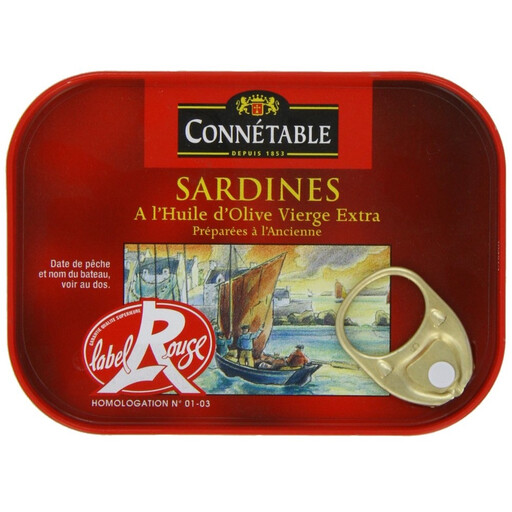 Image unavailable
CONNÉTABLE Sardines in extra virgin olive oil, 135 g
This individual tin can be kept for a quick meal, but on its own it isn’t a family-sized multipack.
Net weight listed: 135 g. Check the drained weight on the label before comparing the amount of fish with other pack sizes.
View on Joybuy
Frequently asked questions
Net weight or drained weight: which should you compare for a family meal?
If the tin contains liquid, compare the drained weight to estimate how much fish it contains. Net weight also includes the liquid; the DGCCRF states that the drained weight must be shown on the label in this case.
Should you always choose boneless sardines for a large family?
No. Boneless sardines are mainly useful if the backbone bothers anyone in your household. If whole sardines suit everyone, focus instead on the pack sizes and quantities you’ll need for the meals you’ve planned.
How should you store sardines once the tin is open?
Refrigerate them and follow the time limit given for the product you’ve bought. The product details for the Saupiquet, Auchan, Connétable and Parmentier products considered here say to eat them within two days of opening. An opened tin can’t be stored in the cupboard like an unopened one.
What should you check on the label before stocking up on several tins?
Check the recipe, quantity, nutritional information, best-before date and storage instructions for each product. For tinned food packed in liquid, the DGCCRF states that the label must also show the drained weight.


