
Livraison le jour même ou le lendemain

Qualité garantie

Débloquez vos offres de bienvenue: Livraison GRATUITE | Jusqu'à -80 % | 30 jours d'essai gratuits à JoyPlus
Téléchargez l'application
Sardines in olive oil are a pantry staple. Convenient, delicious, and packed with benefits, they're perfect on a simple piece of toast or as part of more creative recipes. However, with shelves overflowing with options, making the right choice can be a real challenge. Between marketing promises and unclear labels, the risk of picking a disappointing can is very real.
Our mission? To help you navigate the options. Let's break down the pitfalls to avoid and the foolproof criteria for choosing canned sardines that live up to your expectations.
It's hard to stay on course when faced with the lure of marketing. Here are three things to watch out for so you don't get fooled:
To stop buying blind, here are the key points that signal a quality product.
Far from being a simple preservative, the oil is an ingredient in its own right that makes all the difference. Always opt for an extra virgin olive oil. It infuses the fish with its fruity notes and helps to tenderise the flesh over time. Also, check its proportion in the ingredients list: a good can should be generous with quality oil, not just have a little at the bottom.
The star of high-quality canned sardines is the Sardina pilchardus species. The origin is just as crucial: sardines caught in the North-East Atlantic are a safe bet. Finally, the size grade (the number of fish per can) tells you about their size. Smaller sardines, which are more delicate on the palate, are perfect for an aperitif. Larger ones, on the other hand, hold up better in cooked dishes.
Here, it all depends on your intended use and personal taste:
To put theory into practice, here are a few products that tick all the boxes for transparency and quality.
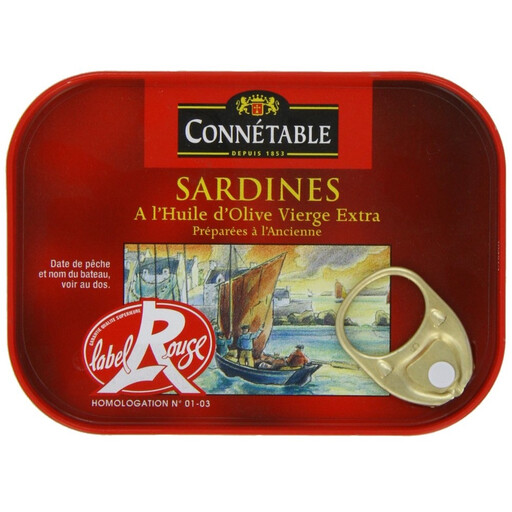
The verdict: For purists seeking excellence and flawless traceability. Ideal on a simple slice of good bread, allowing the full delicacy of the fish and oil to shine through.
It eliminates any ambiguity about the origin with complete traceability (fishing date, boat name) and an official certification (Label Rouge), a guarantee of controlled superior quality.
The Label Rouge certification guarantees seasonal fishing for optimal freshness. The result: flesh that is both firm and melt-in-your-mouth, enhanced by an excellent extra virgin olive oil.
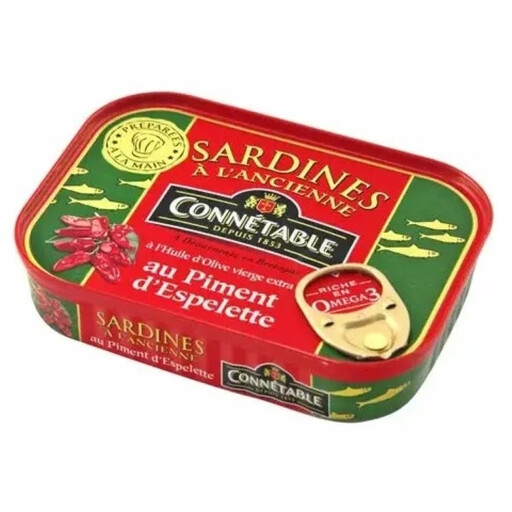
The verdict: For those who like a little twist. Perfect for an aperitif with a kick, to liven up a pizza, or to spice up a simple potato salad.
Here, there's no generic "chilli." The recipe features Piment d'Espelette AOP (0.5%), a premium ingredient that provides an aromatic warmth rather than just a burning sensation.
The perfect balance between the melt-in-your-mouth sardine, the roundness of the extra virgin olive oil, and the subtle heat of the Piment d'Espelette. All prepared in France by a historic cannery.
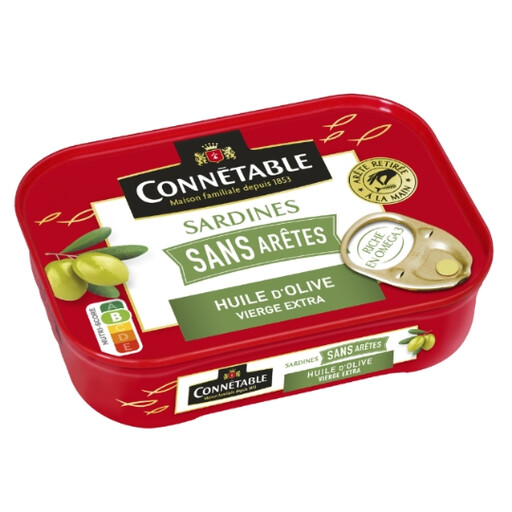
The verdict: For those who want the great taste of sardines without the hassle. These fillets are ready to be added to a salad, sandwich, or homemade rillettes, with no need to worry about bones.
The "boneless" promise is kept and specified: the central bone is removed by hand. This detail makes all the difference in texture and justifies the product's quality.
The convenience of a ready-to-use product, combined with the quality of a French preparation and an extra virgin olive oil. Great taste, with no compromises.
We have selected a full range of products for you that meet our criteria for quality and transparency.
Above all, do not leave them in their metal can. Transfer them to an airtight container (glass is ideal), making sure they are still covered in their oil. Place them in the refrigerator and enjoy them within 48 hours to experience their full flavour.
Absolutely, and it's something of an insider's secret! High-quality canned sardines, packed in extra virgin olive oil, can become true "cellar-aged" or "vintage" sardines. Over the years, the oil slowly tenderises the fish, the central bone becomes soft, and the flavours gain complexity. The ritual involves turning the cans over every six months so the oil soaks the fish evenly.
The difference is huge, and it's a critical one. An olive oil, especially if it's extra virgin, brings complex aromatic notes (fruity, grassy) that enhance the fish. A neutral vegetable oil (sunflower, rapeseed, etc.) primarily serves as a preservative and adds no flavour value. The type of oil is therefore an infallible mark of quality.