Couples keeping an eye on portions
For a simple meal for two, you’ll want a pack size that suits your planned dish, whether that’s toast, a salad or potatoes.


For a dinner for two, whole sardines are a good choice if you’d like to serve them as they are and neither of you minds the bones. Fillets or boneless options make it easier to prepare sharing toasts. Compare the quantity in each tin with your recipe, then check the ingredients, allergens and storage instructions after opening.
For a simple meal for two, you’ll want a pack size that suits your planned dish, whether that’s toast, a salad or potatoes.
If you’d like to mash or spread the sardines without removing the bones, look for fillets and products explicitly labelled boneless.
A recipe with extra virgin olive oil or a lemon and basil marinade can help guide your choice when serving sardines on toast or as a cold starter. Check the exact recipe before you buy.
First, decide how you’d like to serve the sardines: whole on the plate or easy to spread. Then check the quantity and ingredients for the recipe you’ve chosen.
| What to check | Points to consider | Consumers concerned |
|---|---|---|
| Quantity for two | Net weight and, if shown on the packaging, drained net weight; how many tins you’ll need for your dish. | When serving two people, I want to know how much sardine will be left once the liquid has been drained. Around 36% of consumers put this usable quantity first. |
| Preparation and bones | Look for “fillets”, “boneless” or “skinless and boneless”, depending on the texture you want. | For sharing on toast, I’d rather not have to remove the bones while serving. This convenience comes before other criteria for around 29% of consumers. |
| Recipe and presentation | Type of oil or marinade; whole sardines or fillets, depending on how you plan to serve them. | If sardines are the starter, I choose a seasoning that suits the dish rather than adding a recipe that doesn’t work with it. Taste and presentation come first for around 21% of consumers. |
| Ingredients and storage | Ingredients list, allergens, nutritional information and instructions for after opening. | If there’s a chance some will be left after the meal, I need to know what’s in them and how to store them. Around 14% of consumers prioritise these checks. |
A tin of whole sardines may take more preparation for toast or sardine pâté. Connétable and Auchan also offer boneless options, while Saupiquet sells fillets.
If texture matters to one of your guests, look for the exact wording “boneless” or “skinless and boneless” on the product you choose.
A lemon and basil marinade doesn’t have the same ingredients as a recipe with olive oil. Saupiquet’s lemon and basil recipe, for example, contains lemon, vinegar and basil.
Read the full ingredients list and allergen information on the tin you plan to serve, particularly if one of your guests needs to avoid an ingredient.
Storage instructions after opening can vary by product. The Auchan and Saupiquet product pages consulted recommend refrigerating their respective products and consuming them within two days.
Follow the instructions on your packaging and plan how to use any leftovers.
These brands offer a range of tinned sardine formats and seasonings. Choose based on the specific product, not just the brand name.
The brand offers 100 g sardine fillets, including varieties in olive oil and a lemon and basil marinade.
Connétable offers whole sardines in extra virgin olive oil and an option without skin or bones.
Among the products featured by Carrefour, the range includes sardines in sunflower oil, extra virgin olive oil, plain and lemon and basil.
E.Leclerc offers sardines in olive oil, plain, in tomato sauce and with chilli, as well as fillets.
Auchan offers whole sardines in extra virgin olive oil and a boneless option.
These tinned sardines include seasoned recipes that are ready to serve, sardines in oil for a simple plate and a boneless option for toast. Compare the pack sizes with the number of people you’re serving and the dish you’re making.
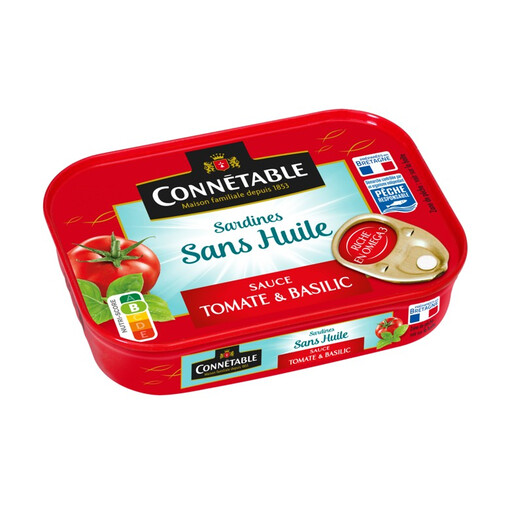 Image unavailable
A seasoned recipe to consider for a starter or toast. Check the ingredients list if the seasoning’s ingredients matter to your guests.
 Image unavailable
Sardines in extra virgin olive oil to serve with bread or potatoes. If the quantity of fish is important for two portions, check the drained net weight on the packaging.
 Image unavailable
Small sardines to consider for toast or a salad. The product title gives a net weight of 115 g and a drained net weight of 81 g. Use the latter to plan your portions.
 Image unavailable
A recipe with Espelette pepper for guests who want this seasoning in their starter. It isn’t a like-for-like substitute for plain sardines, so check the ingredients before adding it to your dish.
 Image unavailable
The boneless option works well on toast or in a salad when you’d rather not remove the central bone. This sardine recipe in water is different from sardines in olive oil, so choose according to the seasoning you have in mind for the meal.
Check the net weight of each tin and, where it’s given, the drained net weight. This helps you work out how much fish there is once the covering liquid has been drained. Then choose the number of tins based on whether the sardines are for a starter, toast or part of the main meal.
Fillets or sardines explicitly labelled boneless mean you won’t need to remove the bones while preparing the toast. Whole sardines are still an option if their appearance and texture suit both of you.
Follow the instructions on the tin you’ve bought and refrigerate the product if the label says to. For the products concerned, Auchan and Saupiquet state that they should be eaten within two days of opening. Auchan gives a storage temperature of 0 to +4 °C for its boneless option.
Check the full ingredients list on the packaging before serving the recipe. The Directorate-General for Competition Policy, Consumer Affairs and Fraud Control states that allergenic ingredients must be highlighted on the labels of prepacked foods. Sardines are not suitable for anyone with a fish allergy.