When you’re doing your first shop, the words ‘reduced sugar’ aren’t enough to help you choose sardines. Connétable and Saupiquet’s sardine fillets in brine contain 0 g and less than 0.2 g of sugars per 100 g respectively, while Connétable’s tomato recipe with no added oil contains sugar. Check the ‘of which sugars’ line and the ingredients on each tin, then choose according to whether you prefer a simple recipe, boneless sardines or extra seasoning.
Who are these criteria useful for?
People keeping an eye on sugar
If you want to keep an eye on sugar from your first shop, check both the ‘of which sugars’ line and the ingredients, particularly for sardines in tomato sauce or marinade. Connétable and Carrefour’s recipes show why a sauce’s name alone doesn’t tell you what it contains.
People looking for a tin that’s easy to serve
If you find bones off-putting, look specifically for sardines described as boneless, and possibly skinless too. An option from Connétable listed by Auchan has both features, making it easy to serve on bread or in a salad.
People stocking up on cupboard essentials
If you’re planning a few simple meals, choose a recipe that suits the way you’ll use it rather than focusing only on sugar. Ingredients, oil, salt, drained weight and storage instructions after opening can also help you choose between two tins.
Which criteria should you check first?
For your first shop, start by deciding what matters most to you: checking sugar, serving the sardines easily or having a tin that works in several meals.
| Criteria |
What to check |
Who is it for? |
| Sugars |
Compare the ‘of which sugars’ value per 100 g with the ingredients list, particularly for sauces and marinades. |
If I’m choosing a seasoned recipe, I want to know what’s in it before adding it to my basket; around 30% of consumers put checking sugars first. |
| Easy to serve |
Look for ‘boneless’ and ‘skinless’ on the label, as well as the drained net weight. |
For my first meals, I’d rather have a tin I can serve without having to remove the bones; ease of use comes first for around 40% of consumers. |
| Versatility |
Check the recipe, fat and salt per 100 g, then read the instructions for after opening. |
If I want to use the same tin in different meals, I want to choose its seasoning to suit what I plan to make; around 30% of consumers prioritise this versatility. |
Mistakes to avoid
-
Assuming ‘no oil’ means ‘no sugar’
These claims answer different questions. Connétable’s tomato recipe with no added oil contains sugar in its ingredients and has 1.0 g of sugars per 100 g.
Check the ingredients, sugars and fat separately for the product you’re choosing.
-
Going by the flavour of a marinade alone
Two lemon and basil recipes can have different ingredients: Carrefour lists 0.59 g of added sugars per 100 g for its product, while Auchan lists less than 0.5 g of sugars per 100 g for its version. These figures don’t measure the same thing.
To compare two tins, start with the ‘of which sugars’ value per 100 g and read the ingredients.
-
Forgetting about bones and drained weight
A tin may suit you in terms of its recipe but not meet your preference about bones. Its net weight may not be the same as the amount available after draining.
If these details matter to you, look for ‘boneless’ on the label and compare the drained net weights.
-
Treating an opened tin like an unopened one
For the Connétable boneless and skinless sardines listed by Auchan, the instructions say to refrigerate any leftovers and eat them within two days of opening.
Follow the instructions on your tin and choose a size that suits the amount you plan to use.
Brands to know and compare
Saupiquet
Its sardine fillets in brine provide a useful comparison with the brand’s more highly seasoned recipes.
- According to Saupiquet, its sardine fillets in brine contain sardine fillets, water and salt, and have less than 0.2 g of sugars per 100 g.
- Its whole sardines with chilli have 0 g of sugars, but also contain 15 g of fat per 100 g, so check each recipe separately.
Connétable
Its range lets you compare a plain recipe, boneless sardines and a tomato recipe with no added oil.
- Connétable lists 0 g of sugars per 100 g for its Sardine Nature.
- Its tomato recipe with no added oil contains sugar in its ingredients and has 1.0 g of sugars per 100 g.
Carrefour Classic'
The lemon and basil recipe is an example of seasoned sardines whose ingredients are worth checking individually.
- Carrefour offers a lemon and basil recipe for anyone looking for this kind of seasoning.
- Carrefour says this product contains sugar in its ingredients and has 0.59 g of added sugars per 100 g.
Pêche Océan / Marque Repère E.Leclerc
Its sardine fillets in brine let you check a short ingredients list and the drained weight before buying.
- According to E.Leclerc, Pêche Océan sardine fillets in brine contain sardine fillets, water and salt, and have 0.2 g of sugars per 100 g drained.
- To compare portions, use the drained weight shown on the tins you’re considering.
Auchan
Its sardines in brine and in olive oil show how your choice of seasoning is separate from your choice about sugars.
- Auchan lists less than 0.5 g of sugars per 100 g for each of these products.
- The sardines in brine contain 6.2 g of fat per 100 g, compared with 12 g for the olive oil version; these figures apply to these specific products.
Sardines to consider on Joybuy
These tins include one recipe in water, two in oil and one with tomato and basil. For your first shop, start by choosing the type of preparation that suits you, then compare the nutritional information and ingredients for the exact product.
 Image unavailable
Connétable Boneless Sardines in Water, 98 g
Worth considering if you’re looking for sardines in water and prefer to avoid bones. Check the drained weight and whether or not they have skin if these details matter to you.
View on Joybuy
 Image unavailable
Connétable Sardines in Extra Virgin Olive Oil, 140 g
Worth considering if you’d prefer a recipe in extra virgin olive oil rather than one in water. Compare its sugars and fat per 100 g with those of the other tins you’re interested in.
View on Joybuy
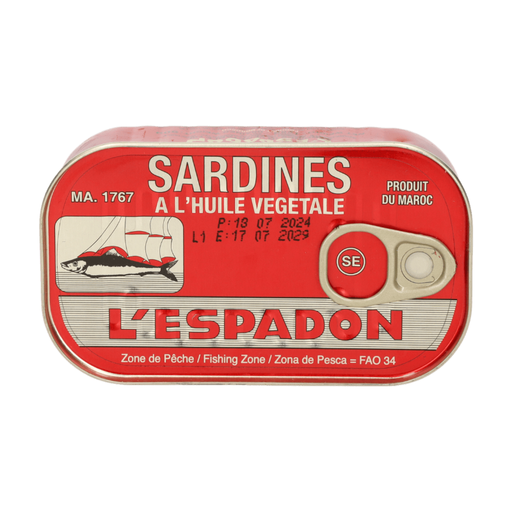 Image unavailable
L`Espadon Sardines in Oil, 125 g
Another recipe in oil to compare when stocking your cupboard. If bones or the amount left after draining could influence your choice, check these details on the tin.
View on Joybuy
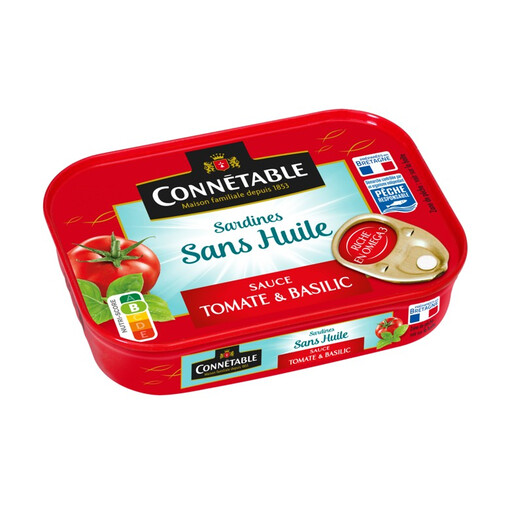 Image unavailable
CONNECTABLE Sardines with Tomato and Basil, 1/6 tin, 115 g
Worth considering if you prefer a tomato and basil recipe. As with any seasoned recipe, read the ingredients and the ‘of which sugars’ line. Check for bones and the drained weight too, if needed.
View on Joybuy
Frequently asked questions
Are sardines with no oil always sugar-free?
No. Connétable lists sugar in the ingredients of its tomato recipe with no added oil, which has 1.0 g of sugars per 100 g. Check these two details separately.
How can I compare two tins of sardines?
Compare the nutritional values per 100 g, then check the ingredients, drained net weight and information about bones. The DGCCRF says that displaying nutritional values per 100 g makes it easier to compare products.
What should I do with leftover sardines after opening?
Follow the instructions on the tin and refrigerate any leftovers if instructed to do so. For the Connétable boneless and skinless sardines listed by Auchan, the instructions say to eat them within two days of opening. Check the time limit for any other product.
Do sardines in oil necessarily contain more sugars?
No, you can’t work out the sugar content from the type of oil. Auchan lists less than 0.5 g of sugars per 100 g for its sardines in brine and in olive oil, even though their fat content differs. Compare each value according to what matters most to you.


