People who compare labels
You want to check the carbohydrates, sugars, fat, salt and ingredients, then compare the figures per 100 g with the amount you plan to serve. France’s Assurance Maladie recommends using the 100 g basis to compare products.


For diabetes-conscious shopping, compare the ingredients and nutritional values per 100 g, then consider how much you plan to serve. A multipack is a good choice for households that eat sardines regularly. A single tin or a boneless option may suit an occasional meal or a particular texture preference better, but the pack format alone won’t tell you about the product’s nutritional composition.
You want to check the carbohydrates, sugars, fat, salt and ingredients, then compare the figures per 100 g with the amount you plan to serve. France’s Assurance Maladie recommends using the 100 g basis to compare products.
You eat sardines often enough to consider buying several tins. Compare the number of tins and their weight: a multipack alone doesn’t tell you the composition of each recipe.
You’re looking for a boneless option that’s easier to serve or eat. Check the label for that specific product too: being boneless doesn’t tell you its nutritional values.
To choose between a multipack, a single tin and a boneless option, start with the recipe and the amount you’ll actually eat. Then work out how many tins you need for the meals you have planned.
| Criteria | What to check | Who it’s for |
|---|---|---|
| Ingredients and portion size | Compare carbohydrates, sugars, fat and salt per 100 g; check the ingredients and serving size. | If I’m planning a meal with diabetes in mind, I want to compare the specific recipe rather than rely on the product name alone. Around 36% of consumers would prioritise this need. |
| Stocking up on several tins | Check the number of tins, their weight and the best-before date. | If sardines feature regularly in my household’s meals, I prefer to have several unopened tins to hand. This would be the main priority for around 29% of consumers. |
| Meal size | Check the net or drained weight per tin and the storage instructions after opening. | If I only eat sardines occasionally, I look for an amount that suits the meal and helps avoid leftovers. Around 21% of consumers would prioritise this. |
| Boneless sardines | Look for the words ‘boneless’, then compare the ingredients and nutritional values for that version. | If bones bother me, I want sardines that are easier to serve. This would be the top preference for around 14% of consumers. |
The 2 × 140 g and 3 × 135 g multipacks listed by Auchan and E.Leclerc respectively are different products. The number of tins doesn’t tell you what the ingredients or nutritional values are.
Compare the label for each recipe, then choose the number of tins to suit the meals you have planned.
Connétable states that its sardines in extra virgin olive oil contain 0.90 g of salt per 100 g of drained fish; Auchan lists 0.54 g of salt per 100 g for its boneless sardines in olive oil. These figures relate to two specific products and don’t represent their entire ranges.
Compare the figures per 100 g on the tins you’re considering, then take the amount you’ll serve into account.
The listings for the Connétable multipack and Auchan’s boneless sardines, both presented by Auchan, say to refrigerate after opening and consume within two days or 48 hours, depending on the product.
Choose a tin size that suits your meal and follow the instructions on the tin you buy.
A tin that’s too large for your meal may leave you with leftovers that need to be eaten quickly.
France’s Assurance Maladie reminds shoppers to check the ingredients and nutritional values. E.Leclerc notes that the Nutri-Score shown on its Pêche Océan multipack listing is based on the previous calculation, which predates April 2025.
Use the logo as an extra guide, and check the ingredients, values per 100 g and weight of the product you choose.
The brand offers whole sardines, boneless options and multipacks.
Saupiquet offers whole sardines and fillets, including recipes in olive oil.
This own-label range includes a 135 g tin of sardines in extra virgin olive oil.
The range includes sardines in olive oil in single tins and multipacks, as well as sardines in spring water.
Auchan offers, among other options, a 100 g tin of boneless sardines in olive oil.
These individual tins show a range of recipes and weights to compare for the meals you have planned, including sardines in water, in olive oil and flavoured varieties. If you’re stocking up, work out separately how many tins you’ll need.
 Image unavailable
Worth considering if you find bones off-putting and want to compare sardines in water with varieties in oil. Check the nutritional information for this product against the amount you plan to serve.
 Image unavailable
For sardines in oil, compare the ingredients and nutritional values on this tin with those of the other products you’re considering. Adjust the serving size to suit your meal.
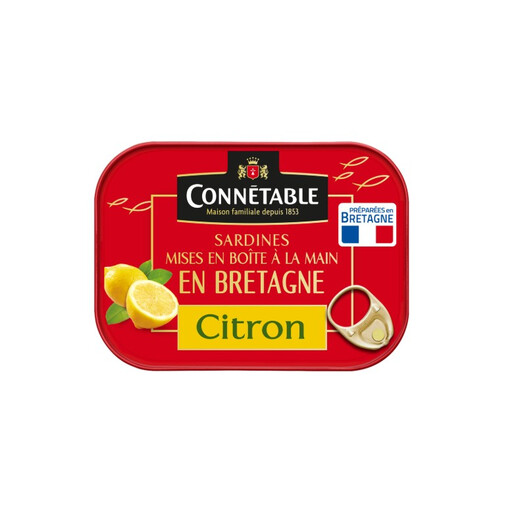 Image unavailable
If you’re considering a lemon-flavoured recipe, compare its ingredients and nutritional values with those of an unflavoured variety. The listed pack size is a 115 g tin.
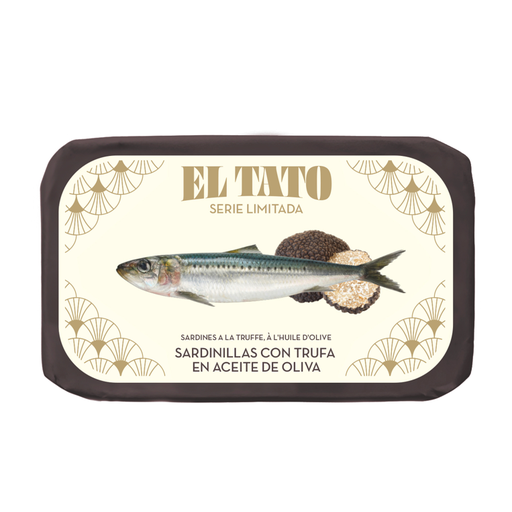 Image unavailable
Compare this flavoured recipe using its own ingredients list and nutritional values per 100 g. The tin contains 115 g in total, with 81 g drained. Once opened, follow the storage instructions and eat any leftovers within 24 hours.
 Image unavailable
This 135 g tin gives you another size to consider when planning a meal. Compare its label with that of the 140 g CONNÉTABLE product rather than assuming the pack sizes or compositions are the same.
No. You can’t tell whether a meal meets someone’s individual needs from one recipe alone. When comparing tinned fish, France’s Assurance Maladie recommends checking the nutritional values per 100 g. You should also look at the ingredients and how much you plan to eat.
Compare the number of tins, their weight and the meals you plan to use them for. To check the composition, read the ingredients and nutritional values for each product on the same per-100 g basis: you can’t tell these from the pack format.
Follow the instructions on the tin you’ve bought. The listings for Connétable and Auchan products presented by Auchan say to refrigerate after opening and consume within two days or 48 hours, depending on the product.
Check details such as the product name, ingredients, net quantity, nutritional values and the date shown on the product. France’s DGCCRF lists these among the labelling information required for pre-packed foods in France. They can also help you compare tins before buying.
Visit RappelConso, the French public product recall website, and use the details on your tin and its batch to identify the product concerned.