If sustainable fishing is a priority for you, check for the MSC logo on the tin of sardines you’re planning to buy. A claim about the brand or another recipe isn’t enough. For a camping meal, choose a portion you can finish if you won’t be able to refrigerate any leftovers, then compare the recipe, drained weight and storage instructions once opened.
Who are these criteria useful for?
Campers who care about certification
You want to be able to identify the certification on the tin you choose. The Marine Stewardship Council explains that its programme combines fishery certification with product traceability, so look for the MSC logo on the specific tin.
Campers without refrigeration after opening
You’re planning a meal where you’ll finish the whole tin. Auchan’s product information for Parmentier MSC sardines says to refrigerate them after opening, so the tin size matters just as much as the recipe.
Hikers planning a no-cook meal
You’re deciding between sardine fillets in water and whole sardines in oil. Check the preparation method, drained weight and nutritional information for each product so you know how much you’ll actually be serving.
What should you check before buying?
When choosing sardines to take camping, first check the certification if that’s what matters most to you, followed by the portion size and storage instructions. The recipe can then help you decide which tin best suits your meal.
| Criterion | What to check | Who it matters to |
|---|
| MSC certification |
Look for the MSC logo on the tin of the recipe you’ve chosen, not just on a brand page. |
I want to see certification linked to this particular tin before I take it with me. Around 36% of consumers prioritise seeing this proof on the tin. |
| Portion size and leftovers |
Compare the net weight with the drained weight, then read the instructions for after opening. |
If I can’t refrigerate an opened tin, I’d rather plan an amount I can finish with my meal. This is the priority for around 29% of consumers. |
| No-cook meals and salt |
Check how the sardines are intended to be eaten and compare the salt per 100 g on the labels. |
For a meal without cooking, I look for a preparation that suits what I’m making and check the salt content too. Around 21% of consumers put this need first. |
| Recipe and origin |
Check whether the tin contains fillets or whole sardines, how they’re prepared and what traceability information is provided. |
I choose the recipe I’d like to serve first, along with any origin information that matters to me. Around 14% of consumers prioritise this criterion. |
Mistakes to avoid
-
Confusing a brand promise with the label on the tin
According to the Marine Stewardship Council, the MSC label applies to products from a certified fishery that are tracked through the supply chain. It doesn’t automatically apply to every recipe from a brand.
If this certification is important to your buying decision, look for the logo on the tin of sardines you’ve chosen.
-
Planning your meal around an outdated product listing
Carrefour’s product listing for MSC sardine fillets in water says they should be eaten cold, but also noted that they were unavailable. Spotting a recipe in a catalogue isn’t enough to plan your meal.
Check that the product is available before you set off. If you need to choose another tin, use certification, format and recipe as your criteria.
Finding an alternative at the last minute can take time.
-
Opening a tin that’s too large without planning for leftovers
Instructions for after opening vary by product. Auchan’s product listing for Parmentier MSC sardines says to refrigerate them and eat them within two days.
If you can’t store leftovers as instructed on the label, choose an amount you can finish with your meal.
-
Comparing tins without checking what’s inside
The amount of fish you’ll serve and its salt content vary by product. Connétable’s product listing for sardines in extra virgin olive oil gives 0.90 g of salt per 100 g of drained fish; Auchan’s listing for the Parmentier MSC product gives 1.2 g per 100 g.
Compare the nutritional values on the same basis and check the drained weight to plan your portions.
Brands and retailers to consider
Connétable
The brand offers whole sardines in extra virgin olive oil, among other products, and provides traceability information for some of its products.
- According to Connétable, its sardines in extra virgin olive oil contain 24 g of protein and 0.90 g of salt per 100 g of drained fish.
- The traceability information provided for its Label Rouge sardines doesn’t prove that every recipe carries the MSC label, so check the tin you choose.
Saupiquet
Saupiquet’s sardine range includes both whole sardines and fillets.
- These two options let you choose based on the recipe and how you’d like to serve the fish.
- If MSC certification is a deciding factor, check for the logo on the specific recipe you’re buying.
Parmentier
Auchan lists a Parmentier MSC product containing whole sardines in organic extra virgin olive oil, with 90 g of drained fish.
- For this product, Auchan’s listing brings together the drained weight, MSC label and recipe details.
- It gives a salt content of 1.2 g per 100 g and says to refrigerate after opening and eat within two days.
Carrefour
A Carrefour product listing describes MSC sardine fillets in water, to be drained and eaten cold.
- The listing describes a preparation made with sardine fillets, water and salt.
- Check that this product is available before relying on it for your meal.
Sardines for putting together a camping meal
These tins offer recipes in water or oil for a no-cook meal. If the MSC label is your top priority, check that it appears on the tin of each product before choosing. Also consider how much you’ll serve and the instructions for after opening.
 Image unavailable
Connétable Sardines in extra virgin olive oil, 135 g
An oil-based recipe to consider for a cold meal. If certification guides your purchase, check for the MSC logo on this tin.
The product name gives a net weight of 135 g. Check the drained weight and instructions for after opening before planning your portions.
View on Joybuy
 Image unavailable
Connétable Boneless sardines in water, 98 g
If you’d prefer sardines in water without the central bone, compare this recipe with the oil-based options to find one that suits your menu.
The product name gives a net weight of 98 g. Check the tin for the MSC label, drained weight and storage instructions after opening.
View on Joybuy
 Image unavailable
Connétable Sardines in extra virgin olive oil, 140 g
This oil-based recipe could work in a cold meal if the portion is right for the number of people you’re serving.
The product name gives a net weight of 140 g. To find out how much fish you’ll be serving, distinguish this from the drained weight. Also check for the MSC logo on the tin.
View on Joybuy
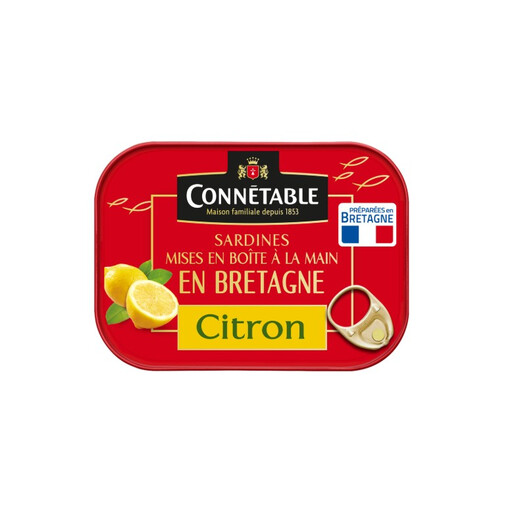 Image unavailable
CONNECTABLE Sardines in extra virgin olive oil and lemon, 1/6 tin, 115 g
Worth considering if you’d like a lemon recipe for a no-cook meal and can adjust the amount to suit your plans.
The product name gives a net weight of 115 g and a 1/6 tin format. Check the label for the drained weight, MSC label and storage instructions after opening.
View on Joybuy
 Image unavailable
Connétable Sardines in olive oil and Espelette pepper, 1/6 tin, 115 g
This Espelette pepper recipe is for anyone looking to add variety to the flavour of a cold meal.
The product name gives a net weight of 115 g and a 1/6 tin format. Check the drained weight, whether the tin carries the MSC logo and the instructions for after opening.
View on Joybuy
Frequently asked questions
How can you identify MSC-certified sardines?
Look for the MSC logo on the specific tin you’re buying. The Marine Stewardship Council distinguishes between fishery certification and product traceability through the supply chain, so a label on another recipe doesn’t tell you whether your tin is certified.
Can you keep an opened tin until the next day when camping?
Only if you can follow the storage instructions for that particular tin after opening. Auchan’s product listing for Parmentier MSC sardines says to refrigerate them and eat them within two days. If you can’t keep them chilled, plan to finish the portion with your meal.
Sardine fillets in water or whole sardines in oil for a cold meal?
Choose based on the preparation you want to serve and the portion you need, rather than assuming one recipe suits every meal better. Carrefour’s product listing for MSC sardine fillets in water says they can be eaten cold. For whole sardines in oil, compare the ingredients, drained weight and salt content of the product you’ve chosen.
What should you check about the date on a tin of sardines?
Read the wording next to the date on your tin, then check the storage instructions for after opening. The Ministry of the Economy distinguishes between a use-by date and a best-before date, and advises following the manufacturer’s storage recommendations.


