A sardine multipack makes most sense if you’re planning to serve them more than once over Christmas or want to keep some tins in the cupboard. Compare the drained weight and price per kilo, not just the number of tins. For your meal, choose a recipe and presentation to suit your guests. Fillets or boneless sardines can make serving easier, while an assortment lets you offer a range of flavours. Check the best-before date, the condition of the tins and the storage instructions after opening.
Which meals and guests are they for?
Hosts planning to serve them more than once
If sardines are on the menu for drinks, as a starter or at several meals over Christmas, a multipack can save you choosing tins one by one. E.Leclerc and Auchan catalogues feature various multipacks; compare their drained weight with the amount you plan to serve.
Guests who prefer boneless sardines
For easier serving, look for a product clearly labelled “boneless” or “fillets”. Connétable offers boneless sardines, while Saupiquet has fillets. Check the recipe and tin size of the product you choose.
Fans of toast and festive recipes
If you’re serving sardines straight on toast or adding them to a dish, first decide whether you want to season them yourself. The ranges featured by Carrefour, Saupiquet and Auchan include sardines in natural juices, in oil and with added seasoning.
What should you check before buying?
Work out how much you’ll need for the meal, then choose a presentation and recipe to suit your guests. If you’re also stocking up for the cupboard, check the size of each product before comparing multipacks with individual tins.
| What to consider |
What to check |
Who might prioritise it? |
| Quantity and pack size |
Number of tins, net drained weight and price per kilo, comparing like for like by retailer and purchase method. |
If I’m planning to serve sardines more than once, I want enough to serve without ending up with unused tins; around 25% of consumers would prioritise having a comparable quantity. |
| Variety at the table |
The contents of the assortment or the recipe in each tin, especially strongly flavoured seasonings. |
For a group with different tastes, I’d rather offer a choice of flavours than just one recipe; nearly 31% of consumers would make variety their priority. |
| Whether they contain bones |
Look for “boneless”, “fillets” or “whole”, then check how much each tin contains to serve. |
If some guests are unsure about whole sardines, I’d look for an easier-to-serve option; around 25% of consumers would put this first. |
| Recipe and storage |
Ingredients, nutritional information, best-before date and storage instructions after opening for the product you choose. |
If I’m planning to season the sardines myself or keep leftovers, I want to know the recipe and check the instructions on the tin; around 19% of consumers would prioritise this information. |
Mistakes to avoid
-
Counting tins instead of the sardines you’ll actually serve
Two multipacks with the same number of tins can come in different sizes. The total weight also includes the liquid they’re packed in, so it’s not a substitute for drained weight when working out how much to serve.
Note the drained weight of each product and estimate how much you’ll need based on the part sardines play in your menu. Then compare pack sizes and price per kilo.
-
Choosing just one recipe for everyone
Sardines in natural juices, in oil or with added seasoning aren’t necessarily used in the same way, especially if you’re serving them as they are.
If you don’t know what your guests prefer, check the ingredients and consider offering a few different recipes rather than buying several tins of just one flavoured variety.
-
Assuming all sardines are boneless
Whole sardines, fillets and boneless varieties suit different serving preferences.
If your guests would rather avoid bones, look for this clearly stated on the product you choose.
-
Putting an opened tin back in the cupboard
The best-before date applies to the product while it’s still in its intact packaging. Once opened, follow the storage instructions for that specific product.
Check the condition of the tin before opening, then follow the refrigeration and storage time instructions on the label. For its sardine fillets in olive oil, Saupiquet advises eating them within two days of opening.
Brands to consider for different recipes
Connétable
Connétable’s range includes whole sardines and a large-format tin of boneless sardines in natural juices.
- The boneless variety is worth considering if easy serving is important for your table.
- Check the size, ingredients and nutritional information for the specific recipe, as these vary from tin to tin.
Saupiquet
Saupiquet offers fillets and whole sardines in several recipes, including grilled varieties.
- The fillets are worth comparing if you’re planning to arrange the sardines on toast.
- For its sardine fillets in olive oil, Saupiquet advises refrigerating them after opening and eating them within two days. Check the instructions for any other variety.
Carrefour Classic'
This range makes it easy to compare sardines in natural juices with other formats available from Carrefour.
- The tin in natural juices featured by Carrefour contains sardines, water and salt, and lists a drained net weight of 95 g.
- If you’re buying a multipack, check what the offer includes and whether it’s available when you place your order.
Pêche Océan / Marque Repère E.Leclerc
The E.Leclerc catalogue features sardines in individual tins and multipacks, including 3 × 63 g and 3 × 135 g formats.
- These formats give you several quantities to compare, depending on how many times you plan to serve sardines.
- Check the drained weight and recipe of each multipack: the weight of a tin alone doesn’t tell you how much fish you’ll have to serve.
Auchan
Auchan’s range includes sardines in natural juices, in oil and with added seasoning, as well as fillets.
- These options make it easy to find both a base for cooking and a recipe ready to serve.
- Check the presentation and ingredients of the tin you choose rather than assuming a recipe’s features apply across the whole range.
Sardines to consider on Joybuy
These products are mainly a choice between fillets, boneless sardines and recipes in oil or water for serving at Christmas. If you’re also stocking up for the cupboard, check how many tins each offer includes and compare their drained weight.
 Image unavailable
EL TATO Sardine Fillets in Olive Oil, 115/81 g
Worth considering if you’d like to serve fillets on toast or in a salad.
The title lists 115/81 g; check the packaging to see what these two weights refer to before working out portions.
View on Joybuy
 Image unavailable
Connétable Sardines in Extra Virgin Olive Oil, 140 g
An olive oil recipe to consider if you’re planning to serve the sardines as they are.
The tin is listed as 140 g. Check the presentation and drained weight of this product if some guests would rather avoid bones or if you’re planning portions.
View on Joybuy
 Image unavailable
Connétable Boneless Sardines in Water, 98 g
Worth considering for a dish you’d like to season yourself or for guests who prefer to avoid bones.
The title lists 98 g; check the net drained weight on the tin to work out how much to serve.
View on Joybuy
 Image unavailable
Connétable Sardines in Extra Virgin Olive Oil, 135 g
Another size to consider if you’ve chosen an olive oil recipe for your meal.
This product is listed as 135 g, so don’t confuse it with the 140 g Connétable tin. Compare their drained weights to work out how much sardine you’ll have to serve.
View on Joybuy
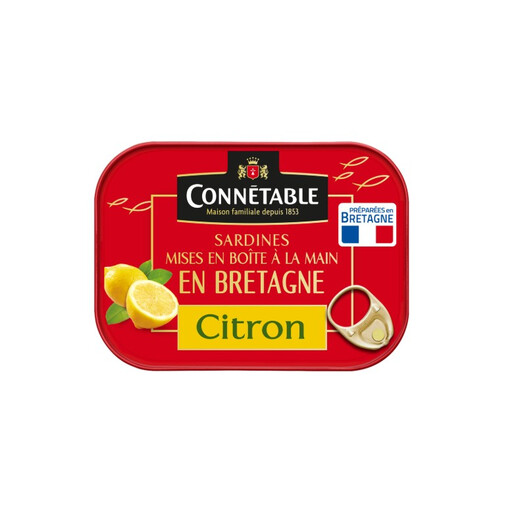 Image unavailable
CONNECTABLE Sardines in Extra Virgin Olive Oil and Lemon, 1/6 tin, 115 g
Worth considering if you’d like to offer a lemon-flavoured recipe among the sardines served at Christmas.
The title lists a 1/6 tin of 115 g. Check the drained weight and the number of tins included before comparing it with a multipack.
View on Joybuy
Frequently asked questions
Can you eat sardines after their best-before date?
A past best-before date doesn’t automatically mean the tin needs to be thrown away. The DGCCRF says that a product may still be eaten if its packaging is intact, although its taste may have changed. Check the condition of the tin and don’t confuse a best-before date with a use-by date.
How should you store sardines after opening?
Follow the instructions for the product you’ve bought and refrigerate it if the label says to. For its sardine fillets in olive oil, Saupiquet advises eating them within two days of opening. Check the storage time for other tins.
What size tin of sardines should you buy for Christmas drinks?
Choose a size based on how much sardine you plan to serve on toast, not just the number of tins. Check the net drained weight. An assortment can offer a range of flavours, while a multipack of the same recipe is a good choice if you already know how you’ll use each tin.


