
Livraison le jour même ou le lendemain

Qualité garantie

Débloquez vos offres de bienvenue: Livraison GRATUITE | Jusqu'à -80 % | 30 jours d'essai gratuits à JoyPlus
Téléchargez l'application
A drawer overflowing with knives that have lost their edge, a countertop overrun by an army of blades for a single recipe… Sound familiar?? The dream of many home cooks is simple?: to find the one versatile kitchen knife that transforms the chore of prep work into a genuine pleasure. Hailing from Japan, the Santoku knife often emerges as the ideal solution.
Its name means "three virtues," referring to its ability to slice, dice, and mince with surprising ease. But with the jungle of available models, how do you find your way?? This guide is here to help you navigate the options and choose the perfect Santoku for your daily needs by breaking down essential criteria like materials and ergonomics.
Before diving into our top picks, let's review the key factors that should guide your choice.
The blade is the soul of the knife. Its composition determines its edge retention, corrosion resistance, and ease of maintenance. For regular home use, a stainless steel knife is the most practical choice.
The Santoku's silhouette, with its downward-curving tip and a straighter edge than a European chef's knife, makes it particularly formidable for thinly slicing vegetables with a vertical chopping motion.
A good grip is crucial for working with precision and safety. The handle material affects not only the knife's balance but also its upkeep.
Here are a few models that caught our eye for their design and suitability for daily use.
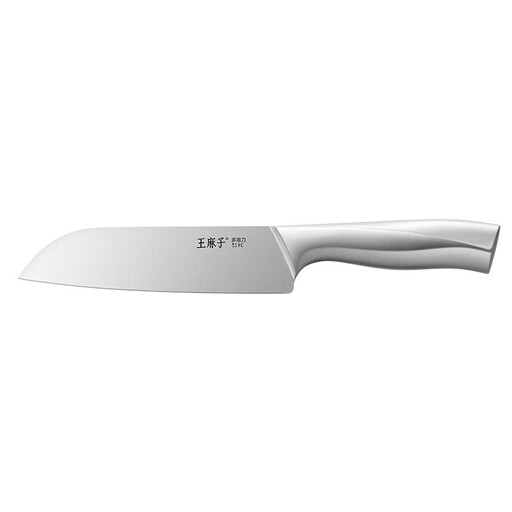
Why it stands out?: This model is a powerhouse of durability and simplicity. Its single-piece, all-stainless-steel construction, from tip to pommel, makes it an extremely durable and easy-to-clean ally.
Advantages?:
Who is it for???: Ideal for cooks who prioritise practicality, durability, and minimal maintenance. Its modern design will fit naturally into contemporary kitchens.
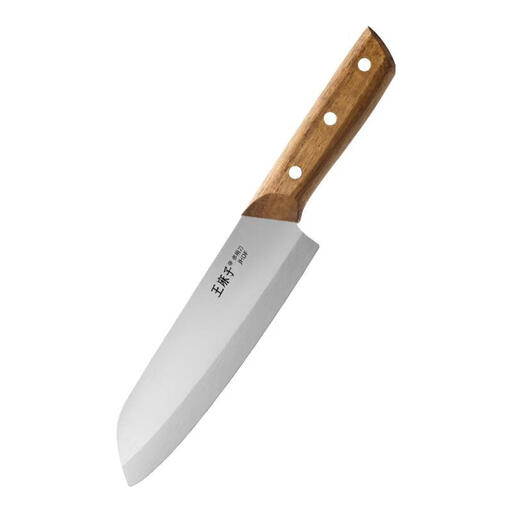
Why it stands out?: This Wangmazi knife combines the performance of a stainless steel blade (400 series) with the elegance of an acacia wood handle. It will appeal to those who prefer a more traditional feel with its warm, comfortable grip.
Advantages?:
Who is it for???: Perfect for those who appreciate the warmth and feel of wood and are looking for a knife that blends functionality with authentic design.
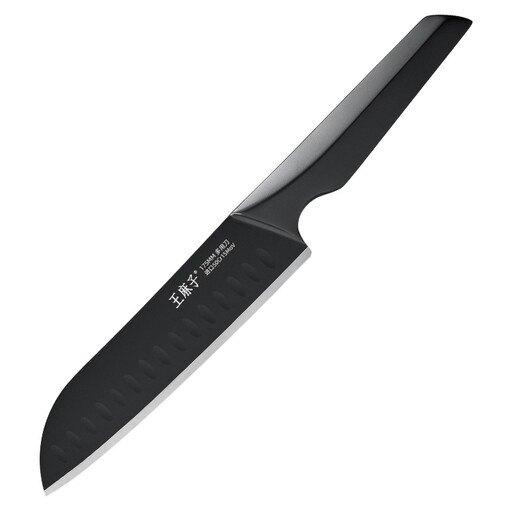
Why it stands out?: This is a step up in quality, featuring a blade made of German 50Cr15MoV steel. This superior steel offers better edge retention. In practical terms, it stays sharp longer and therefore requires less frequent sharpening.
Advantages?:
Who is it for???: For passionate cooks who do a lot of prep and want to take their cutting to the next level, without the hassle of complex professional equipment.
The Santoku is a fantastic all-purpose knife, but every cook has their own preferences. If you want to explore other blade shapes or compare different types of knives for specific tasks, other options are available.
? Explore our full collection of Multipurpose Kitchen Knives to discover other models.
The main difference lies in the blade shape and the resulting cutting technique. The Western chef's knife has a more curved blade, which is ideal for a rocking motion. The Santoku knife, on the other hand, has a straighter edge and a lowered tip, making it better suited for a vertical chopping motion. It is often shorter and lighter, and therefore more nimble for many users.
A few simple steps are all it takes to maintain your knife's quality. It's best to wash it by hand with a soft sponge and dry it immediately to prevent any spots or risk of corrosion, even on stainless steel. Avoid the dishwasher?: its harsh detergents and the potential for collisions can damage both the blade and the handle. Regular honing with a honing steel or a whetstone will help maintain a perfect edge.
Yes, absolutely. Its versatility makes it an excellent first high-quality knife. It allows you to perform most cutting tasks (vegetables, boneless meats, fish) with a single tool. Its compact size and balanced weight make it less intimidating than a large chef's knife, making it a perfect kitchen essential for getting well-equipped without overcomplicating things.