
Livraison le jour même ou le lendemain

Qualité garantie

Débloquez vos offres de bienvenue: Livraison GRATUITE | Jusqu'à -80 % | 30 jours d'essai gratuits à JoyPlus
Téléchargez l'application
As a product expert at Joybuy, my role is to help you navigate the complex world of tool consumables. Choosing the right sanding sheet for your sander?? It seems simple enough. Yet, factors like compatibility, grit, and durability can turn a sanding job into a chore or, conversely, guarantee a perfect finish.
Whether you're a seasoned artisan or a passionate DIYer, you know that a meticulous sanding job is the cornerstone of any successful project. That's why it's crucial to have the right equipment, without breaking the bank. This guide is here to help you find the ideal sandpaper set, focusing on versatile and cost-effective solutions for your work on wood, metal, or paint.
Before we get to our top picks, let's review the essential points for making a smart purchase that's perfectly suited to your needs and your tools.
This is fundamental, but it bears repeating: the abrasive must be perfectly compatible with your machine.
A single grit can't do it all. A proper sanding job is done in several stages, using progressively finer grits. Opting for a grit assortment is therefore by far the most practical and cost-effective solution.
For general-purpose work on wood and metal, aluminium oxide abrasive is the undisputed standard. It offers the best balance of cutting power, longevity, and price. It's the material found in almost all consumer and professional-grade sets.
We've selected three abrasive sets that tick all the boxes: versatility, an unbeatable quantity-to-price ratio, and compatibility with the most common sanders.
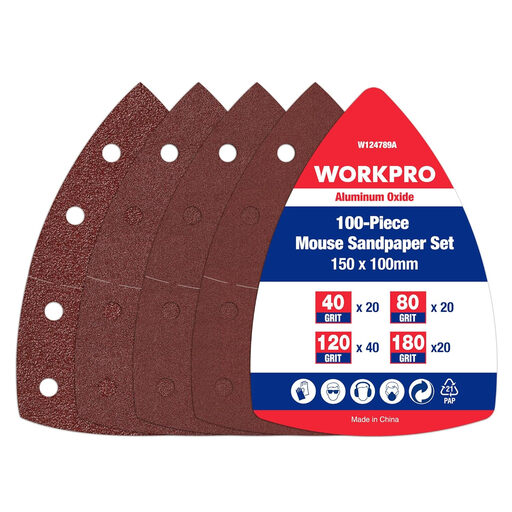
Why we chose it
This set is tailor-made for owners of delta sanders or multi-tools. Its clever 2-in-1 design allows each sheet to be split in two, offering incredible flexibility for precision jobs like furniture restoration or sanding shutters.
Key features
Who is it for?
For DIYers and artisans equipped with a triangular detail sander. It's the perfect set to cover the entire sanding process, from rough stripping to final finishing, on projects that demand precision.

Why we chose it
This pack is the Swiss Army knife for owners of orbital finishing sanders. With its standard format and a grit assortment focused on the most common applications, it's an excellent stock of consumables for sanding medium-sized flat surfaces: doors, worktops, shutters, and more.
Key features
Who is it for?
Ideal for users of orbital finishing sanders who want a reliable supply for their renovation projects. The grit selection is perfect for preparing surfaces before painting or varnishing.
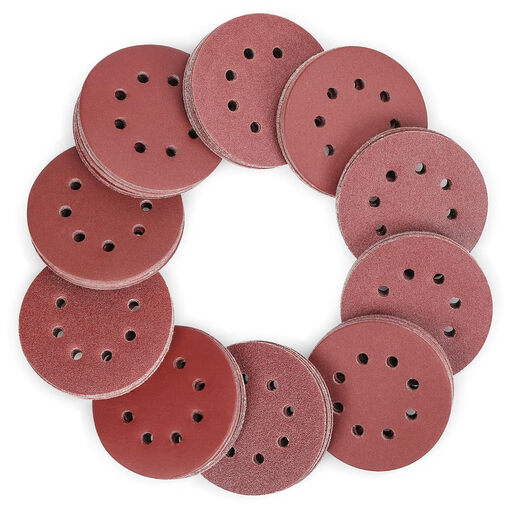
Why we chose it
With 150 discs, this is the most comprehensive and versatile set in our selection. Its 9 different grits (from 60 to 600) cover absolutely every stage of sanding, from the heaviest stripping to a mirror-like finish. A top-tier choice for professionals and demanding DIYers.
Key features
Who is it for?
For professionals (carpenters, painters) and heavy-duty DIYers equipped with a 125?mm random orbital sander. It ensures you always have the right grit on hand, no matter the project.
Is your surface perfectly smooth and ready for the next step? If you're planning to give your walls a new look, a polished finish is key.
? Discover our selection of Wall Coverings to complete your projects.
1. What grit of sanding sheet should I use for sanding wood?
It all depends on the condition of the wood and the finish you're aiming for.
2. How do I know if a sanding sheet is compatible with my sander?
Check three things on your sander:
3. Can you use the same sanding sheet for wood and metal?
Yes, aluminium oxide abrasives are versatile enough for sanding both wood and metal. However, it is highly recommended to dedicate separate sheets to each material. Sanding metal can leave behind particles that could scratch or stain a wooden surface. Furthermore, metal and wood wear down the abrasive differently.