
Livraison le jour même ou le lendemain

Qualité garantie

Débloquez vos offres de bienvenue: Livraison GRATUITE | Jusqu'à -80 % | 30 jours d'essai gratuits à JoyPlus
Téléchargez l'application
The Samyang Buldak Carbonara wins you over with its blend of spicy sauce, chicken and cheese. But when it comes to placing an order, the differences between a packet, a cup and a bowl are far from trivial. A convenient format can work out more expensive per portion, while a poorly chosen multipack might end up gathering dust at the back of a cupboard if the heat level or allergens don't match your habits.
Before you buy Korean instant noodles, take a moment to check three points that visuals and social media trends tend to push into the background.
The term "carbonara" mainly refers to creamy notes, with milk, cheese or cream powder. It does not mean the noodles are low in spice. Buldak recipes keep their chilli base and spicy chicken sauce.
The heat sensation can vary depending on the format, the amount of sauce used and your own tolerance. If you are new to spicy Korean ramen, start by using only part of the liquid sauce sachet. You can then increase the amount gradually.
A 105 g bowl, a 130 g packet and a multipack of 5 × 140 g do not serve the same purpose. The unit price alone is not enough to compare offers. Instead, look at:
A large pack can be worthwhile if you eat them regularly. Conversely, an individual format lets you try Buldak carbonara noodles without committing to several portions straight away.
Recipes can change depending on the market and the production batch. For people with allergies or those following a particular diet, the packaging of the product sold in the UK remains the most reliable source. The available references notably mention wheat or gluten, milk, soya and, in some cases, sesame. Traces of celery, egg, mustard, nuts or crustaceans may also be indicated.
The mention of halal Korean ramen must also be checked for each format. One reference may display a halal certification on its packaging, without that indication automatically applying to the entire Samyang range.
The packet usually requires a saucepan and a draining step. It is best suited to home or a equipped kitchen. The bowl or cup is prepared with boiling water and is more practical at the office, in student accommodation or on the go, provided you have a stable surface and a heat-resistant container.
The formats featured in this selection include:
Buldak noodles are generally thick and become soft after cooking. The stated preparation time is often around 4 to 5 minutes, but it is best to follow the instructions printed on the packaging. Some formats require you to keep a little cooking water before adding the sauce; others need you to fill the bowl to a line and then drain.
To achieve a well-blended carbonara sauce:
You can also add a well-cooked egg, vegetables or a ready-prepared source of protein. These ingredients will, however, change the nutritional value of the dish and do not alter the storage instructions.
The recipes for spicy chicken and cheese ramen often contain wheat flour, palm oil, soya, milk powder, cheese and chicken flavourings. For several references, the nutritional data is around 380 to 448 kcal per 100 g, with a salt content that may exceed 2 g per 100 g. The exact values vary depending on the product and the market.
These noodles should therefore be considered a quick meal to include in a varied diet, not a product with particular nutritional benefits. Always check the declaration on the packaging you receive.
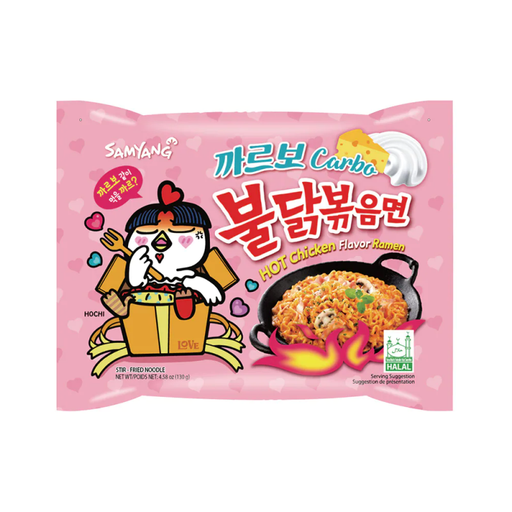
Why this choice suits this profile: The individual format lets you discover the spicy carbonara taste without buying a pack of several portions straight away.
The 130 g weight, the liquid sauce and the cheese powder are clearly stated. You can also adjust the amount of chilli to suit your preferences.
Thick noodles, a stated preparation time of around 4 minutes and an origin listed as South Korea.
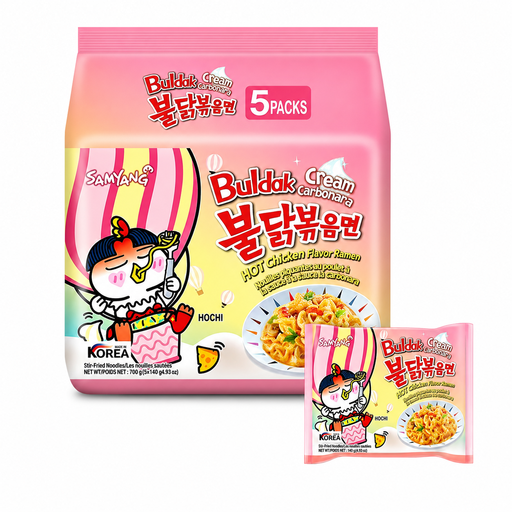
Why this choice suits this profile: This multipack focuses on 140 g portions and a sauce described as creamy and cheesy, for those seeking a more generous experience.
The total weight of 700 g is clearly stated. This makes it easy to calculate the cost per portion and avoid confusing the number of sachets with the actual weight purchased.
A multipack of 5 portions, cheese instant noodles and an origin listed as South Korea.
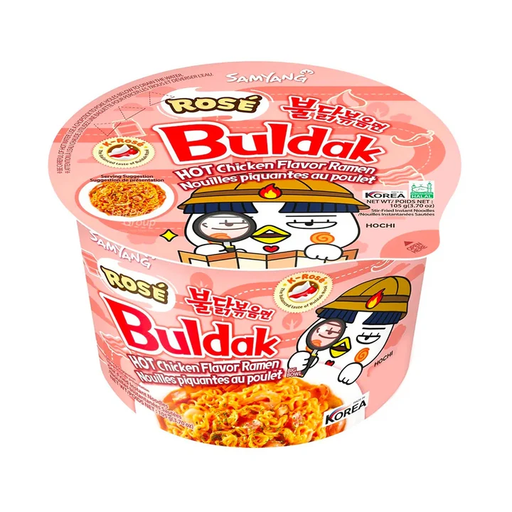
Why this choice suits this profile: With its 105 g and built-in container, this bowl is ideal for meals at the office, in student accommodation or on the go, when a saucepan is not easily available.
The built-in container means you do not need to buy an extra accessory, and the fill lines simplify preparation. However, check the halal certification on the packaging of the batch you receive.
A convenient bowl format, a creamy rosé-style sauce and a box available in 16 units depending on the reference selected.
We have selected a comprehensive, real-time updated list of products that meet these demanding selection criteria and European safety regulations.
Start by pouring in only part of the liquid sauce, then adjust the amount to your taste. A creamy ingredient or some vegetables can soften the sensation in your mouth, but they do not remove the chilli present in the recipe. Always refer to the instructions for the format you have chosen.
Keep it in a cool, dry place, away from heat, humidity and direct light. The best-before date is on the packaging. Once prepared, the noodles should be eaten immediately.
It depends on the reference and the market of distribution. Some listings mention a halal product, particularly for certain bowls, but the certification and labelling must be checked on the packet you receive. Also consult the list of ingredients and allergens before consuming the product.