
Livraison le jour même ou le lendemain

Qualité garantie

Débloquez vos offres de bienvenue: Livraison GRATUITE | Jusqu'à -80 % | 30 jours d'essai gratuits à JoyPlus
Téléchargez l'application
By Joybuy, our high-tech specialist – Published July 10, 2026
Buying a high-end television is a considered investment. Between the dizzying array of technologies and endless spec sheets, it's easy to get lost. This guide is here to demystify the 65-inch Samsung Neo QLED 8K TV segment, a true technological powerhouse. We will break down its features to help you decide if it's the right fit for you, whether you're a passionate cinephile, a demanding gamer, or simply looking for the centerpiece of your living room.
Choosing a television is about more than just its screen size. For such a significant investment, three technical criteria should be closely monitored.
8K resolution means four times more pixels than 4K, totaling over 33 million. The result is an image with breathtaking sharpness and detail, especially on a large 165 cm screen. The catch is that native 8K content is still rare. This is where 8K AI upscaling comes into play. Ultra-powerful processors, like the NQ8 AI Gen3 Processor, analyze the source image (HD, 4K) and use neural networks to reconstruct it to near-8K quality. This technology enhances textures, reduces digital noise, and sharpens edges, making all your content more immersive.
In a brightly lit living room, an anti-glare Samsung TV is a game-changer. Technologies like the Glare Free filter disperse ambient light to drastically reduce distracting reflections. This preserves deep blacks and vibrant colors, even in broad daylight. Aesthetics have also become a key purchasing criterion. The wireless One Connect Box is a brilliant solution: it offloads all connectivity (HDMI, USB, etc.) to an external box that communicates wirelessly with the screen. The result: a perfectly clean wall-mounted setup, without the usual jungle of cables behind the TV.
For gamers on next-gen consoles or PC, responsiveness is the name of the game. A good 8K gaming TV is not just about its resolution. It must feature a high refresh rate, such as 240 Hz (in 4K on some models), for rock-solid motion fluidity. The inclusion of HDMI 2.1 ports is non-negotiable to support 4K at 120 Hz signals, VRR (Variable Refresh Rate) which syncs the screen's frequency with the console, and ALLM (Auto Low Latency Mode) which automatically switches the TV to game mode for minimal latency.
Here is our selection of flagship models, for all needs and budgets.
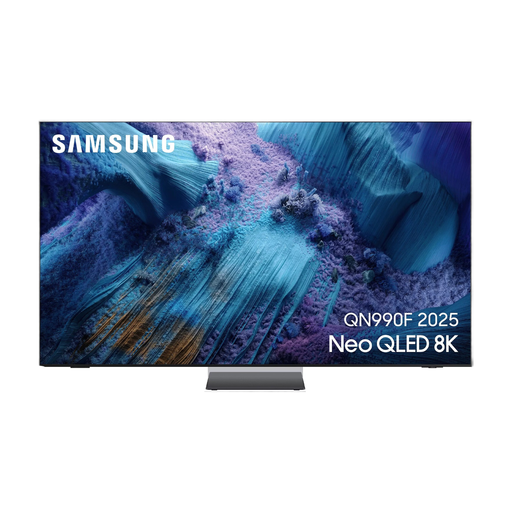
Why it stands out: This model is a true showcase of Samsung's latest innovations in picture quality, intelligent processing, and design. It was designed for those who refuse to compromise on the visual experience and its integration into their home.
Advantages:
Who is it for? Cinephiles seeking absolute immersion, tech enthusiasts who want the best of the best, and competitive gamers for whom every millisecond counts.
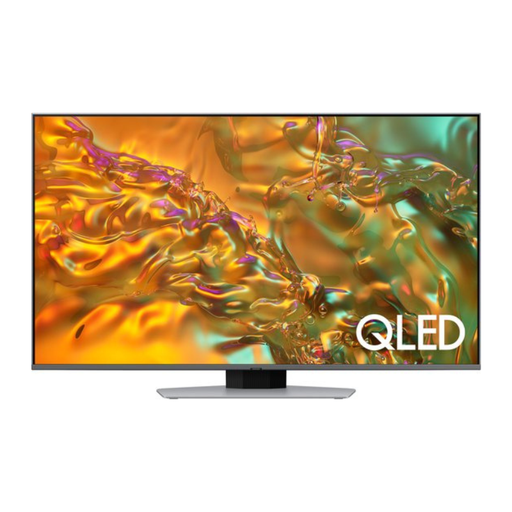
Why it stands out: The Q80D offers a highly refined 4K experience by inheriting technologies from higher-end models. It's the perfect middle ground for enjoying a sublime picture without necessarily switching to 8K.
Advantages:
Who is it for? Those looking for a top-tier 4K picture for movies and gaming, with a more controlled budget than for an 8K model.
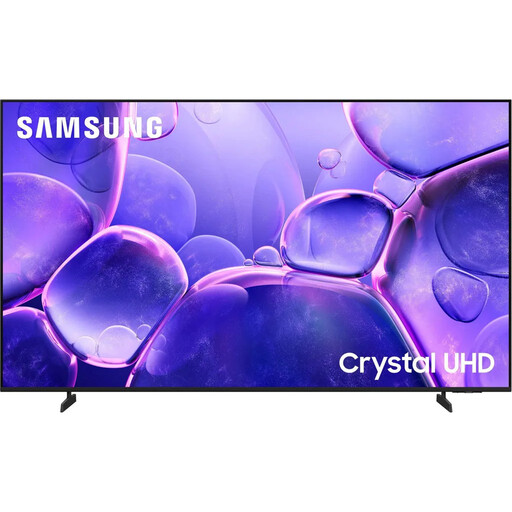
Why it stands out: This model is an excellent entry point into the world of Samsung 4K Smart TVs. It gets straight to the point: good picture quality and comprehensive connectivity.
Advantages:
Who is it for? For those looking for an efficient and reliable 4K TV for daily use (broadcast TV, streaming) without breaking the bank.
Do the models presented not check all your boxes? Want to compare with other technologies or simply see other sizes? Take a look at our complete selection of Samsung televisions. There you will find an extensive range to refine your choice.
The high price of a model like the Samsung TQ65QN990FTXXC is explained by the concentration of technologies it packs: 8K panel, Mini LED backlighting (Neo QLED), the brand's most powerful AI processor, advanced anti-glare treatment, and refinements like the wireless external box. Ultimately, justifying the price of the Samsung 65QN990F depends on the value you personally place on these cutting-edge performances and premium finish.
Simply put, Neo QLED is a major evolution of QLED. It replaces the classic LEDs of the backlight with Mini LEDs, which are up to 40 times smaller. This miniaturization allows for many more to be packed in and controlled by zones with greater finesse. The benefit is immediate: much sharper contrasts, abyssal blacks, and far more precise management of peak brightness.
Absolutely not. The real strength of current 8K TVs is their powerful 8K AI upscaling engine. The processor analyzes lower-resolution content (broadcast TV, 4K Blu-ray, streaming...) in real time and scales it up for display on the 8K panel. In practice, you get a visibly sharper and more detailed image from all your current sources, while you wait for native 8K content to become more widespread.