
Livraison le jour même ou le lendemain

Qualité garantie

Débloquez vos offres de bienvenue: Livraison GRATUITE | Jusqu'à -80 % | 30 jours d'essai gratuits à JoyPlus
Téléchargez l'application
Saltwater lure fishing is a demanding technique that leaves no room for improvisation. For enthusiasts who pursue fish from a boat, the choice of gear is absolutely crucial. Yet, even the most seasoned angler can feel overwhelmed by slick marketing jargon and opaque technical sheets. Before you pull out your credit card, it's vital to understand the common pitfalls that can turn a promising outing into a day of frustration.
As a product expert at Joybuy, my mission is to help you see things more clearly. Let's review the most common mistakes and the essential criteria to ensure your next boat fishing session is a success.
The 3 pitfalls to avoid before buying your gear?:
To avoid these disappointments, rely on objective technical specifications. Here are the 3 non-negotiable checkpoints before buying your saltwater lure fishing gear.
Matching your rod to your intended technique is paramount. Be careful not to confuse these two concepts?:
A good carbon rod will offer the winning trifecta?: lightness, resonance (for feeling the bottom and bites), and backbone (reserve power). These are indispensable assets for targeting sea bass and other marine predators.
At sea, a reel is put under serious strain. Two criteria must therefore take precedence over all others?:
The line is your one and only link to the fish. The choice of a PE fishing braid must therefore be made with the utmost care. The Japanese standard (PE) is a much more reliable indicator of diameter than the simple strength rating in kg. For the same strength, a thinner diameter cuts through the current better, allows for a faster drop, and provides a more direct contact with the lure.
As for lures, take a close look at the profile of an inchiku lure, for example. A low centre of gravity and an asymmetrical shape promote an attractive, fluttering action on the fall—the phase during which most strikes occur.
To help you put this advice into practice, here are a few cohesive setups, designed for specific angler profiles.
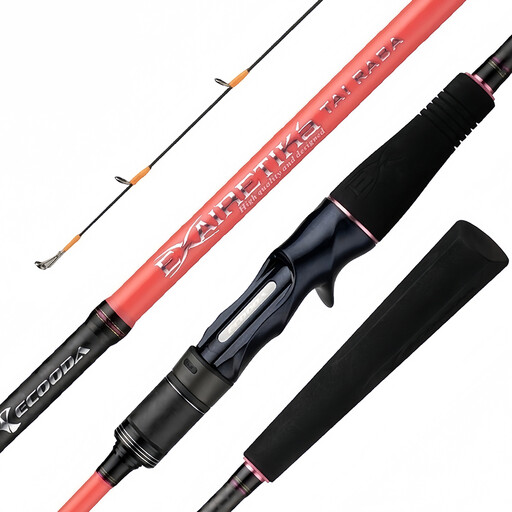
Why this choice: Specifically designed for tactile techniques (tenya fishing, Tai Rubber), where feeling the slightest bite is the key to hooking sea bream, porgies, and giltheads.
Unlike an "all-in-one" rod, its parabolic action and solid tip are optimised for working an inchiku lure gently and preventing hook pulls on fish with soft mouths.
Its ultra-sensitive solid tip transmits even the most subtle bites, even in weak currents.
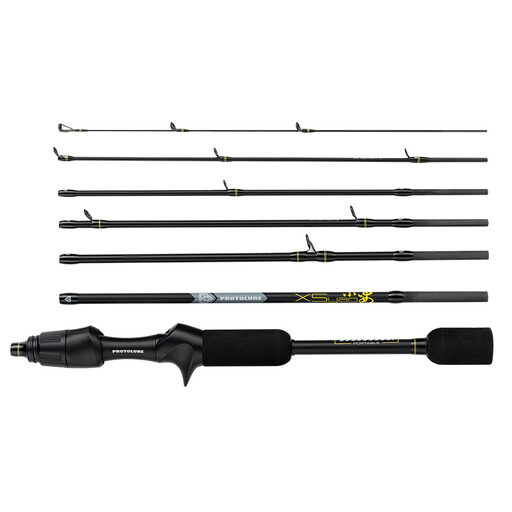
Why this choice: A crisp and lightweight sea bass rod, perfect for casting and working topwater lures or soft plastics at long range, whether combing the edges or targeting feeding frenzies.
It has the necessary backbone to control a good-sized sea bass while maintaining excellent sensitivity. This is a balance that's impossible to find in a heavy jigging rod.
Its highly responsive carbon rod blank ensures surgical casting accuracy and a perfect read of the bottom and the finest bites.
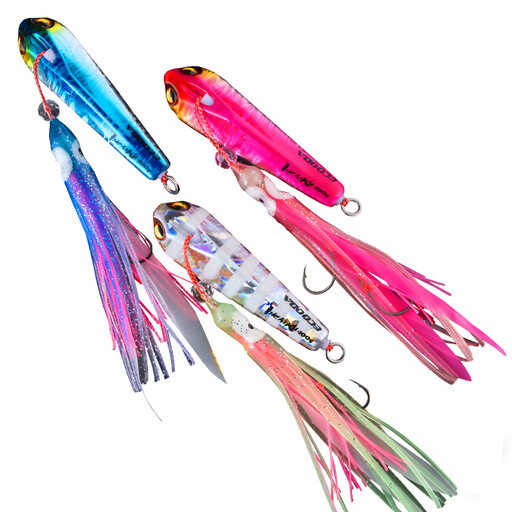
Why this choice: For the angler dedicated to jig fishing who targets deep areas and strong currents, where a heavy weight is mandatory to reach the bottom and fish vertically.
Its hydrodynamic profile is engineered to cut through the water on the drop and provide an attractive swimming action, unlike poorly designed jigs that spin and twist the line instead of fishing effectively.
Its low centre of gravity gives it a pronounced "fluttering" action on the fall, a signal that very often triggers a strike.
Discover our full selection of products that meet this quality charter and safety standards.
A good rule of thumb is to use 1g to 1.5g per metre of depth. For example, to fish in 60 metres of water with little current, a 60g to 90g lure is an excellent starting point. Don't hesitate to increase the weight if the current is strong and you're struggling to feel the bottom. The goal is to stay as vertical as possible under the boat.
Absolutely! It's non-negotiable. Salt is public enemy number one for your gear?: it attacks the rod guides, the reel's mechanism, the hooks... A thorough and systematic rinse with fresh water after each trip is the best life insurance for your equipment. It guarantees its reliability for years to come.
With proper maintenance (systematic rinsing, storage away from impacts and sunlight), a quality carbon rod can last for many, many fishing seasons. Its Achilles' heel is direct impact. Avoid hitting it against the boat's gunwale or dropping it on a hard surface. A micro-fracture, even one invisible to the naked eye, can cause a clean break in the middle of a fight.