People who use a little salt every day
A compact jar keeps a small amount within easy reach. If you’re decanting salt from an opened pack, check how it seals rather than judging the lid by its appearance alone.


To decant an opened pack of salt for everyday use, start with a compact food storage jar described as airtight or fitted with a seal. A capacity of 1 L or more is better suited to storing a reserve or organising several dry goods, as long as the lid, dimensions and care instructions work for your needs.
A compact jar keeps a small amount within easy reach. If you’re decanting salt from an opened pack, check how it seals rather than judging the lid by its appearance alone.
A jar of 1 L or more can be part of a coordinated storage set for salt and other ingredients. Before choosing this size, check that it will fit in your cupboard and is easy to clean.
If the salt will come into direct contact with the jar, choose a container intended for food use, as recommended by the DGCCRF. It’s also worth checking the washing instructions for the specific model’s body, lid and seal.
If the salt will come into direct contact with the container, the DGCCRF recommends using one intended for food. The seal, care instructions and available space can then help you choose between different sizes.
| Feature | What to check | Who is it for? |
|---|---|---|
| Seal | That it is intended for food use and that the model is specifically described as airtight or fitted with a seal. | When I decant an opened pack, I want a small amount of salt to be easy to reach, without choosing a lid based on appearance alone. Around 45% of consumers prioritise this everyday protection for their salt. |
| Care | The washing instructions for the jar, lid and seal, as these may differ. | If I use the jar every week, I want to be able to clean it in a way that fits my usual routine. Around 33% of consumers put ease of care ahead of other factors. |
| Capacity and space | The dimensions of the space available and a capacity that suits the pack you buy or the amount you plan to store. | I’d rather organise a reserve or several dry goods without cluttering the cupboard. For around 22% of consumers, balancing capacity with available space is the main priority. |
The glass and the appearance of the lid alone don’t tell you how suitable a closed jar is for storing decanted salt. Lidl specifies a silicone seal for its Silvercrest jars, while Auchan describes its 1 L jar as airtight. These features apply to those specific models.
For the jar you’re considering, look for clear information about the seal, closure and suitability for food use.
The 2 L jar listed by Carrefour measures 14 × 11 × 26 cm. It needs more clearance in height than a small container intended for the salt you use every day.
Measure the space, then compare the jar’s dimensions with those of the pack you plan to decant.
Instructions vary by product: Auchan says its 1 L jar is not dishwasher-safe, while Lidl states that the relevant Silvercrest jars are dishwasher-safe.
Follow the instructions for the specific model, including those for the glass, lid and seal, if it has one.
These examples showcase different capacities and types of closure. Their features don’t necessarily apply to every jar sold by each retailer.
Carrefour lists a 2 L glass jar for larger-scale storage.
E.Leclerc features a 1.7 L Five jar made from glass and stainless steel.
Auchan offers a 1 L glass jar with a wooden lid and metal closure.
Lidl offers Silvercrest jars for dry goods, including a small 350 ml size sold in a multipack.
Monoprix Maison lists a compact 500 ml jar made from glass and stainless steel.
These models are mainly suited to storing dry salt in a compact jar. The set of three can also help you organise several dry goods; check the size of each container to make sure it suits your storage space.
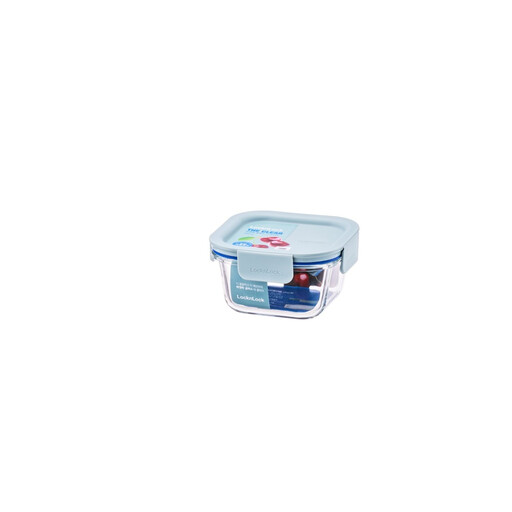 Image unavailable
This 500 ml jar could be a good choice for keeping a small amount of dry salt within easy reach. Check that its dimensions and care instructions suit the place where you plan to use it.
 Image unavailable
This 750 ml jar combines an acacia lid with a silicone seal, making it an option for decanting dry salt. The lid should be hand-washed and dried thoroughly. Avoid pouring boiling water directly into the jar, too.
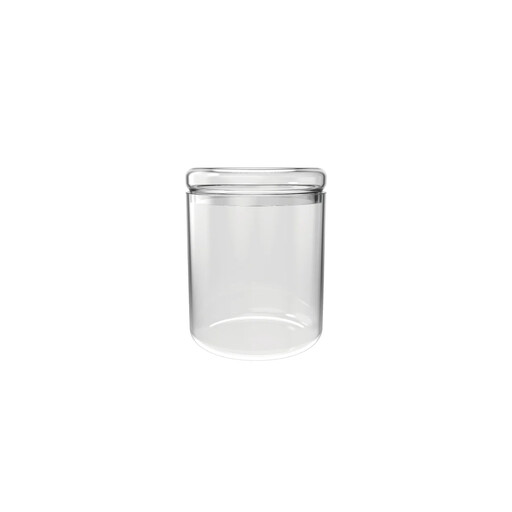 Image unavailable
This round 500 ml jar is a compact option for storing dry salt. Hand-washing is recommended to help preserve the jar and its lid.
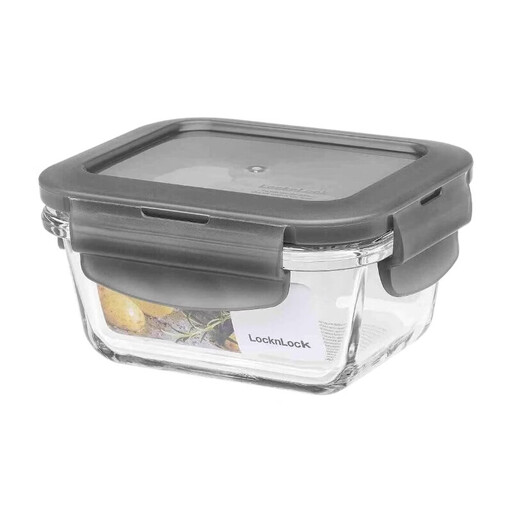 Image unavailable
This 500 ml square container could be suitable for storing a small amount of dry salt. Before buying, check the washing instructions for the container, lid and seal: the care information on the product page is contradictory.
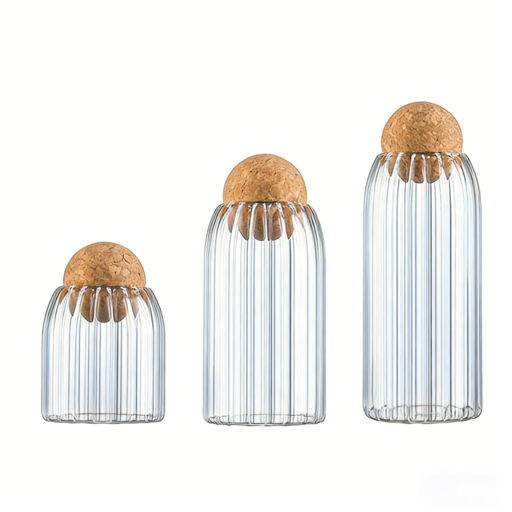 Image unavailable
This set of three jars can help you organise salt and other dry goods. Check the capacity and dimensions of each jar to make sure the set suits your pack of salt and the space you have available.
Yes, as long as the jar is intended for contact with food and you follow its instructions for use. The DGCCRF recommends using only containers intended for cooking or storing food. A decorative appearance alone doesn’t confirm that it’s suitable for this purpose.
Not necessarily: instructions vary by model and may differ for the jar and its lid. Auchan says its 1 L jar with a wooden lid is not dishwasher-safe. Check the instructions for each part before washing.
A large jar can work well for storing a reserve, but its capacity isn’t automatically an advantage when you only use a small amount each day. Before choosing between a compact size and a model of 1 L or more, consider the pack you’ll decant, how often you’ll refill it and the dimensions of your cupboard.
No. Decanting salt into a jar doesn’t change its composition. If you’re comparing different types of salt, check their nutritional information separately from your choice of container.