
Livraison le jour même ou le lendemain

Qualité garantie

Débloquez vos offres de bienvenue: Livraison GRATUITE | Jusqu'à -80 % | 30 jours d'essai gratuits à JoyPlus
Téléchargez l'application
When tackling the trails, good shoes aren't an option: they are the cornerstone of your trail running gear. And with a benchmark brand like Salomon, the sheer number of models can quickly become overwhelming. This guide is here to break down the essentials and present our top picks. The goal? To help you find THE perfect pair of Salomon trail running shoes for your profile, whether you're a curious beginner exploring forest paths or a seasoned expert on technical routes.
Before you dive in, let's review a few technical criteria that make all the difference. Three essential points to ensure you make the right choice.
The cushioning of a trail running shoe is crucial for your comfort, especially as the miles add up. Generous cushioning is more forgiving on impact over hard ground and will protect your joints on long runs. Conversely, firmer cushioning connects you to the terrain: it offers more ground feel and responsiveness, a decisive advantage on technical courses where every footfall needs to be precise. The choice, therefore, depends on your preferred terrain (mixed terrain, rocky, etc.) and the distance of your runs.
Grip is non-negotiable in trail running. Salomon has developed its own Contagrip outsole technology, which comes in several versions to adapt to all conditions. The rubber compound and lug design are fine-tuned to guarantee maximum grip, whether the ground is dry, wet, loose, or rocky. A versatile outsole like the All-Terrain Contagrip is an excellent compromise for those who like to mix things up. For extreme conditions, however, specialised outsoles will truly make a difference.
A good trail running shoe should wrap the foot without constricting it, ensuring a secure hold on cambered slopes and descents. The shoe's structure, its lacing system (Salomon's iconic Quicklace), and the lateral reinforcements are what guarantee your stability. Whether you're looking for a men's trail shoe or a women's running shoe, the key is to find a fit adapted to your foot shape to say goodbye to chafing and run comfortably for hours.
We have selected three flagship models from the Salomon range, each with its own unique character, to meet the needs of distinct runner profiles.
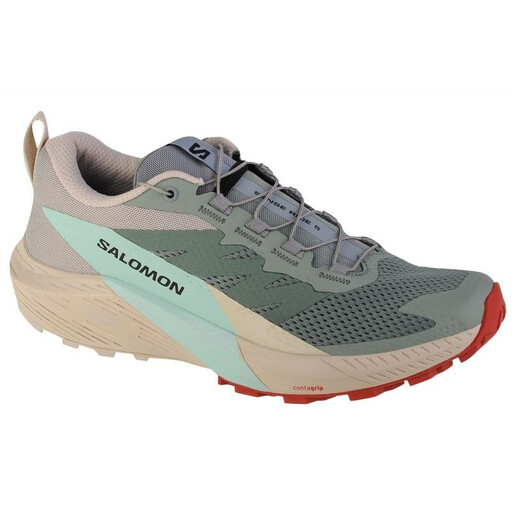
What sets it apart: The Salomon Sense Ride 5 is the very definition of versatility. It's the do-it-all shoe, capable of accompanying you on rolling trails as well as more technical sections. It offers a perfect balance of cushioning, responsiveness, and protection.
Key Features:
Who is it for? The runner looking for a single pair for all their trail outings. It's the perfect choice for someone who wants one pair that can do it all, handling different types of terrain without sacrificing comfort.
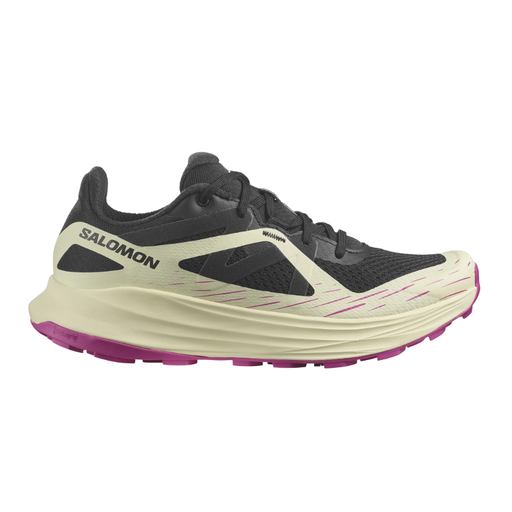
What sets it apart: The Salomon Ultra Flow is designed for absolute comfort, with very generous cushioning reminiscent of a road shoe. It is therefore perfect for hybrid routes, alternating between asphalt and non-technical trails.
Key Features:
Who is it for? Runners who prioritise comfort and cushioning above all, especially those who include sections of road in their trail routes or who run on easy trails and in parks.
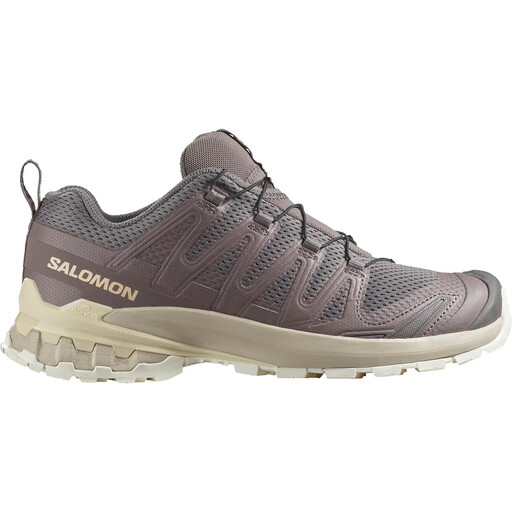
What sets it apart: The Salomon XA Pro 3D V9 is a true icon, renowned for its rock-solid robustness and stability. It's armour designed to tackle the most demanding and technical terrain with maximum protection.
Key Features:
Who is it for? Female trail runners and fast hikers who venture onto difficult, rocky, and technical trails. It's the model of choice for those who prioritise stability, protection, and durability, bordering on a lightweight hiking shoe.
The Salomon range is vast, and every runner is unique. If these models don't check all your boxes or if you're curious to discover other running philosophies, feel free to explore other options.
? Explore our complete collection of Natural Foot Shape Running Shoes to discover other models suited to your practice.
In short:
The fit can vary slightly from one model to another and, of course, depends on the shape of your foot. In general, Salomon is known for having a rather snug fit. Our advice: consult the brand's size guide and measure your foot. For trail running, it's common to choose a half-size up from your usual size to leave room for your toes, especially on descents.
Yes, it's entirely possible, especially with robust models like the Salomon XA Pro. Trail running shoes are lighter and more flexible than traditional hiking boots, which is a real advantage for fast hiking. However, for multi-day treks with a heavy backpack, a classic hiking boot, with its better ankle support and superior rigidity, will remain more suitable.