
Livraison le jour même ou le lendemain

Qualité garantie

Débloquez vos offres de bienvenue: Livraison GRATUITE | Jusqu'à -80 % | 30 jours d'essai gratuits à JoyPlus
Téléchargez l'application
Salmon is a favourite with many cats, but its appearance on the packaging does not necessarily mean a recipe meets your pet’s needs. From salmon cat food, wet food, treats and large formats, differences in ingredients, storage and everyday use can quickly affect the total cost.
Before filling your basket, three common pitfalls are worth avoiding:
For everyday meals, look for the wording “complete food for cats”, together with a clear indication of the animal’s age or profile: kitten, adult cat or neutered cat. Complete food is formulated to meet your cat’s nutritional needs when served according to the manufacturer’s recommendations.
By contrast, salmon cat treats remain complementary food. Catisfactions Salmon Treats, for example, are suitable for adult cats and kittens from 2 months old. The recommendation is up to 20 treats per day for an adult and 6 for a kitten. The product information clearly states that they do not replace main meals. Each treat contains fewer than 2 kcal, but you should still deduct them from your cat’s daily allowance.
Kittens have different nutritional needs from adult cats. For a neutered cat, also monitor the daily allowance, energy density and weight-based feeding recommendations. The simple mention of “salmon” does not tell you whether a recipe is suitable for an indoor or less active cat.
Salmon dry cat food is easy to serve and generally stores well. Wet food offers a different texture and provides a significant amount of water. You can combine both, provided you adjust the portions and follow the guidance on the packaging.
Do not stop at the product name: read the full ingredient and nutritional information. The figures below make it easier to compare products objectively:
Also check for allergens, cereals or plant proteins, additives and storage instructions. Once you open a bag of dry food, seal it carefully. For pouches and mousses, follow the refrigerated storage period stated on the label.
The products below address different needs. The information comes from the available product pages and should be checked against the packaging you receive, particularly if the recipe has been updated.
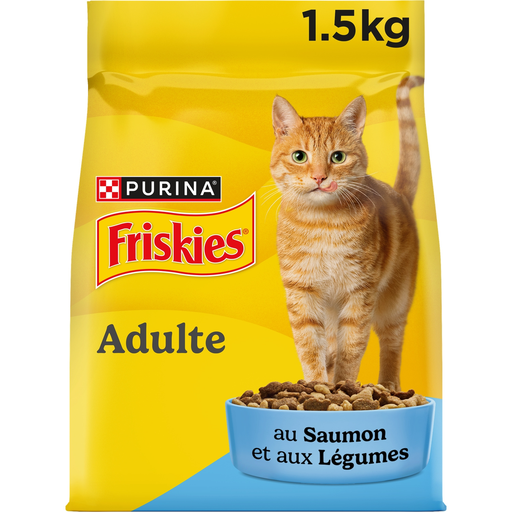
Why this profile is a good match: This compact pack is ideal for a first purchase, a household with one adult cat or a gradual transition to a new diet.
With 1.5 kg, you reduce the risk of keeping an open bag for weeks and can check that your cat enjoys the recipe.
Complete food for adult cats, 30% crude protein and several pack sizes available.
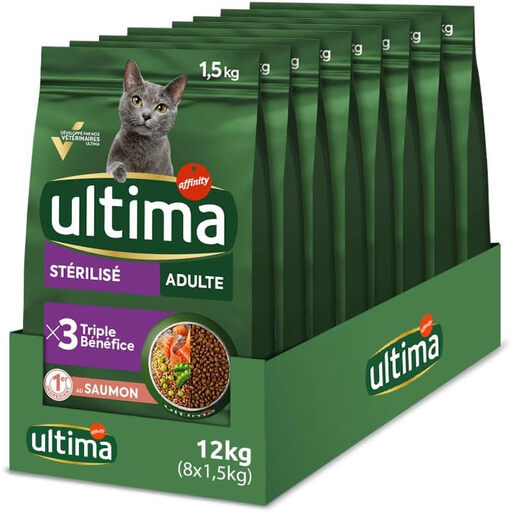
Why this profile is a good match: This multipack is suited to people who regularly buy food for neutered cats and have a dry, dedicated storage area.
The product information details weight-based portions and recommends a 7- to 10-day transition—two points that are easy to overlook when ordering.
15% salmon, 35% crude protein and 12% fat according to the available product information.
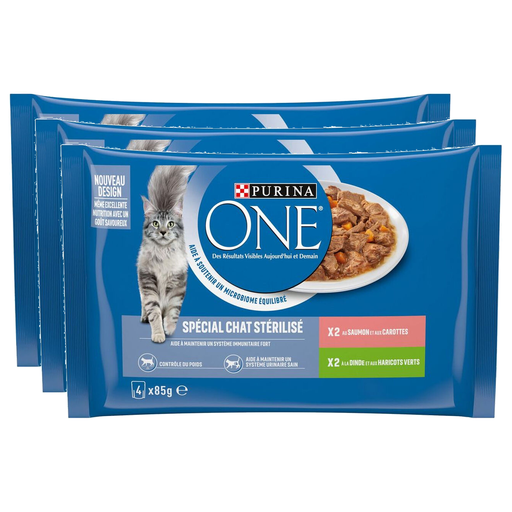
Why this profile is a good match: Individual pouches are ideal for neutered adult cats and owners who prefer to serve clearly defined portions.
The 85 g pouches make it easier to control portions and avoid leaving a large opened can in the refrigerator for several days.
Complete food for neutered adult cats, 78% moisture and 12 × 85 g pouches.
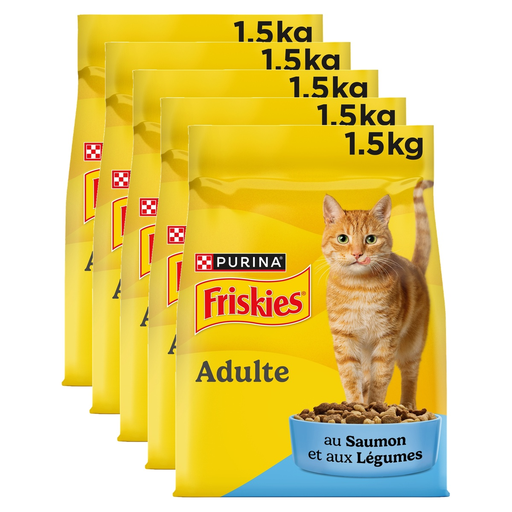
Why this profile is a good match: This large bag can be worthwhile if you use a substantial amount of dry food and can store it in an airtight container.
Compare the bag size with your rate of consumption and storage conditions—not just its price.
Complete food for adult cats, 30% crude protein and a 7.5 kg format.
Salmon cat food is a practical choice for anyone looking for something easy to serve and store. Weigh out each portion rather than filling the bowl by eye, particularly if your cat is neutered or not very active.
Salmon wet cat food is easy to serve in measured portions and adds variety in texture. The 85 g pouches fit neatly into a daily routine. A canned mousse such as Vitakraft Poetry with Salmon is also available in a pack of 12 × 85 g and has a stated moisture content of 78%.
Salmon cat treats, such as Catisfactions sold in packs of 6 resealable 60 g pouches, should be reserved for rewards. They can be used during play or training, but should never form the foundation of your cat’s diet.
We have brought together an updated selection of salmon products to help you compare formats, ingredients and intended uses before placing your order.
Yes, provided it is a complete food suited to your cat’s age and profile, and you follow the recommended daily allowance. Fresh salmon intended for human consumption does not automatically replace food formulated specifically for cats. Avoid salted or seasoned preparations, as well as any ingredients unsuitable for animals.
It depends on your cat’s weight, age, activity level and chosen recipe. Use the manufacturer’s feeding chart as a starting point, weigh the food and adjust gradually if necessary. Treats must also be included in your cat’s daily calorie intake.
Allow for a gradual transition over approximately 7 days, or follow the product-specific instructions. Start by mixing a small amount of the new recipe with the old one, then gradually increase its proportion. If digestive problems persist or your cat follows a specialised diet, seek advice from a veterinarian.