
Livraison le jour même ou le lendemain

Qualité garantie

Débloquez vos offres de bienvenue: Livraison GRATUITE | Jusqu'à -80 % | 30 jours d'essai gratuits à JoyPlus
Téléchargez l'application
A salad bowl can be used to mix batter, store a preparation, serve a salad or organise a buffet. However, not every model is suited to the same uses. An elegant bowl may prove impractical for everyday use, while a functional mixing bowl may lack stability or take up too much cupboard space.
Before buying, start by identifying your needs for preparation, serving and presentation. Here are the criteria to consider so you can avoid unpleasant surprises and compare models with greater confidence.
A ceramic or porcelain salad bowl adds a beautiful finish to the table, but remains vulnerable to knocks and sudden changes in temperature. By contrast, a stainless steel salad bowl is ideal for whisking, kneading or marinating, but its metallic appearance may not suit every presentation.
Your choice of material should therefore take into account how often you will use the bowl, the type of food you prepare and where it will be used.
A bowl that slips while you are beating eggs or mixing batter quickly becomes frustrating to use. A non-slip base limits movement on the worktop, although it cannot make the bowl impossible to tip over. The fill level and how even the surface is are just as important.
A large salad bowl is very practical for a family-sized salad, but several pieces that cannot be stacked can quickly clutter a cupboard. A set of salad bowls or stackable preparation bowls gives you several capacities without sacrificing all your available storage space.
For versatile use, compare the diameter, height and capacity rather than relying on appearance alone. A preparation bowl measuring 18 to 22 cm is suitable for small quantities, beaten eggs and sauces. Dimensions of 25 to 30 cm are better suited to family-sized salads, pasta and larger preparations.
A deep shape helps to prevent splashes while mixing. For serving, a wider opening makes sharing easier and shows the food to better effect.
Do not rely solely on the phrase ‘easy to clean’. Check whether the product is dishwasher-safe and whether this also applies to the silicone base or removable parts. For wooden models, hand washing is preferable. With ceramic, avoid thermal shock and regularly check for any chips or cracks.
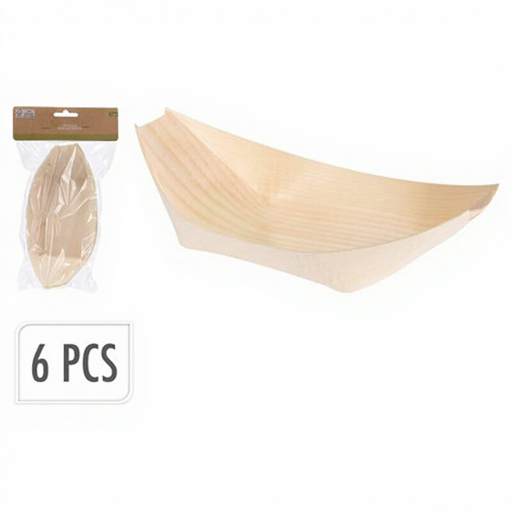
Why this choice suits this profile: This six-piece set is ideal for sauces, dips, olives and small portions, whether you are serving appetisers or a family meal.
Their compact size means you do not need to buy a large salad bowl for uses limited to a few spoonfuls of sauce. However, the wood must be washed by hand and must not be immersed in water.
Six lightweight poplar wood bowls, available in several shades. Hand washing recommended.
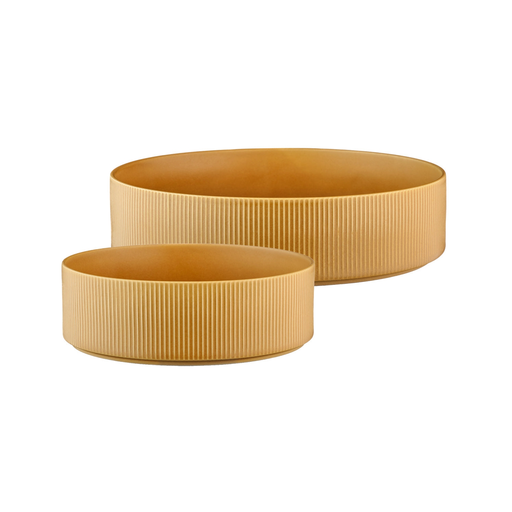
Why this choice suits this profile: The two sizes and ochre finish blend perfectly with refined tableware, for serving salads, fruit or side dishes.
The diameters are clearly stated and the bowls are stackable. The product details also specify the precautions to take in the event of sudden temperature changes.
Two bowls made from recycled stoneware, stackable and stated to be dishwasher-, microwave- and oven-safe up to 220 °C.
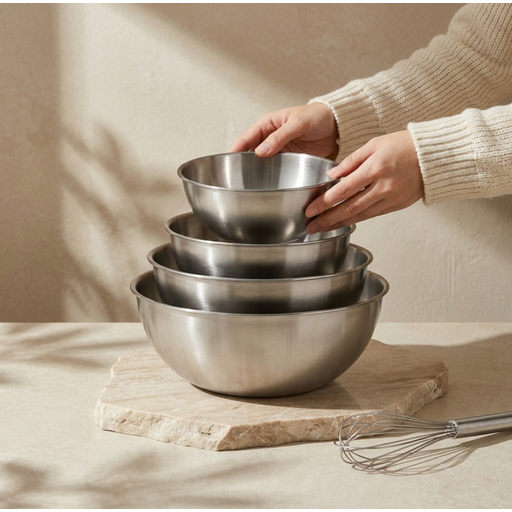
Why this choice suits this profile: The four capacities of 19, 22, 25 and 28 cm are suitable for baking, marinating, washing vegetables and preparing several dishes one after another.
The well-spaced sizes mean you do not have to prepare everything in a single bowl. The nesting design reduces clutter, while the stainless steel means it cannot be used in the microwave.
304 stainless steel, a rolled rim stated to be smooth, four stackable bowls and dishwasher cleaning.
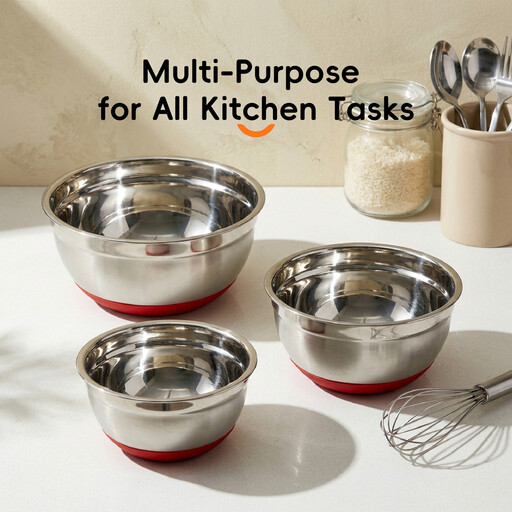
Why this choice suits this profile: The non-slip base is ideal for anyone who regularly whisks, kneads or mixes on a household worktop.
The base limits slipping and reduces contact noise on the worktop. It does not eliminate the need to avoid overfilling or using the bowls on uneven surfaces.
Three nesting bowls, a food-grade silicone base and sizes of 18, 20 and 22 cm. Dishwasher compatibility stated.
We have put together a complete, real-time updated list of products that fully meet these strict selection criteria and European safety regulations.
For cooking, choose a mixing bowl with an easy-to-grip rim and a stable base. Sets of three to five pieces are particularly practical when you are preparing several ingredients separately.
For serving, a wide salad bowl or serving bowl showcases food to better effect. An open fruit bowl makes the contents easy to see and can also hold bread or pastries. For a buffet, a porcelain or slate serving platter, or a divided serving tray, meets a different need from that of a classic salad bowl.
Catering professionals should check compatibility with their washing schedule, resistance to repeated handling and, where this information is provided, the conditions of use in a public-access establishment.
Stainless steel is suitable for frequent preparation, marinades and baking. Ceramic is better suited to serving and presentation. Wood adds a decorative touch, but requires more thorough hand care.
Choose a salad bowl with a non-slip base or place it on a stable kitchen mat. Even with a silicone base, avoid filling it to the brim and use it on a flat, dry surface.
Follow the manufacturer’s instructions, avoid abrasive sponges and dry wooden models and metal parts thoroughly. With ceramic, regularly check for chips or cracks and stop using any damaged item.