For serving straight onto your plate
If you dress a salad or lunchbox just before eating, check the design of the spout on the product you choose. A squeezy bottle doesn’t necessarily have a valve or measuring cap.


If you dress your salad directly on the plate, look for a salad dressing that explicitly states it has a measuring cap or a suitable dispensing system. The words “squeezy bottle” alone don’t confirm this. For meals throughout the week, choose a size you can use in line with the storage instructions after opening, then compare the recipe, ingredients and nutritional information.
If you dress a salad or lunchbox just before eating, check the design of the spout on the product you choose. A squeezy bottle doesn’t necessarily have a valve or measuring cap.
If your household regularly uses the same recipe, compare bottle sizes and storage instructions after opening before buying a large bottle. A bigger size is only practical if you can use and store the dressing as directed.
If certain ingredients or allergens matter to you, read the label for each recipe, even when two bottles have similar names. Nutritional information also lets you compare products on a like-for-like basis.
When doing your weekly shop, start with your main need: easy pouring, a suitable quantity or a recipe that works with the meals you have planned. Then check the other details on the exact bottle you’re considering.
| What to consider | What to check | Who is it for? |
|---|---|---|
| Portion control | Look for clear information about a measuring cap, valve or upside-down dispensing. Check the spout on the exact product you’re considering. | If I’m dressing a salad straight onto the plate, I want to control how much I pour rather than assume every squeezy bottle works the same way. Around 33% of consumers might make this their top priority. |
| Bottle size | Compare the volume and storage instructions after opening. If you’re comparing prices per litre in store, compare the products you’re considering at the same time. | When several meals use the same dressing, I look for a quantity my household can finish while following the storage instructions. This would be the top priority for around 27% of consumers. |
| Ingredients | Read the ingredients, highlighted allergens and nutritional values on a like-for-like basis, for example per 100 g or per 100 ml, depending on the label. | If I need to avoid an ingredient or compare fat, sugar and salt, the recipe name alone isn’t enough. Around 27% of consumers would prioritise this check. |
| Recipe and meals | Choose a flavour to suit the meals you have planned, then check the ingredients in that specific recipe. | For salads and other planned meals, I prefer to start by choosing a recipe we’ll actually use. Around 13% of consumers would make this their top priority. |
A flexible bottle doesn’t tell you what kind of spout it has. A dispensing system listed for one particular sauce won’t necessarily be used for other salad dressings.
If easy serving matters to you, look for the words “measuring cap” or “valve”, and check the packaging of the exact product.
A 50 cl or 1 L bottle needs to suit how often you use it and its own storage instructions. These can vary from one recipe to another.
Before choosing a size, check where to store the bottle once opened and how soon to use it, if a time limit is given.
If you can’t use the quantity while following the instructions, some of it may end up being thrown away.
This description is no substitute for the ingredients list or nutritional information. The Amora light mustard dressing featured by Carrefour contains mustard and honey, among other ingredients.
For every bottle you’re considering, check the allergens and compare nutritional values on a like-for-like basis.
The examples below relate to specific recipes and sizes. Check the label and cap on the bottle you’re considering rather than assuming the same features apply to every product from that brand.
Carrefour lists an Amora light mustard dressing in a 380 ml bottle.
The range includes lighter salad dressings and sauces for raw vegetables, with 50 cl and 1 L sizes listed by Carrefour.
E.Leclerc’s Marque Repère range includes Rustica sauces for raw vegetables and salad dressings, including 50 cl bottles, as well as a 1 L wholegrain mustard variety.
Auchan lists a Tête Noire fine herb dressing in a 36 cl squeezy bottle.
ALDI lists Dilecta salad dressings in 500 ml bottles, including balsamic and olive oil, red wine and shallot, and sesame and soy sauce flavours.
This selection includes a Caesar sauce described as having an upside-down squeezy bottle, two large-format salad dressings and a flavoured dressing in a 360 ml bottle. If a measuring cap is essential, check each product individually: a large size or a recipe that suits your meals doesn’t confirm how it dispenses.
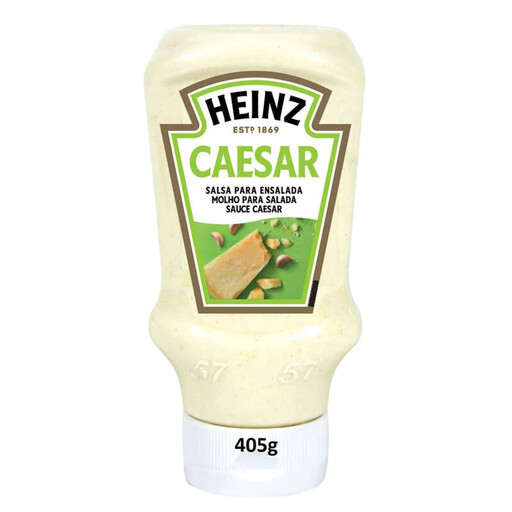 Image unavailable
Worth considering if you’d like to serve Caesar sauce straight onto your salads from an upside-down squeezy bottle. This is a 405 g Caesar sauce, not a classic vinaigrette. The product information lists egg, mustard, fish, milk and barley among its ingredients, and says to refrigerate after opening.
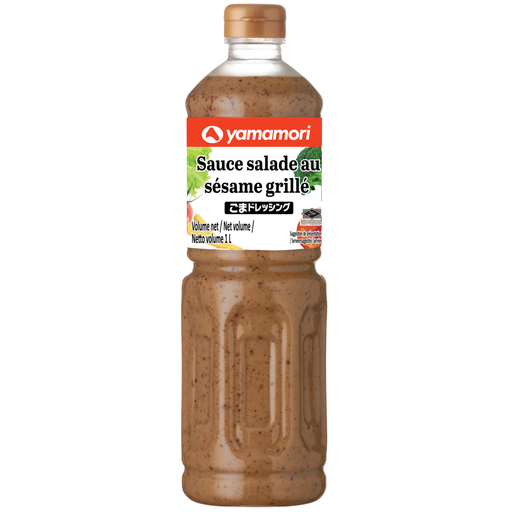 Image unavailable
This 1 L size may suit you if you regularly use the same sesame dressing on your salads. The product information lists sesame, soya and wheat, and recommends refrigerating it after opening and using it promptly. If you want to pour it straight from the bottle, check the spout.
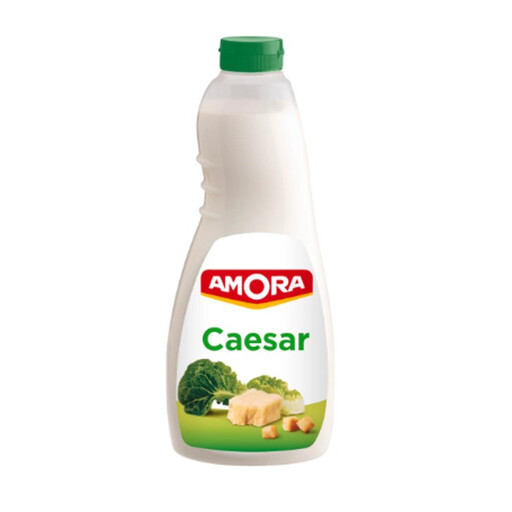 Image unavailable
Consider this if Caesar sauce is on the menu for several meals during the week and you can use a 1000 g bottle. The recipe contains egg, mustard and anchovies, among other ingredients. The product information says to refrigerate after opening. Check the type of cap if you’re looking for easy portion control.
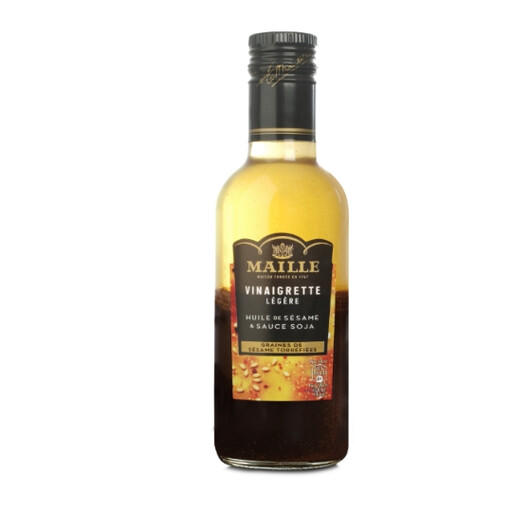 Image unavailable
This 360 ml flavoured vinaigrette is worth considering if the soy and sesame flavour suits the meals you have planned. The product information lists soya, wheat and sesame, and says it may contain mustard. It should be refrigerated and used within a month of opening. Check the spout if portion control is a priority.
No. “Bottle” describes the container, not necessarily how the dressing is dispensed. Look for clear information about the specific product you’re considering, and check its spout if you want to pour the dressing straight onto your plate.
Follow the instructions for the bottle you’ve chosen. For example, Auchan’s product information for Tête Noire fine herb dressing says to store it between +2 °C and +6 °C and use it within three months of opening. These instructions don’t necessarily apply to other recipes.
Read the full ingredients list and check the highlighted allergens on the exact product. The DGCCRF states that allergenic ingredients must be highlighted on the label. Different sauces and salad dressings may contain mustard, egg, soya or fish, among other allergens.
Compare the nutritional information on a like-for-like basis, per 100 g or per 100 ml depending on the labels, then read the ingredients. The DGCCRF says nutrition declarations include information about fat, sugar and salt. The word “light” alone doesn’t tell you everything about the ingredients.