People who use salad dressing regularly
You often have raw vegetables or salad with breakfast and are looking for a size that suits how much you use.


If you regularly enjoy a savoury breakfast, choose a dressing that goes well with the food you’re serving, then pick a size you’ll actually use. A flavoured recipe caters to a particular taste; ‘light’ on the label is no substitute for checking the ingredients, allergens and nutritional information on the bottle you choose.
You often have raw vegetables or salad with breakfast and are looking for a size that suits how much you use.
You want to pair a dressing with raw vegetables, eggs or savoury sandwiches, and would rather choose the flavour profile before the bottle size.
You need to check the ingredients and allergens for each product, or want to compare fat, sugar and salt on a like-for-like basis.
For a savoury breakfast, start with what you’ll be dressing and how often you’ll use it. Then check the exact recipe: neither the bottle size nor the word ‘light’ is a substitute for reading the label.
| What to consider | What to check | Who it matters to |
|---|---|---|
| Suitable size | Choose a bottle size that suits how often you’ll use it, and check the date shown on the bottle. | If I serve raw vegetables often, I want to finish the bottle without waste. Around 50% of consumers would prioritise finding a suitable size. |
| Flavour | Check the exact recipe, whether plain, mustard, herb or balsamic vinegar, to suit the food you’re serving. | When I’m having eggs or a savoury sandwich, I’m mainly looking for a dressing I enjoy. Flavour would be the top priority for around 30% of consumers. |
| Ingredients | Read the ingredients and allergen information. Compare nutritional information only on the same basis, per 100 g or per 100 ml. | If certain ingredients matter to me, I need to check each recipe rather than rely on the word ‘light’. Around 20% of consumers would put this check first. |
Ingredients vary from one product to another. Auchan’s product information for its 1 L light plain dressing lists mustard, sulphites and milk, among other ingredients. This does not describe the brand’s other dressings.
Check the allergen information on the specific bottle you’re considering.
This size may suit frequent use, but could be impractical if you’re still trying the recipe or only use dressing occasionally.
Choose a size you’ll be able to use, and check the date and storage instructions for the product.
An opened bottle that’s left unused could go to waste.
Carrefour’s range includes a 500 ml light plain dressing and sauces for raw vegetables.
E.Leclerc’s range includes plain, light and mustard dressings, with sizes including 50 cl and 1 L.
Auchan’s range includes light plain dressings, as well as balsamic vinegar and herb recipes.
ALDI offers Dilecta dressing in a 500 ml bottle, with plain, mustard and fine herb varieties.
Auchan describes a 38 cl Amora light mustard dressing that combines honey with wholegrain mustard.
These two Maille dressings are flavoured options for serving with salad or raw vegetables as part of a savoury breakfast. To choose between them, think about the flavour you’re after, the ingredients and the bottle size.
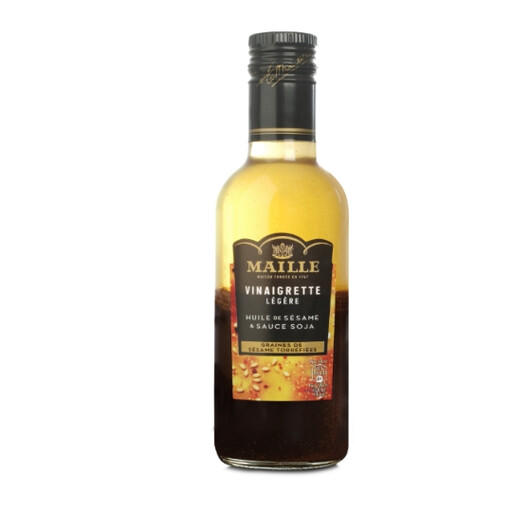 Image unavailable
Worth considering if you’re looking for a soy and sesame dressing for salad or vegetables. The bottle contains 360 ml; check the ingredients and allergens if they’re relevant to you.
Once opened, keep refrigerated and use within a month, as stated on the product page.
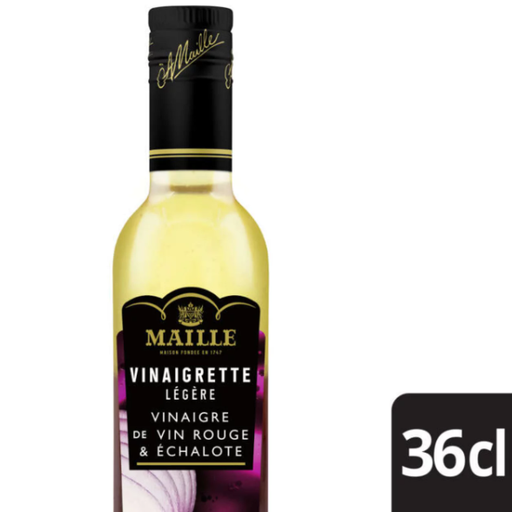 Image unavailable
Worth considering for salad or raw vegetables if you’re looking for a recipe made with red wine vinegar, shallot and small red onions. The bottle contains 36 cl; check the allergens for this product.
Once opened, keep refrigerated and use within a month, as stated on the product page.
The word ‘light’ doesn’t answer that question: check the ingredients and allergen information for the exact product. Auchan’s product information for its 1 L light plain dressing lists mustard, sulphites and milk, among other ingredients. That doesn’t mean the same applies to its other recipes.
Use the same reference unit for both products, either per 100 g or per 100 ml, then compare fat, sugar and salt. If the labels use different units, don’t compare the figures directly as though they refer to the same amount.
A 1 L bottle is best considered if you use the same recipe regularly. If you only use dressing occasionally or are trying it for the first time, choose a size you think you’ll finish, and check the date and storage instructions on the product.