
Livraison le jour même ou le lendemain

Qualité garantie

Débloquez vos offres de bienvenue: Livraison GRATUITE | Jusqu'à -80 % | 30 jours d'essai gratuits à JoyPlus
Téléchargez l'application
A salad bowl is not just for serving salad. It is also useful for preparing cake mixtures, mixing ingredients, washing vegetables, making marinades and, of course, serving food at the table. However, some attractive models can prove impractical after just a few uses.
Before buying a kitchen salad bowl, there are three potential pitfalls to consider:
The material affects the salad bowl’s durability, weight, care requirements and appearance on the table.
For a mixing bowl used very frequently, stainless steel or a dishwasher-safe set can make everyday tasks easier. For serving, ceramic, glass and wood are more easily incorporated into an attractive table setting.
A small salad bowl is suitable for individual portions, fruit or side dishes. For a family, a large salad bowl measuring around 25 to 33 cm in diameter makes it easier to mix a composed salad, pasta or vegetables.
A set with several sizes is particularly practical for preparing a range of dishes:
Also consider the height of the sides. A container that is too shallow is more likely to cause splashes when whisking or kneading. Conversely, a very deep salad bowl may be less convenient for serving directly at the table.
A non-slip base helps prevent movement on the worktop, although it cannot make the container impossible to tip over. Avoid filling it beyond its capacity and place it on a completely flat surface.
A stackable salad bowl or set of salad bowls helps save space in a cupboard. However, check that the bowls genuinely nest together and that their shape will not damage the rims.
Finally, check the care instructions. A dishwasher-safe salad bowl saves time, whereas a wooden model or one with a bamboo handle will generally need to be washed and dried by hand.
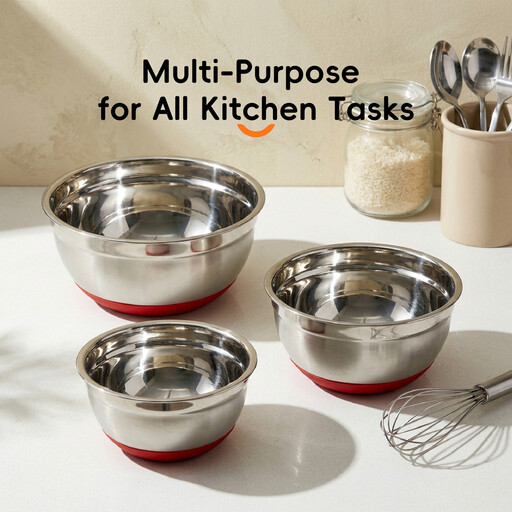
Why this choice suits this profile : This set of three stainless steel bowls is suitable for first-time preparations, salads and compact storage thanks to its nesting sizes.
The red silicone base helps limit slipping and noise on the worktop. The bowls nest together to save space.
Three sizes, uncoated stainless steel and stated dishwasher compatibility. However, the manufacturer recommends hand washing to preserve the base.
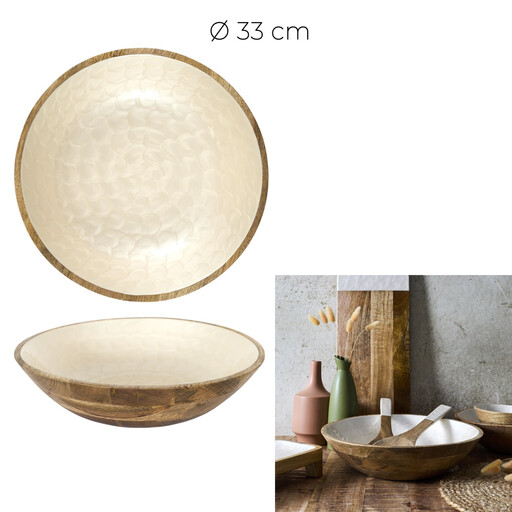
Why this choice suits this profile : With its 33 cm diameter and natural grain, this model is designed for those who want to combine generous serving portions with attractive table décor.
The product details clearly state the limitations of wood: hand washing, no soaking and no use in the microwave or with very hot food.
Natural mango wood, a smooth finish and a size suited to family salads, pasta or presenting fruit.
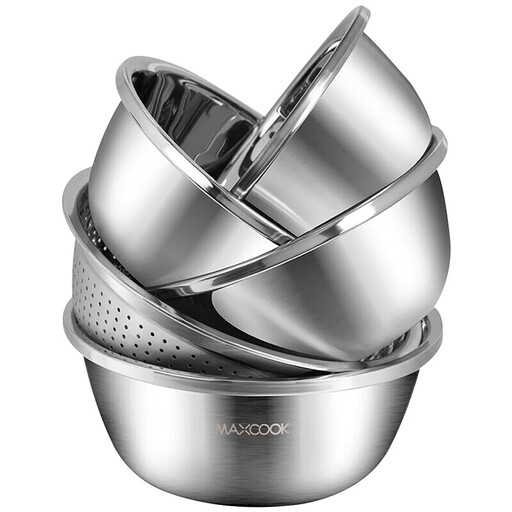
Why this choice suits this profile : With five pieces and an integrated colander, this set is suitable for repeated preparations, washing vegetables and serving multiple portions.
The different pieces mean you do not need to buy accessories separately. 304 stainless steel is specified as suitable for food contact and dishwasher use.
Sizes up to 30 cm, a colander included and 304 stainless steel construction. The product is not suitable for microwave use.
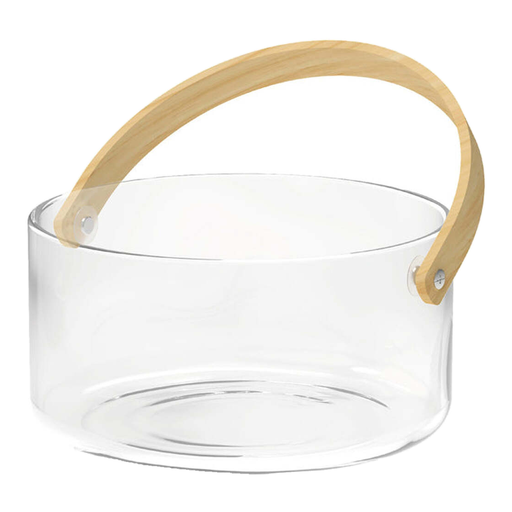
Why this choice suits this profile : Its transparent glass and bamboo handle make it a natural choice for a buffet, everyday table settings or presenting fruit.
The product details state that it is suitable for both hot and cold preparations, while recommending that extreme temperature changes and knocks be avoided.
Borosilicate glass measuring 20 × 10,5 cm with a bamboo handle. Hand washing is recommended.
We have put together a complete, real-time updated list of products that meet these strict selection criteria as well as European safety regulations.
A few simple habits can help keep your salad bowl in good condition for longer:
Cracked ceramic, chipped glass or a wooden salad bowl with a splinter must no longer be used in contact with food.
Stainless steel is ideal for anyone looking for a lightweight, versatile container that is easy to clean. Ceramic is better suited to serving and offers good stability, while glass makes presentation easy. Wood stands out for its decorative appearance but requires more careful maintenance.
No. Some stainless steel or ceramic models are advertised as dishwasher-safe, but wood and bamboo handles generally require hand washing. Always check the product details before starting the first cycle.
A diameter of 25 to 30 cm is generally suitable for family salads and side dishes. To prepare large quantities or serve several guests, a large salad bowl measuring around 30 to 33 cm provides more room to mix without spilling.