
Livraison le jour même ou le lendemain

Qualité garantie

Débloquez vos offres de bienvenue: Livraison GRATUITE | Jusqu'à -80 % | 30 jours d'essai gratuits à JoyPlus
Téléchargez l'application
Heading out on an adventure in an RV or caravan offers an unparalleled sense of freedom. But this freedom comes with a responsibility: ensuring the safety of every journey. The tyre pressure monitoring system, better known by its acronym TPMS, is a cornerstone of this safety, especially for long and heavy vehicles.
The problem? The market is flooded with promises that are rarely kept. As a result, many RV owners throw their money away on unreliable systems that ultimately put their safety at risk. To ensure you don't get caught out, here are the three main pitfalls to be aware of before you buy.
The 3 pitfalls to avoid when buying an RV TPMS:
To make the right choice, focus on a few non-negotiable technical features. These are what separate a mere gadget from a genuine piece of safety equipment.
TPMS with a RepeaterFor an RV, caravan, or trailer, signal stability is the number one criterion. Wireless communication, typically operating on the 433.92?MHz frequency, weakens with distance. For any rig over 12 metres, a TPMS with a repeater is therefore not an option—it's a necessity. This small unit, placed in a strategic location, amplifies the signal from the furthest sensors to ensure flawless data transmission to the display on your dashboard.
The tyres on an RV or caravan require much higher pressures than those on a car. It is imperative to choose a system with a suitable measurement range, for example up to 13?BAR (approx. 188?PSI). Also, remember to check the number of sensors provided and the system's expansion capabilities. A good caravan tyre pressure monitoring system should be able to handle 4, 6, 8, or even more tyre configurations.
An effective system must offer several types of alerts to cover all eventualities. Aim for a model that handles at least 6 scenarios, including:
For installation, opt for an external wireless tyre pressure sensor and, most importantly, one that is factory pre-paired. This means each sensor is already assigned to a specific wheel. Installation is as simple as screwing the sensors onto the valve stems in place of the caps. The whole process takes just a few minutes.
Rather than an endless list, we have selected solutions tailored to specific profiles. The goal is to help you find the system that truly matches your needs.
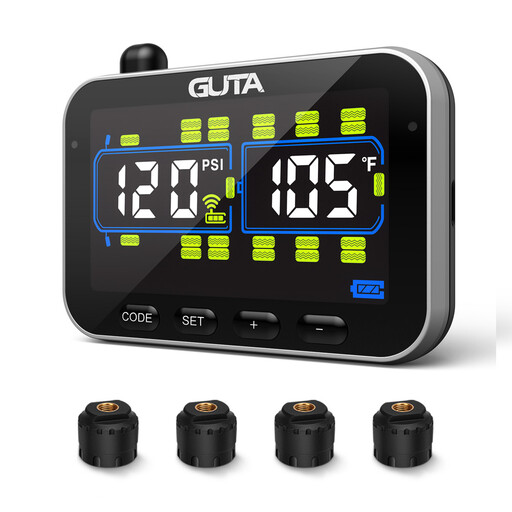
Why we chose it: Perfect for semi-integrated motorhomes, camper vans, or small caravans (under 12 metres). It packs all the safety features of a premium system into a simple and effective package.
The sensors are pre-paired, making installation incredibly simple. The transmission is stable for standard-sized vehicles, so you can say goodbye to frustrating disconnects.
Its large colour LCD screen provides a very clear reading of the data, and its 6 alert types ensure comprehensive monitoring.
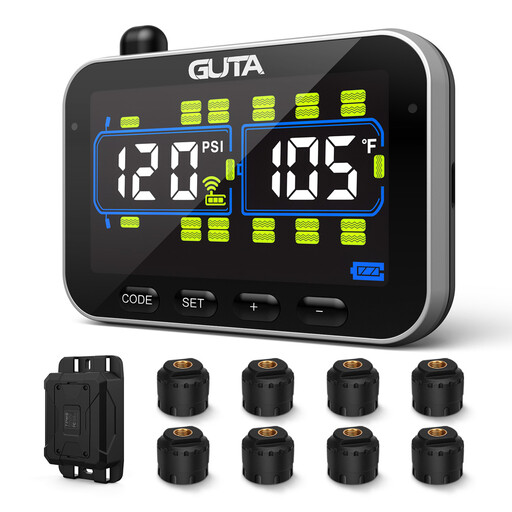
Why we chose it: Built for large A-Class motorhomes and rigs (caravan, car hauler trailer...). Its 8 sensors and repeater guarantee total coverage and an infallible signal.
The included repeater directly tackles the problem of signal loss on long vehicles. Data from the trailer's tyres comes through just as clearly as data from the towing vehicle.
An all-in-one solution for large rigs. The system is optimised for lengths up to 15 metres, allowing you to travel with complete peace of mind.
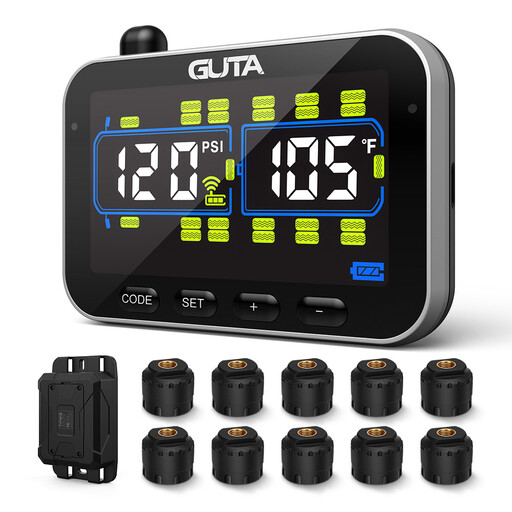
Why we chose it: The ultimate solution for heavy-duty, multi-axle RVs, fifth-wheels, or even small fleet managers. This 10-sensor kit is expandable up to 24 tyres.
This is a scalable platform. No need to buy a whole new system if your setup changes: just add more sensors. The repeater ensures rock-solid reliability on the largest vehicles.
Maximum flexibility. With its 24-tyre capacity and wide pressure range (0-14 BAR), it adapts to a huge variety of heavy vehicles.
Discover our complete and up-to-date selection of products that meet our strict selection criteria and safety standards.
Battery life varies depending on the model and your usage. For quality external sensors using standard batteries (like the CR2032), expect up to 4 years. High-performance systems, like those in the GUTA range, include a low battery alert to warn you long before they die.
wireless tyre pressure sensor difficult?No, with external sensors, installation is child's play. You simply replace your valve caps with the TPMS sensors. If the system is factory pre-paired, no configuration is needed. The process takes less than 15 minutes.
TPMS with a repeater really necessary for my RV?If your vehicle (or the entire rig) is over 12 metres long, a repeater is more than recommended: it's practically essential. It eliminates the risk of signal loss caused by distance and metal structures. This ensures you receive real-time data from all your tyres, even the most distant ones. For shorter vehicles, it's not mandatory but provides a welcome extra layer of safety.