
Livraison le jour même ou le lendemain

Qualité garantie

Débloquez vos offres de bienvenue: Livraison GRATUITE | Jusqu'à -80 % | 30 jours d'essai gratuits à JoyPlus
Téléchargez l'application
By the Joybuy Editorial Team, published July 14, 2026.
Hitting the road in an RV is all about freedom and adventure. But when you're on the move, safety is paramount, and monitoring your tire pressure is a cornerstone of that safety. An underinflated or overheating tire doesn't just increase your fuel consumption: it risks a blowout, a potentially devastating accident, especially when driving a vehicle of this size.
That's where a Tire Pressure Monitoring System (TPMS) comes in, providing real-time alerts for any anomaly. Navigating the vast market of options can be challenging. This guide breaks down the essential selection criteria and presents a curated selection of products designed for RVs, trailers, and heavy-duty trucks.
Before making a purchase, review these key technical points. This will ensure you find the system that perfectly matches your vehicle and your travel style.
The starting point is, of course, the number of wheels you need to monitor. A standard RV requires 4 sensors. If you're towing a caravan or trailer, you'll need a system that can handle 6, 8, or even 10 tires. For larger rigs like semi-trailers or heavy-duty trucks, some TPMS units can monitor up to 24 tires. Make sure the kit you choose includes enough RV tire pressure sensors and, if necessary, is expandable to add more later.
On a long vehicle, remote tire monitoring is a significant technical challenge. A wireless TPMS must ensure flawless signal transmission between the sensors and the in-cab monitor. Most systems operate on the 433.92?MHz frequency. For vehicles over 6-7 meters (20-23 feet) or towed setups (RV + trailer), a signal repeater is no longer an option: it's practically essential. When included in the kit, it boosts the signal to prevent any connection loss and ensure constant monitoring.
A good system must trigger a clear and immediate tire pressure alarm. Check the available alert types: fast leak, low pressure, high pressure, excessive temperature, and low sensor battery. The screen itself should be readable at a glance. Models with an LCD screen, auto-adjusting backlighting, and a color display offer a vastly superior user experience.
We have reviewed several models on the market to bring you solutions tailored to every user, from the occasional RVer to the professional truck driver.
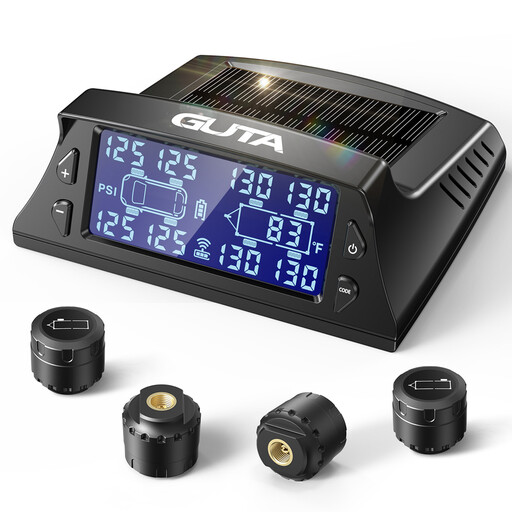
Why it stands out: This system is a simple and effective solution for standard-sized RVs. It gets straight to the point: real-time monitoring of pressure (up to 13 BAR / 188 PSI) and temperature, complemented by 5 alarm modes for a worry-free drive. Its auto-backlit LCD screen and smart sleep mode make it a discreet and energy-efficient companion.
Advantages:
Who is it for? Owners of RVs or camper vans under 6 meters (20 feet) looking for a reliable, effective, and no-frills tire pressure monitoring system.
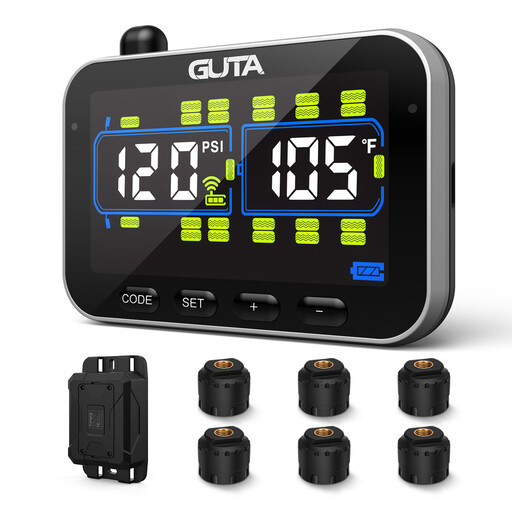
Why it stands out: Specially designed for towed setups, this kit includes 6 sensors and a signal repeater, ensuring a stable connection even on the longest vehicles. Its large color LCD screen offers perfect readability, and its 6 alarm modes cover all critical scenarios. The sensors are pre-paired at the factory, which greatly simplifies installation.
Advantages:
Who is it for? Drivers of RVs with a caravan or trailer, as well as owners of small trucks or long vehicles (up to 15 meters / 50 feet) who need comprehensive monitoring and a rock-solid signal.
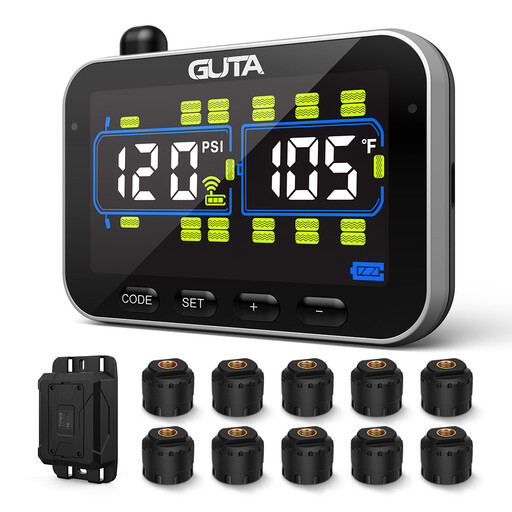
Why it stands out: This is the ultimate solution for large vehicle combinations. With 10 sensors, a repeater, and the ability to manage up to 24 tires, this heavy-duty TPMS is built for semi-trailers and fleet management. It shares the strengths of the 6-sensor model (color screen, 6 alarms, pre-paired sensors) while taking monitoring capacity to the maximum.
Advantages:
Who is it for? Truck drivers, fleet managers, owners of large American RVs or semi-trailers... In short, anyone who needs to monitor more than 6 tires.
Our selection covers the most common needs. If you can't find what you're looking for or simply want to explore other models, feel free to browse our full range.
? Discover our full range of Tire Pressure Monitoring Systems
Not at all. Most modern external sensor systems can be installed in minutes. Simply screw each tire pressure sensor onto its valve stem, replacing the original cap. Models with factory pre-paired sensors are even faster to set up, as no manual syncing is required.
It depends on the model and your usage, but it's generally long. For external sensors, you can expect between 2 and 4 years of battery life. The models in our selection, for example, use standard CR2032 batteries with an estimated 4-year lifespan. In any case, the monitor will alert you long before a sensor's battery is completely drained.
Yes, and that's actually one of the major advantages of a trailer TPMS. However, it's crucial to choose a suitable system. Verify that the kit has enough sensors for the entire setup and, most importantly, that it includes a signal repeater. This is the only way to guarantee a stable connection between the trailer's tires and the monitor in your cab.