Joybuy Insights

RV Accessory Guide: Avoid Common Pitfalls and Gear Up Right

Outfitting your RV, camper van, or trailer is an exciting step—a promise of freedom and adventure. However, the market for RV accessories is a veritable maze where it's easy to fall into traps that can quickly turn your dream into a nightmare. Between overblown marketing promises and compatibility issues, a poor choice can be costly, both literally and figuratively, and ruin an entire trip.

This guide is here to bring clarity by breaking down the essential criteria for making a smart purchase. Let's review the most common mistakes and the key points to check before you pull out your credit card.

The 3 Pitfalls to Avoid When Buying Van and RV Equipment

  1. ‘Miracle’ all-in-one solutions that do everything, but do it all poorly: Beware of all-in-one devices that promise to heat, cool, and ventilate with record-breaking efficiency. In reality, these products are often compromises that don't excel at any of their tasks. A weak auxiliary heater in the middle of winter or a cooler that struggles to keep things cold in the summer are classic disappointments.
  2. The electrical compatibility headache: Buying an electrical appliance without checking its connectors is a classic rookie mistake. Arriving at a service area and realizing your cable isn't compatible with the P17 hookup (the famous blue plug, the most common European standard) can quickly become a nightmare. The same goes for 12V devices whose excessive power consumption can drain your auxiliary battery in just a few hours.
  3. Underestimating the silent enemies: moisture and leaks: Moisture and micro-leaks are your vehicle's worst enemies. Burying your head in the sand over a small leak or condensation can lead to structural damage, mould, and persistent odours. A simple vehicle moisture absorber or RV sealant tape are much smarter preventive investments than a repair that will cost you an arm and a leg.

Technical Criteria to Scrutinise for Reliable and Durable Equipment

To make the right choice, it's better to rely on objective technical specifications than the siren song of marketing. Here are the key points to watch for across three families of essential accessories.

1. Warmth and Comfort: Choosing the Right Portable Heater

For off-season travel, a reliable heater isn't an option—it's a necessity. The portable diesel heater is emerging as an increasingly popular solution for its versatility and self-sufficiency.

  • Heating Power (kW): This must be suited to your vehicle's volume. A 2?kW output may be enough for a small van, while a full-size motorhome will require 5 to 8?kW for quick and even heating.
  • Fuel Consumption (L/h): A decisive factor for autonomy. The most efficient models have a consumption rate between 0.15 and 0.5?L/h, allowing you to stay warm for several nights on a single tank.
  • Power Supply Versatility: The ability to run on the vehicle's battery (12/24V DC) and on mains power (230V AC) offers maximum flexibility, whether you're off-grid or hooked up at a campsite.

2. Keeping Cool: Food Preservation, a Matter of Self-Sufficiency

Forget thermoelectric (Peltier effect) coolers, which struggle to cool more than 15?°C below the ambient temperature. To preserve your food without any nasty surprises, the 12V compressor cooler is the only truly reliable technology.

  • Compressor Technology: It's the same principle as your home refrigerator. This technology can reach true sub-zero temperatures (down to freezing) and maintain them stably, even in the middle of a heatwave.
  • Battery Protection: A good model must include a protection system that automatically cuts off power if the battery voltage drops too low. This is your guarantee against waking up to a dead battery.
  • Insulation and Consumption: The quality of the insulation is directly linked to power consumption. A well-insulated chest will put less strain on the compressor, thereby preserving your precious energy autonomy.

3. Maintenance and Protection: Hunting Down Leaks to Preserve Your Vehicle

Good RV maintenance requires constant vigilance over its seals. And when it comes to repairs, be warned: not all adhesives are created equal.

  • Sealant Tape Composition: Opt for an RV sealant tape with a butyl base. This material offers far superior long-term adhesion and elasticity. It resists UV rays, temperature fluctuations, and moisture, unlike bitumen-based tapes that eventually crack.
  • Surface Compatibility: Check that the tape is compatible with the various materials on your vehicle (sheet metal, aluminium, fibreglass, plastic from skylights, etc.).

Our Recommended RV Accessories

Here are a few products that meet specific needs, all selected in accordance with the objective criteria we've just detailed.
IDEAL FOR: THE ALL-SEASON ADVENTURER
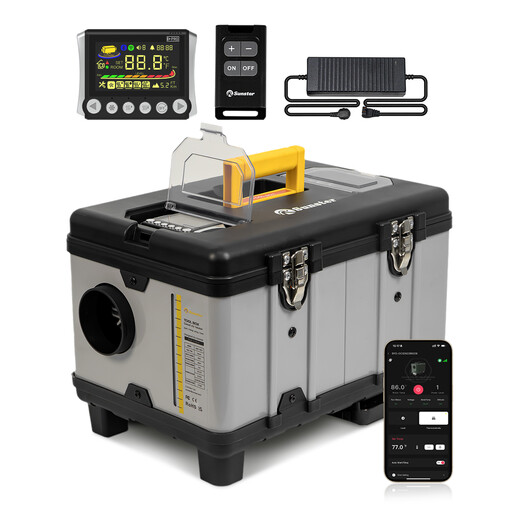
TB10 8KW TOOLBOX Diesel Air Heater

TB10 8KW TOOLBOX Portable Diesel Heater

The verdict: Perfect for those who refuse to compromise on thermal comfort, even in the mountains or the dead of winter. Its "toolbox" form factor makes it ultra-easy to move and use anywhere (van, tent, garage...).

Why it avoids the pitfall

This isn't a multifunctional gadget. It's a specialised portable diesel heater with a high 8 kW output and controlled consumption. It meets a single need with uncompromising performance.

Key Advantage & Strengths

Dual 12V DC / 230V AC power supply for total versatility. Adaptive altitude mode up to 5,500 m and control via a Bluetooth app.
IDEAL FOR: THE FORWARD-THINKING DIYER
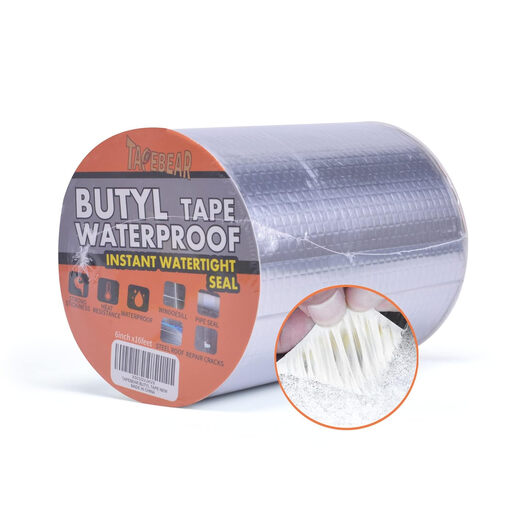
TAPEBEAR Butyl Tape, Waterproof Sealing Tape

TAPEBEAR Butyl Sealant Tape

The verdict: For those who live by the adage "better safe than sorry." This tape is the trusted solution for RV maintenance, creating a long-lasting seal on roof joints, window perimeters, or any crack.

Why it avoids the pitfall

It directly tackles the silent menace of leaks. Its pure butyl rubber composition guarantees a durable repair, unlike low-end adhesives that dry out and crack over time.

Key Advantage & Strengths

Its wide 150 mm format allows it to cover large areas. It adheres to a multitude of materials (PVC, glass, metal) and provides a complete shield against water, UV rays, and heat.
IDEAL FOR: THE NOMADIC COMFORT ENTHUSIAST
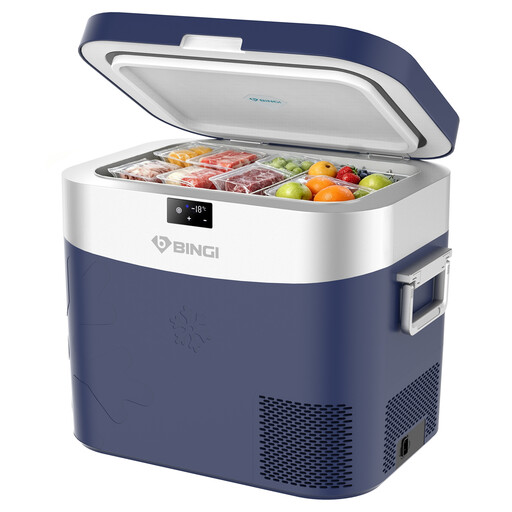
BINGI 22L Portable Compressor Cooler

BINGI 22L Portable Compressor Cooler

The verdict: The essential accessory for anyone who wants the certainty of keeping drinks and food cold, no matter the weather. Its 22L size is an excellent compromise between capacity and footprint.

Why it avoids the pitfall

It features compressor technology, the only kind that guarantees powerful and consistent cooling. This is a true portable fridge, not just a "cooling" box with underwhelming performance.

Key Advantage & Strengths

Runs on 12/24V DC, perfect for nomadic use. It provides rapid cooling with optimised energy consumption to preserve the vehicle's battery.

Looking for other top picks?

We have curated a complete selection of products for you that meet our strict selection criteria and current safety standards.

Frequently Asked Questions About RV Equipment

What is the lifespan of a portable diesel heater?

The longevity of a portable diesel heater depends on its build quality and, most importantly, its maintenance. A well-maintained unit can operate flawlessly for many years. Maintenance is simple: just run it at full power for 15 to 20 minutes at least once a month to burn off carbon deposits (soot) and always use high-quality diesel fuel.

Will a 12V compressor cooler drain my battery?

That's a valid concern. Rest assured, modern 12V compressor coolers are designed to be very energy-efficient. Most include multi-level battery protection (often low, medium, and high). This allows you to set the voltage threshold at which the cooler will automatically shut off, ensuring you always have enough juice to start the engine.

How do I correctly apply sealant tape for a durable repair?

For maximum effectiveness, surface preparation is the key step.

  1. Clean the repair area with a degreaser to remove all traces of dirt, dust, oil, or old sealant.
  2. Dry the surface completely. Butyl will not adhere to a damp surface.
  3. Apply the tape starting from one end, peeling back the protective film as you go.
  4. Press down firmly along the entire length with a small roller or a cloth to force out any air bubbles and ensure perfect contact. Most importantly, do not stretch it during application.