
Livraison le jour même ou le lendemain

Qualité garantie

Débloquez vos offres de bienvenue: Livraison GRATUITE | Jusqu'à -80 % | 30 jours d'essai gratuits à JoyPlus
Téléchargez l'application
A peeling gate, rust-spotted garden furniture or tools turning brown do not necessarily need to be thrown away. A rust converter can prepare a metal surface before painting, provided you choose a suitable formula and follow every application step.
However, the market has a few pitfalls. Some products are marketed as universal, even though they are designed only for ferrous metals. Others promise application without preparation, even though flakes, grease and dust must always be removed. Finally, the format — bottle, aerosol or larger container — has a direct impact on both price and ease of use.
A rust converter does not replace a wire brush, abrasive or paint stripper. It works on rust that is still bonded to the surface, transforming it and preparing it to receive protection. Any loose, crumbly areas must therefore be removed mechanically before application.
A rust treatment is not a substitute for a finishing paint either. To achieve lasting protection against corrosion, you will generally need to apply a paint specially formulated for metal afterwards, if the product instructions allow it.
Rust mainly affects ferrous metals such as iron and steel. A product designed for these surfaces is not necessarily suitable for aluminium, copper, brass or stainless steel. Always check the compatible materials stated on the label.
This precaution is particularly important for grilles, gates, tools, appliances and metal structures exposed to moisture. An unsuitable formula may produce an uneven finish or fail to deliver satisfactory results.
A surface that is dry to the touch is not necessarily ready to paint. Some treatments, such as the Frameto products featured here, specify 24 hours before repainting. This time must be observed with temperature, humidity and ventilation taken into account.
Safety precautions are not optional: wear gloves and protective goggles, work in a well-ventilated area and keep products out of children’s reach. When using an aerosol, also take into account that it contains a pressurised container.
Before choosing a rust inhibitor, start by identifying the material. On a ferrous metal, prepare the surface by removing:
The phrase ‘direct application to rust’ generally means that it is not necessary to remove every last trace of corrosion. It does not eliminate the need for thorough cleaning or the removal of unstable areas.
A small bottle is enough for a touch-up, a partially rusted grille or a small piece of furniture. For several garden items, a fence or a set of tools, a one-litre container will be more suitable. An aerosol makes it easier to cover recesses, corners and uneven surfaces, but it requires controlled spraying to avoid overspray.
Compare the quantity, the surface area to be treated and the number of jobs planned, rather than focusing solely on the price of the container.
If you plan to apply paint over rust, check three points: drying time, compatibility with metal paint and the finish achieved after treatment. A dark or zinc-effect shade may alter the final appearance if the finishing paint does not provide enough coverage.
For an indoor and outdoor rust treatment project, also make sure that outdoor use is clearly stated. Changes in temperature, rain and salty air accelerate corrosion, making preparation especially important.
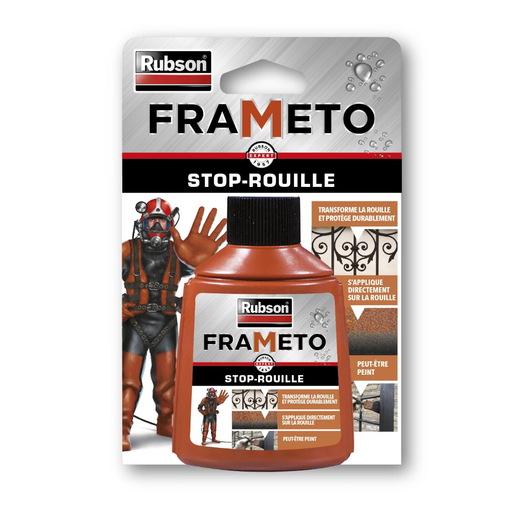
Why this choice suits this type of user : This small pack is ideal for a first repair or a limited area, without having to buy a large quantity for a single job.
The product details state that it can be applied directly to bonded rust, while also reminding you to clean the surface and remove loose areas before use.
90 ml format, suitable for indoor and outdoor use, a formula stated to be lead-free and the option to repaint after 24 hours of drying.
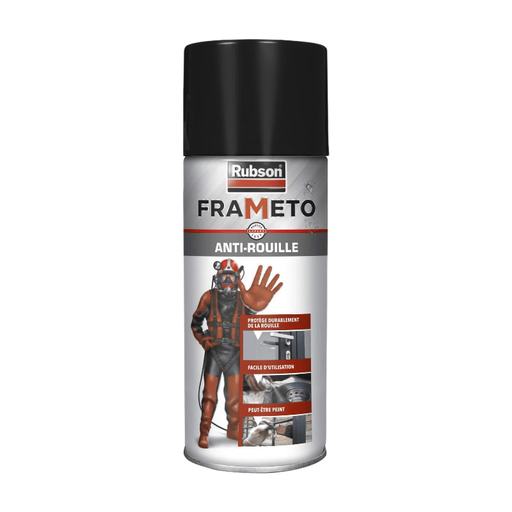
Why this choice suits this type of user : The aerosol format is ideal for projects requiring even application over raised surfaces, in corners or on hard-to-reach areas.
The instructions recommend cleaning beforehand, allowing 24 hours to dry and using the product in a ventilated area — steps not to rush through just to save time.
400 ml capacity, spray designed for even coverage and stated suitability for ferrous metals, both indoors and outdoors.
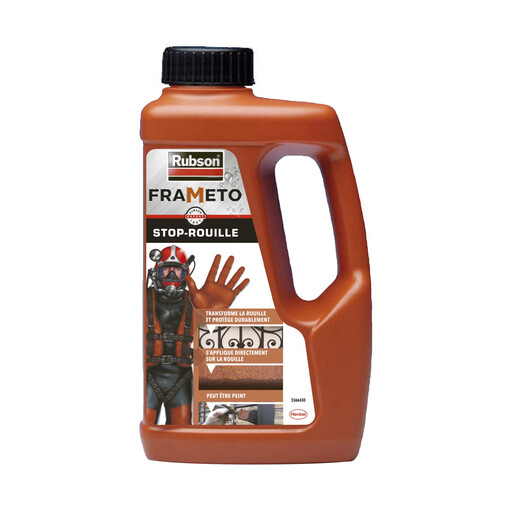
Why this choice suits this type of user : This large format is made for repeated jobs, maintaining several items of equipment or restoring a large surface.
Its volume avoids the need for multiple purchases, but it only makes sense if you genuinely have several ferrous surfaces to treat.
1-litre capacity, stated suitability for direct application and the option to paint after drying with a special metal paint.
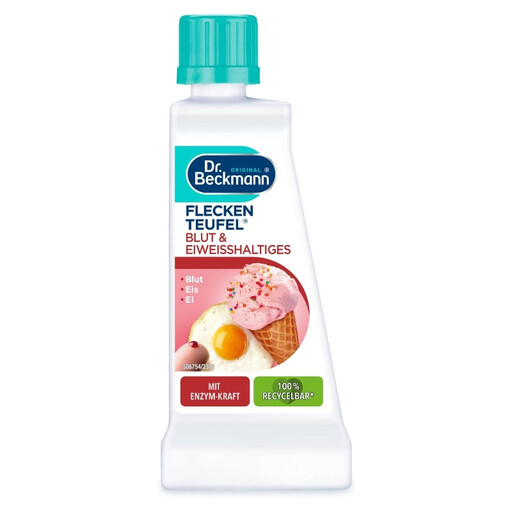
Why this choice suits this type of user : This product meets a completely different need: removing a stain from clothing, rather than treating corrosion on a gate or tool.
It prevents you from using a metal treatment on fabric. The product details exclude carpets and leather and recommend testing it on a concealed area first.
50 ml format, suitable for textiles and colours according to the product details, with gloves and eye protection required.
We have created a complete, real-time updated list of products that meet these strict selection criteria and European safety regulations.
Never use a product intended for metal on textiles, a surface that comes into contact with food or any material not specified by the manufacturer. To treat a rust stain on clothing, follow the stain remover’s instructions along with the washing instructions on the textile’s care label.
Yes, some treatments are formulated for direct application to rust that is still bonded to the surface. You must nevertheless remove flakes, degrease, dust and dry the surface. Very loose, deep or penetrating rust requires more thorough preparation and may even mean replacing the part.
The time required depends on the formula used and the surrounding conditions. The Frameto products featured here specify 24 hours of drying before repainting with a special metal paint. Always consult the instructions for the product you have bought and avoid painting in damp weather or on a cold, wet surface.
Not always. A converter intended for ferrous metals should not be applied to aluminium, copper or brass unless this is explicitly stated. Check the compatible materials before buying to choose a rust treatment that is suitable for your surface.