What should you look for?
First decide whether you’re making an open sandwich or a closed sandwich: a large topping surface and a thick slice are not the same thing. Then check the label of the specific product you’re planning to buy.
| What to look for |
Check |
Who it matters to |
| Topping surface |
Look for the words ‘large slices’; the pack weight and number of slices don’t tell you how thick they are. |
For a generously topped open sandwich, I look for enough surface area without assuming the slice is thick. Around 36% of consumers say this is their top priority. |
| Sandwich to take away |
In the sliced bread aisle, look for ‘thick-sliced’ or ‘special sandwich’ if you need to keep the filling enclosed. |
If my sandwich needs to stay closed while I’m travelling, the format matters more than the crunch of a rusk. This is the top priority for around 29% of consumers. |
| Ingredients and allergens |
Compare the values per 100 g and read the ingredients and allergen information on the pack you choose. |
Before buying a product for back-to-school, I want to check its sugar, salt and fibre content, as well as any allergens that affect me. Ingredients are the top priority for around 21% of consumers. |
| Pack size |
Check the net weight and number of slices against how much you expect to use. |
When several people are having toast, I look for a pack that suits the amount we’ll use. Around 14% of consumers put this format first. |
Rusks and crispbreads on Joybuy
These rusks and crispbreads are worth considering for open sandwiches at breakfast or as a snack. For a closed sandwich to take with you, look instead for sliced bread that is explicitly described as a sandwich loaf or has a stated slice thickness.
 Image unavailable
Heudebert Biscot Nat 300 g
Worth considering for an open sandwich if you’re looking for a crunchy rusk. The pack is listed as 300 g; if the size or thickness of each slice is important, check the packaging.
View on Joybuy
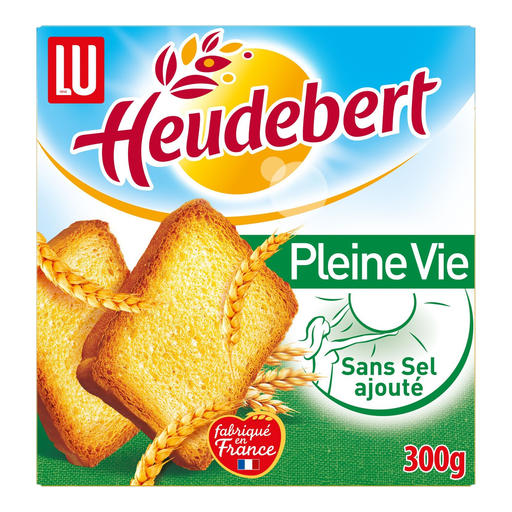 Image unavailable
LU Heudebert Unsalted Rusks 300 g
Worth considering for an open sandwich rather than a closed one. The pack is listed as 300 g. The name suggests a recipe with no added salt, but the product information also lists salt: check the ingredients and nutritional values on the packaging before relying on this claim.
View on Joybuy
 Image unavailable
KRISPROLLS Swedish Rusk Complete Nature Unsweetened 240 g
This crispbread can be used as a base for an open sandwich; it isn’t a rusk. The bag is listed as 240 g. If thickness matters, check the slice format; if you have an allergy or need to avoid an ingredient, check the label for wheat and barley.
View on Joybuy
Frequently asked questions
How can you tell if a rusk is genuinely thick?
Don’t assume you can tell how thick it is from the pack weight or number of rusks. ‘Large slices’ describes the surface area; if a particular thickness is essential, look for it on the packaging rather than relying on this wording alone.
What should you choose for a packed school sandwich?
For a filled sandwich that stays closed, choose sliced bread described as ‘special sandwich’ or thick-sliced. A rusk or toasted bread is still an option for an open sandwich, but it may not hold a moist filling together in transit.
What should you compare on packaging in France?
Compare the ingredients and nutritional values per 100 g, particularly sugars, salt, fat and fibre. France’s Directorate-General for Competition Policy, Consumer Affairs and Fraud Control states that nutrition information is given per 100 g or 100 ml, and that allergenic ingredients must be highlighted.
How should you store rusks and toasted bread?
Keep them somewhere cool and dry, away from heat and moisture, and follow the instructions on the packaging you choose. The Joybuy listing for the 300 g LU Heudebert product includes this storage advice.
Does choosing wholemeal or organic rusks mean you don’t need to check the ingredients?
No. ‘Wholemeal’ and ‘organic’ describe certain features of a product, not all of its nutritional values or allergens. The CLCV highlights differences between recipes in the same product category, so compare the labels of the specific products you’re interested in.


