Who are these pack sizes for?

Small household looking to reduce leftovers

For someone who lives alone or a couple who rarely have this kind of afternoon snack, it’s worth comparing a 225 g pack of toasted rolls with a 300 g box of rusks. However, the weight alone won’t tell you how much will be left once the pack is open.

Someone who pays close attention to ingredients

If fibre, salt, sugars or particular ingredients matter when choosing a product, compare the nutritional information and allergens for each one. Claims such as “wholemeal”, “organic” or “no added salt” are no substitute for checking the label.

Carer who needs to consider the texture

For someone who has difficulty chewing or swallowing, the dry, crunchy texture matters more than the pack size. The French National Authority for Health highlights the importance of appropriate care to manage the risk of choking.

What should you check before buying?

Start by thinking about how much is likely to be eaten, then check the recipe and texture. A smaller pack doesn’t automatically make its contents suitable for the person’s afternoon snack.

What matters What to check Who is it for?
Amount once opened Net weight and number of pieces; storage instructions after opening. For an occasional snack for one or two people, I want to avoid leaving a large pack open for a long time. Around 36% of consumers put the need for a smaller pack first.
Ingredients and allergens Ingredients, allergens and nutritional values per 100 g, especially fibre, salt and sugars. If the ingredients guide my purchase, the claims on the front of the pack aren’t enough to compare two recipes. Around 29% of consumers prioritise checking the label and allergens.
Texture Whether the person can chew and swallow a dry, crunchy texture; seek advice from a healthcare professional if they have difficulties. If chewing or swallowing is a problem, choosing a small pack doesn’t resolve the issue of texture. Around 21% of consumers put suitability of the texture first.
How often it’s eaten How much is actually eaten between shopping trips and how easy it is to buy more. If this is a regular snack, I look for a pack that suits my usual consumption rather than a smaller size I have to keep replacing. Around 14% of consumers prioritise their usual shopping routine.

Mistakes to avoid

  • Searching only for “half loaf”

    This phrase alone doesn’t tell you how many rusks or toasted rolls are in a pack. For example, 225 g packs of toasted rolls are available from Auchan and Carrefour.

    Try searching for “toasted rolls” instead, then compare the net weight and number of pieces shown.

  • Assuming a small pack will always prevent leftovers

    You’ll buy a smaller amount, but the result also depends on how often you have afternoon snacks and how the product should be stored after opening.

    Choose a pack size that suits your household’s actual consumption and follow the storage instructions on the packaging.

  • Relying only on “wholemeal”, “organic” or “no added salt”

    These claims don’t tell you everything about the recipe or all its allergens. For example, the product information for Auchan Bio 225 g toasted rolls lists wheat and 1.2 g of salt per 100 g.

    Compare the ingredients, allergens and nutritional information per 100 g, and take into account any individual dietary advice you’ve already received.

  • Choosing a very crunchy product despite eating difficulties

    Problems with chewing or swallowing can make this texture unsuitable. The French National Authority for Health highlights the potentially serious consequences of choking.

    If the person coughs while eating or regularly has difficulty swallowing, ask their healthcare professional for advice before choosing this texture.

Brands to compare

Carrefour Extra / Carrefour Classic'

Two ranges to consider for different products: wholemeal toasted rolls and rusks with no added salt.

  • Carrefour Extra offers 225 g packs of wholemeal toasted rolls, while Carrefour Classic' offers 300 g packs of rusks with no added salt.
  • Check the ingredients of the product you choose and whether it’s available at your store. The range name alone isn’t enough to judge whether it suits an individual.

Auchan Bio / Auchan

The 225 g packs of Auchan Bio wholemeal toasted rolls let you compare a smaller size using the nutritional values listed for this product.

  • Auchan’s product information lists around 18 rolls, 8.5 g of fibre and 1.2 g of salt per 100 g.
  • This product contains wheat and may contain traces of sesame and other cereals containing gluten.

Heudebert

The 300 g packs of plain rusks and rusks with no added salt offer two recipes to compare in the same pack size.

  • The plain variety described in the information provided lists ingredients including wheat flour, palm oil, sugar, yeast and salt.
  • For the no-added-salt version, check the ingredients and allergens on the packaging before choosing.

Brioche Pasquier

Its 225 g packs of wholemeal toasted rolls are another smaller-size option to consider.

  • The ingredients listed include wheat, crushed wheat and wheat sourdough starter.
  • The product is still crunchy and contains wheat; a smaller pack size alone won’t address difficulty chewing or swallowing.

Bon&Bio (ALDI)

The 300 g wheatgerm rusks can be used for comparison if this pack size suits your household’s consumption.

  • ALDI offers this product in a 300 g pack.
  • Check the pack label to compare its ingredients, allergens and nutritional values with those of another product.

Joybuy products to suit the amount you need

This selection includes crunchy products in 240 g and 250 g packs to compare for a small household, followed by two 425 g packs to consider if you eat them more regularly. A Cracotte crunchy slice isn’t a rusk, so check that this type of product is what you’re looking for.

240 g pack of KRISPROLLS Complete Nature toasted rolls

KRISPROLLS Complete Nature, 240 g

Consider this 240 g pack if you’d like to buy a smaller amount than the 300 g sizes. Check the ingredients and allergens on the packaging. As with any crunchy product in this selection, make sure the texture is suitable for the person eating it.

View on Joybuy
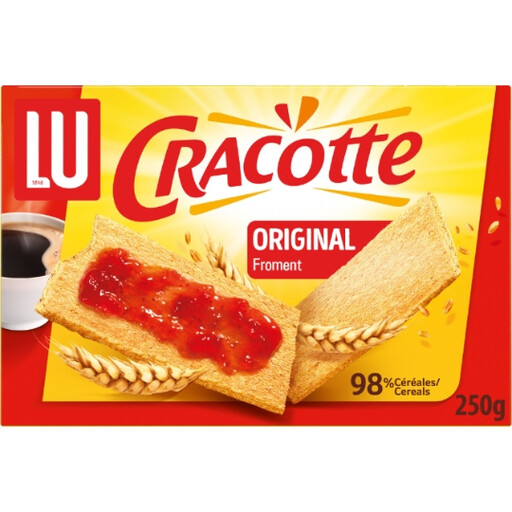
250 g pack of LU CRACOTTE Original crunchy slices

LU CRACOTTE Original crunchy slices, 250 g

These 250 g crunchy slices offer another option that’s smaller than 300 g, but they shouldn’t be confused with rusks. If the person avoids certain ingredients, check the recipe on the packaging before buying.

View on Joybuy

425 g pack of KRISPROLLS wholemeal toasted rolls

KRISPROLLS wholemeal, 425 g

The 425 g pack is better suited to a household that eats this kind of product regularly, as there’s more to use than in a 225–250 g pack. Check the ingredients and storage instructions on the pack.

View on Joybuy
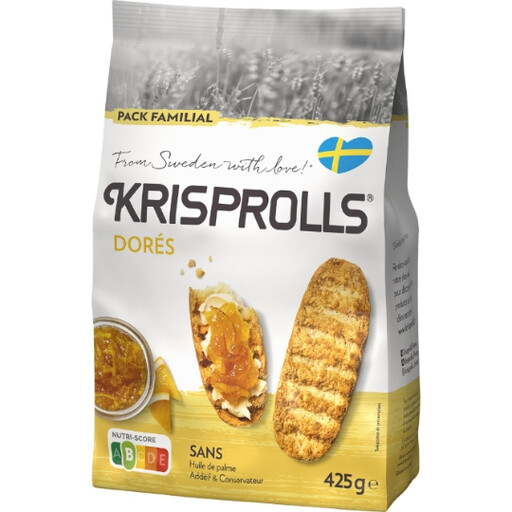
425 g pack of KRISPROLLS Golden

KRISPROLLS Golden, 425 g

This 425 g pack is best suited to households that can use a large pack once it’s open. If added sugars matter to you, check the ingredients list on the packaging rather than relying on a claim in the product listing.

View on Joybuy

Frequently asked questions

What should I look for instead of “half loaf” for a small snack?

Compare the net weights of rusks and toasted rolls rather than relying on this English phrase. Auchan and Carrefour, for example, offer 225 g packs of toasted rolls. Check the number of pieces too, along with the storage instructions after opening.

Is a wholemeal or no-added-salt rusk always suitable for an older person?

No. These claims describe the recipe, not the person’s individual needs or how easy the product is to chew and swallow. Check the label and, if the person has been given specific dietary advice, discuss the choice with their healthcare professional.

What should I do if the person coughs or struggles to swallow a rusk?

Don’t automatically choose a crunchy texture. Ask the person’s healthcare professional for advice. The French National Authority for Health highlights that the risk of choking needs to be properly assessed and managed.

How should I read the date on the pack?

First, check the exact wording: the French Ministry of the Economy distinguishes between a use-by date, which must be followed, and a best-before date, which relates to the product retaining its properties. Also follow the storage conditions and instructions for after opening on the packaging.