For a small household, compare the weight and number of pieces with how often you’ll be making packed lunches. Toasted rolls are available in 225 g packs, while a box of rusks can contain 2 × 18 slices. If you’re looking for a ‘half loaf’, toasted rolls, crisp toast and rusks are the formats to explore. If there’s an allergy or medical diet to consider, the format alone isn’t enough: check the pack label and the school’s arrangements before planning a packed lunch.
Who are these formats suitable for?
Small household making a few packed lunches
If the pack will also be used for breakfast, work out how many pieces you’ll use after opening it. Toasted rolls in 225 g packs, available from retailers including Auchan and E.Leclerc, and a box of 2 × 18 Heudebert rusks listed by Auchan give you specific formats to compare. A smaller pack won’t automatically prevent leftovers.
Family that likes to vary the toppings
For sweet or savoury toppings, compare the shape of the slices or rolls, the number of pieces and the recipe. Carrefour and Auchan stock several varieties: the retailer’s name alone won’t tell you which pack is right for the portions you’re preparing.
Pupil with an allergy or medical dietary requirement
Check the ingredients of the product you buy: the wholemeal Epi d’Or and Auchan toasted rolls described by these retailers contain wheat and gluten. If a medical condition means meals need to be adapted, also contact the school about an individual healthcare plan (PAI). The French Ministry of Education states that packed lunches provided under this arrangement are subject to specific requirements.
What should you check before choosing?
Start with how much will actually be eaten, then consider how you’ll transport each portion. The recipe and, where relevant, any dietary or school requirements may rule out a format that initially seemed convenient.
| What matters |
What to check |
Who is it for? |
| Keeping leftovers to a minimum |
Compare the weight, number of pieces and storage instructions once opened. |
When I’m only planning a few packed lunches, I want to use up the pack while it’s still in good condition. Around 31% of consumers would make getting the right quantity their priority. |
| Taking a portion with you |
Check the size of the pieces and use a compartment that protects them from moist foods. |
If the lunchbox only needs a small portion, I want to be able to separate it without crushing it. Easy transport would be a priority for around 31% of consumers. |
| Choosing a recipe |
Read the ingredients and compare the nutritional information per 100 g, particularly fibre, sugars and salt. |
Between a plain, brioche-style or wholemeal recipe, I’d rather check exactly what’s in the pack. Around 23% of consumers would put the recipe first. |
| Meeting a dietary requirement |
Check the allergens on the pack you buy and, if necessary, ask the school about its PAI arrangements. |
If a pupil follows a medical diet, I first need to avoid unsuitable products and arrange their meal with the school. This check would be the priority for around 15% of consumers. |
Mistakes to avoid
-
Assuming a small pack will always prevent leftovers
A 225 g pack only helps if it contains the right amount for the meals and breakfasts you have planned. Storage conditions also matter once the pack is open.
Estimate how many pieces you’ll use during the week and follow the storage instructions on the packaging. The listing for the Auchan toasted rolls reviewed here specifically notes that they are sensitive to heat and humidity.
-
Confusing ‘wholemeal’ with ‘gluten-free’
The Epi d’Or and Auchan wholemeal recipes reviewed here list wheat and gluten. ‘Wholemeal’ describes the flours used; it doesn’t mean the product is free from allergens.
If the pupil’s diet excludes an ingredient, check the ingredients and allergens on the pack you’re actually buying before adding it to their lunchbox.
-
Preparing a medical packed lunch without contacting the school
Arrange with the school how the meal should be delivered, stored and served. According to the French Ministry of Education, packed lunches provided under a PAI are subject to strict requirements.
Before the first relevant meal, ask the school or its catering team which procedure applies to the pupil’s situation.
Brands to compare
Heudebert
Auchan lists, among other options, a 290 g box of Heudebert rusks containing 2 × 18 slices. Carrefour and Auchan also stock other varieties from the brand.
- The slice count shown on this box makes it easier to plan portions.
- Check the ingredients and allergens for each variety.
Carrefour
Carrefour stocks its own-brand rusks and toasted rolls, including 225 g packs of toasted rolls.
- Plain, wholemeal and brioche-style varieties let you compare different recipes.
- Check the number of pieces and the ingredients for the product you choose rather than assuming these are the same across the range.
Epi d’Or
E.Leclerc describes Epi d’Or wholemeal wheat toasted rolls in a 225 g pack.
- The product information lists the flours used and provides nutritional values per 100 g.
- This product contains wheat and wheat gluten, so it isn’t suitable if these ingredients need to be avoided.
Auchan
Auchan lists 225 g packs of wholemeal toasted rolls, with around 18 pieces.
- The product information specifies the ingredients and allergens and notes that these rolls aren’t individually wrapped.
- Use a separate container if the portion is packed alongside moist foods; the recipe contains wheat and gluten.
Mannapain
ALDI France lists Mannapain toasted rolls in a 225 g pack.
- This gives you another pack size to compare when working out how much a small household will use.
- Check the packaging of the product you choose for ingredients, allergens and the number of pieces.
Rusks and toasted rolls on Joybuy
This selection includes wholemeal toasted rolls and packs of rusks. If you’re choosing for a few packed lunches, compare the weight with the number of pieces shown on the pack and check the ingredients of the variety you select.
 Image unavailable
Krisprolls plain wholemeal toasted rolls, 240 g
Worth comparing if you’re looking for toasted rolls to portion out between meals at home and packed lunches. The pack weighs 240 g; check the number of pieces and the storage instructions once opened to see if it suits how quickly you’ll use them. The product description lists gluten from wheat and barley.
View on Joybuy
 Image unavailable
Heudebert plain rusks, 300 g
If you prefer sliced rusks with toppings in a lunchbox, compare this 300 g pack with the number of slices you’ll use. Check the number of pieces on the packaging before planning portions. The product description lists wheat and soya lecithin, so check the allergens on the pack you buy.
View on Joybuy
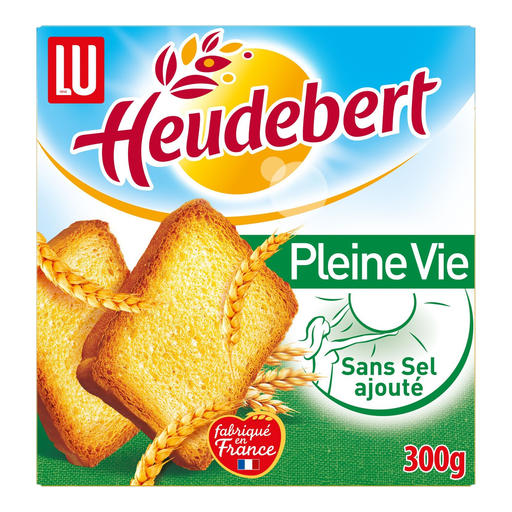 Image unavailable
LU Heudebert Unsalted rusks, 300 g
Compare this variety with other 300 g packs if you’re looking for a particular recipe for packed lunches. Check the number of pieces and how they’re packed before preparing portions. The description lists gluten, so check the label if you have a dietary requirement.
View on Joybuy
Frequently asked questions
What should I look for if I see the term ‘half loaf’?
To find a compact pack in the French shops reviewed here, try searching for ‘toasted rolls’, ‘crisp toast’ or ‘rusks’. Then compare the weight and number of pieces: in these shops, ‘half loaf’ doesn’t refer to a specific size of rusk pack.
Can wholemeal toasted rolls be suitable for a gluten-free diet?
Not the Epi d’Or and Auchan wholemeal products described here: their product information lists wheat and gluten. If gluten needs to be avoided, check the ingredients and allergens on every pack you’re considering. The word ‘wholemeal’ doesn’t answer that question.
Can a pupil take an allergy-friendly packed lunch to school?
If a medical condition means a pupil needs an adapted diet, ask the school or its catering team what arrangements apply. The French Ministry of Education states that packed lunches provided under a PAI are subject to strict requirements, so preparing one doesn’t remove the need to check with the school.
How can I compare two packs to avoid leftovers?
Compare the weight and number of pieces with the packed lunches and other meals you have planned, then read the storage instructions. To compare recipes, also check the ingredients and nutritional information per 100 g. The DGCCRF states that this information makes it possible to compare the nutritional values of different products.


