Anyone who enjoys a treat with their coffee
You put flavour and texture first, whether you enjoy your rusk plain or with a topping. Carrefour’s product pages for Heudebert rusks feature, among others, a brioche-style recipe and a Braisor recipe.


For a coffee break, choose a brioche-style rusk if flavour and texture matter most, a plain one if you want a crunchy bite without the brioche flavour, or a wholemeal one if you’re looking at the proportion of wholemeal flour and fibre. The “no added sugars” claim addresses a different need: check the sugars, salt and allergens for the specific product too.
You put flavour and texture first, whether you enjoy your rusk plain or with a topping. Carrefour’s product pages for Heudebert rusks feature, among others, a brioche-style recipe and a Braisor recipe.
You want to check the proportion of wholemeal flour in the ingredients and compare fibre per 100 g. The wholemeal products described by Auchan and E.Leclerc provide information specific to each recipe.
You compare sugars, salt and allergens before choosing. France’s Directorate-General for Competition Policy, Consumer Affairs and Fraud Control reminds shoppers that allergenic ingredients must be highlighted on the labels of prepacked foods.
For your morning coffee break, start with what matters most to you, then compare the exact recipe: a claim on the front of the pack doesn’t tell you everything about what’s inside.
| Criteria | What to check | Who is it for? |
|---|---|---|
| Flavour and texture | Whether it’s plain or brioche-style, then the ingredients that give it the flavour you’re looking for. | With my coffee, I mainly want a rusk whose flavour and texture I enjoy, plain or with a topping. Around 40% of consumers put this enjoyment first. |
| Wholemeal flour and fibre | The proportion of wholemeal flour in the ingredients and the fibre per 100 g. | If I’m looking for a wholemeal recipe, I want to be able to tell how it differs from a plain rusk. Wholemeal flour and fibre are the top priority for around 30% of consumers. |
| Detailed ingredients | Sugars and salt per 100 g, highlighted allergens and any potential traces. | If I need to consider an ingredient or a claim such as “no added sugars”, flavour alone isn’t enough to help me decide. Around 30% of consumers put checking the ingredients first. |
These terms alone don’t tell you about fat, sugars or fibre. A brioche-style recipe and a wholemeal recipe suit different tastes, but their names don’t let you compare all their nutritional values.
Start by choosing the texture you want, then check the nutrition table for the exact product per 100 g.
According to its product page, Auchan’s whole wheat rusk carrying this claim contains 3.4 g of sugars and 1.5 g of salt per 100 g. The claim doesn’t tell you about allergens either.
Check the ingredients list, allergens and nutritional information together.
The Bio Village and Pasquier wholemeal products described on E.Leclerc and Auchan’s product pages contain wheat or gluten. These terms refer to other characteristics of the recipe.
If gluten or another allergen is a concern for you, check the ingredients and any warnings on the pack you buy.
The range featured by Carrefour includes rusks with different recipes and textures, including Brioché and Braisor.
The retailer offers, among other products, a whole wheat rusk with no added sugars and another organic wholemeal recipe.
The Bio Village product featured by E.Leclerc is a wholemeal rusk made with organically farmed ingredients.
The Pasquier whole wheat rusk listed by Auchan lets you choose based on the stated proportion of wholemeal flour.
Aldi sells a 300 g pack of wheat germ rusks under this brand.
These products offer the option of a plain rusk or crispbread to enjoy with your coffee. Swedish crispbreads should be compared based on their own recipe: they’re not the same as traditional French rusks.
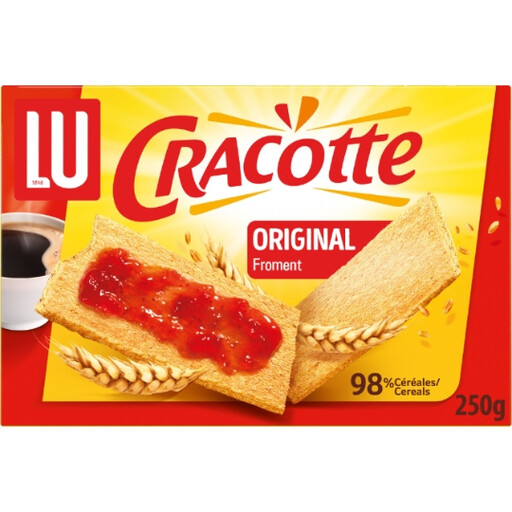 Image unavailable
These slices are a good choice if you’re looking for a crunchy bite with your coffee rather than a brioche flavour.
250 g pack. The listed ingredients include wheat, rye and skimmed milk powder. Check the label if any of these are a concern for you.
 Image unavailable
This Swedish crispbread is a good option if you’re looking for wholegrains with your coffee, though it isn’t the same as a traditional rusk.
According to the Joybuy product page, it contains 62% wholemeal wheat and 8.3 g of fibre per 100 g. The page states “no added sugars” and lists gluten from wheat and barley.
 Image unavailable
This plain rusk is a good choice if you want something crunchy with your coffee but don’t fancy a brioche-style version.
300 g pack. The listed ingredients include sugar and salt. Compare the values per 100 g on the packaging.
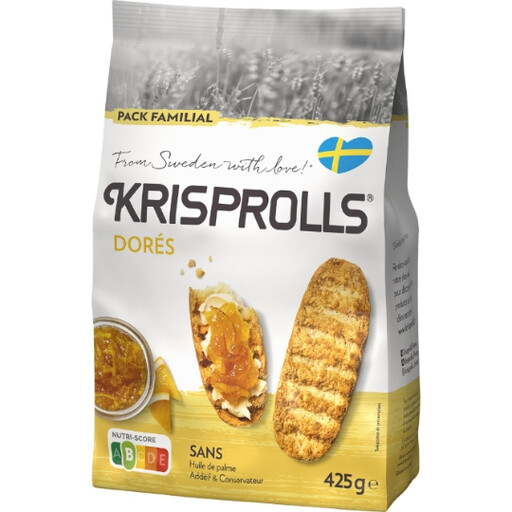 Image unavailable
This crispbread is for anyone who loves a crunchy bite and is happy to try something different from a traditional French rusk.
425 g pack. The product page says “no added sugar”, but the ingredients list includes sugar. Check the pack before choosing it based on this claim. The page also lists gluten from wheat and barley.
Start with what matters most to you: a brioche-style recipe for its flavour, a plain one for a crunchy bite without the brioche flavour, or a wholemeal one if you want to check the proportion of wholemeal flour and the fibre content. Then compare the ingredients and nutritional values per 100 g for each product.
No. The product page for Auchan’s whole wheat rusk carrying this claim lists 3.4 g of sugars per 100 g. Check the claim, ingredients list and “sugars” line in the nutritional information separately.
Keep them away from moisture and follow the instructions on the pack. Joybuy’s product page for KRISPROLLS wholemeal crispbread recommends sealing the bag tightly after opening.
On the packaging of prepacked food sold in France, look for allergens highlighted in the ingredients list and check for any trace warnings too. France’s Directorate-General for Competition Policy, Consumer Affairs and Fraud Control states that nutritional information is given per 100 g or 100 ml. For rusks, use 100 g as the basis for comparison.