For an occasional breakfast
If you’re after a brioche flavour for brunch or a special meal, check the exact recipe rather than relying on the range name. Auchan’s listing for Heudebert brioche-flavour rusks, for example, mentions butter and milk.


For your first food shop, don’t choose a rusk just because it’s labelled “premium”. Start with the recipe you’ll actually want to eat. A brioche-style version is for when you fancy a brioche flavour, a wholemeal version may suit you if ingredients are your priority, and a no added salt option is worth considering if you’re looking to reduce salt. In every case, check the ingredients, allergens and nutritional information for the specific variety you’re choosing.
If you’re after a brioche flavour for brunch or a special meal, check the exact recipe rather than relying on the range name. Auchan’s listing for Heudebert brioche-flavour rusks, for example, mentions butter and milk.
A wholemeal recipe may catch your eye if you’re comparing fibre and ingredients. The Heudebert wholewheat rusks listed by Auchan contain 6.5 g of fibre per 100 g; their salt content and allergens are also worth considering.
If salt is your main consideration, compare the “salt” figures in the nutritional information per 100 g. Also check the ingredients and allergen information on the exact pack you’re buying.
For your first food shop, start by choosing a recipe to suit how you plan to use it, then compare the labels of products that meet your needs.
| What to consider | What to check | Who is it for? |
|---|---|---|
| Brioche-style recipe | Whether it contains butter or milk, followed by the fat and sugar content per 100 g. | For an occasional brunch, I’m mainly looking for a brioche flavour, while also keeping dairy ingredients in mind. Around 36% of consumers prioritise this type of recipe. |
| Ingredients and fibre | The fibre, salt and ingredients in the wholemeal or multigrain variety. | If I regularly top rusks for breakfast, I put their ingredients ahead of a brioche flavour when choosing. This is the main consideration for around 29% of consumers. |
| Salt content | The “salt” figure per 100 g and the exact variety. | When comparing several packs, I first want to see how their salt content differs, without assuming that “no added salt” means no salt at all. This is a priority for around 14% of consumers. |
| Pack size and storage | The quantity, best-before date and storage instructions. | When stocking my first cupboard, I prefer a pack I can store somewhere cool and dry and use in time. Around 21% of consumers put this practical consideration first. |
These terms don’t sum up the sugar, fat or salt content of a recipe. For example, Auchan lists 6.5 g of fibre, but also 1.4 g of salt per 100 g, for Heudebert wholewheat rusks.
Compare the values per 100 g and the ingredients in the varieties you’re interested in.
Ingredients vary by recipe: the Heudebert brioche-flavour version listed by Auchan contains butter and a milk-derived ingredient, among other things.
Check the highlighted ingredients and any “may contain” statements on the pack of the variety you’re buying.
When stocking your cupboard, choose a pack size that suits the space you have and how quickly you’ll use it.
Check the best-before date and storage instructions. Keep rusks somewhere cool and dry, away from heat and moisture.
Several rusk recipes to compare separately: wholewheat, brioche flavour or no added salt.
A plain rusk variety to consider if you’re after a simple recipe to keep in the cupboard.
The Marque Repère range featured by E.Leclerc includes a variety of rusks and crispbreads.
ALDI sells a 300 g pack of wheat germ rusks under this name.
These Joybuy products give you the option of no added salt rusks, wholemeal Swedish crispbreads or plain rusks to keep in the cupboard. Swedish-style crispbread isn’t a direct substitute for French rusks if it’s specifically the latter you’re looking for.
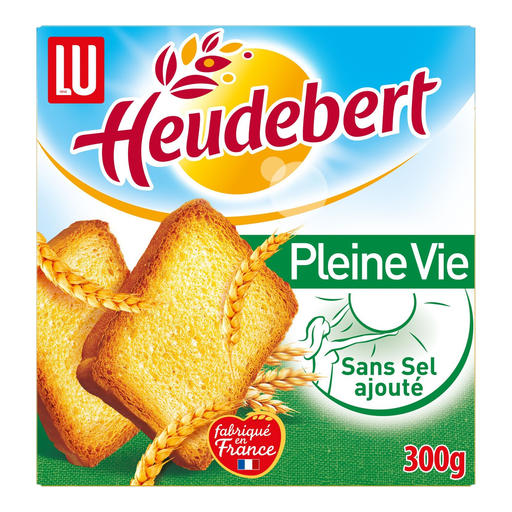 Image unavailable
Worth considering if you’re first comparing recipes by their salt content. “No added salt” doesn’t mean salt-free, so check the figure per 100 g on the pack. This product may contain sesame.
 Image unavailable
Worth a look if you’re interested in a wholemeal recipe and Swedish crispbread suits how you plan to use it. Compare its label with those of the rusks you’re considering: the recipe name alone doesn’t tell you how their nutritional values differ.
 Image unavailable
A plain rusk to consider for breakfast or to keep in your first kitchen cupboard. If your choice depends on a particular allergen or nutritional value, check the information on the pack of this variety before buying.
Start with the nutritional values per 100 g, then check the ingredients and allergens. The French Directorate-General for Competition Policy, Consumer Affairs and Fraud Control (DGCCRF) states that nutritional information is given per 100 g or 100 ml, making it possible to compare packs of different sizes.
For prepacked food, look for allergenic ingredients highlighted in the ingredients list, as required by the labelling rules outlined by the DGCCRF. Also check any “may contain” statements for the variety you’re buying, as these can differ between recipes.
No: the word “wholemeal” doesn’t tell you everything about a product’s nutritional values. For the Heudebert wholewheat rusks mentioned here, Auchan lists 6.5 g of fibre and 1.4 g of salt per 100 g. Also compare the sugar, fat and ingredients in the other products you’re considering.
It doesn’t mean that the rusks contain no salt at all. To choose between products, check the salt content per 100 g and make sure the label matches the variety you’re adding to your basket.
Keep them somewhere cool and dry, away from heat and moisture, and follow the instructions on the pack. Also check the best-before date when choosing a pack you plan to keep in the cupboard.