Holidaymakers keeping an eye on fibre
If you’re choosing rusks for breakfasts or snacks during your stay, you may want to compare the fibre content of different options. The amount per 100 g lets you look beyond the name given to the recipe.


If fibre is your top priority, compare the amount per 100 g shown on the packets rather than relying on the word ‘digestive’ when choosing rusks. A wholemeal recipe or one with no added sugar meets a different need. For your holiday, also check that the pack size and number of slices are right for the length of your stay. Biscuits sold as ‘Digestive’ are not rusks.
If you’re choosing rusks for breakfasts or snacks during your stay, you may want to compare the fibre content of different options. The amount per 100 g lets you look beyond the name given to the recipe.
You may be looking for wholemeal wheat or a mix of grains. Check the ingredients for the specific product: ‘wholemeal’ and ‘multigrain’ describe different recipes and don’t, on their own, tell you how much fibre a product contains.
You’ll want enough rusks without taking an unnecessarily large pack. The net weight and the number of slices, when shown on the packet, can help you choose a size that suits your stay.
When choosing rusks to take on holiday, start with what matters most to you, then check the other details on the packet you choose.
| What to compare | What to check | Who is it for? |
|---|---|---|
| Fibre | Compare the fibre per 100 g and check whether each product is labelled ‘a source of fibre’. | If fibre is my top priority at breakfast, I want to be able to compare packs on a like-for-like basis. Around 43% of consumers would prioritise this above all else. |
| Ingredients | Read the ingredients list and, if it matters to you, check for a ‘no added sugar’ claim. | If I’m mainly looking for a wholemeal recipe or one with no added sugar, the product name alone isn’t enough to help me choose. This would be the priority for around 29% of consumers. |
| Pack size | Check the net weight, the number of slices shown and the condition of the packaging. | If I’m away from home for several breakfasts, I want to take an appropriate amount without bringing several packs. Around 28% of consumers would put pack size first. |
Carrefour France lists a McVitie’s product called ‘Digestive’ among its crunchy biscuits. The name doesn’t tell you that it’s a rusk or how much fibre it contains.
Make sure you’re looking at rusks, then compare the nutritional information and ingredients for the specific product you’re considering.
These terms describe different aspects of a product. The ingredients list tells you about the recipe, while the ‘fibre’ value lets you compare the amount per 100 g.
Check the ingredients and nutritional information separately. Don’t assume all grain-based rusks contain the same amount of fibre.
Pack sizes listed by Carrefour France and E.Leclerc include 280 g and 300 g options; Carrefour France also lists an 875 g Heudebert product. Weight alone doesn’t tell you how much you’ll get through.
Choose a pack size to suit the number of breakfasts you’re planning and check how many slices are in the pack.
The ingredients list published by Auchan France for its wholemeal wheat rusks with no added sugar includes wheat flour and wheat gluten.
If you need to avoid an ingredient, check the ingredients list and allergen information on the exact pack before choosing.
Heudebert offers several rusk recipes in a range of pack sizes, making it easy to compare different options.
Carrefour France offers rusks made with a variety of recipes, including one made with wholemeal wheat flour.
E.Leclerc offers Marque Repère rusks and crispbreads, including rusks made with six grains.
Auchan France offers wholemeal wheat rusks with no added sugar for shoppers who prioritise these recipe features.
Aldi France offers BON&BIO wheatgerm rusks, another recipe to consider when comparing options.
These products include rusks and similar grain-based breakfast or snack options for your holiday. The third is described as a biscuit, so check its category if you’re specifically looking for rusks.
 Image unavailable
Worth considering if you’re looking for wholemeal Swedish rusks for your stay. The product name specifies a 240 g bag and the claim ‘Unsweetened’. If sugar or fibre matters to you, compare the nutritional information on the pack.
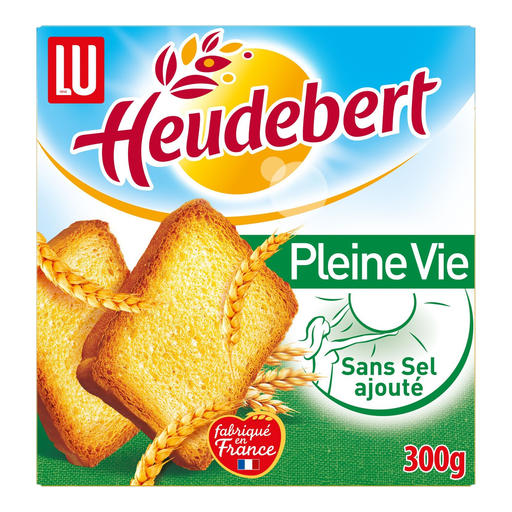 Image unavailable
A rusk to compare if salt content is part of your decision. The pack is listed as 300 g; the word ‘Unsalted’ alone doesn’t tell you how much salt it contains, so check the nutritional information.
 Image unavailable
Consider this if you’re comparing wholegrain products, but don’t assume a biscuit will meet your need for rusks. The product name specifies a 425 g pack and the claim ‘No Added Sugar’. Check the category and nutritional information on the packaging.
No. The word doesn’t mean the product has a digestive effect. Carrefour France uses it, for example, for a McVitie’s biscuit listed among its crunchy biscuits, which are different from rusks. To compare rusks, check their ingredients and nutritional information.
Check the fibre per 100 g for both products and see whether either pack carries a relevant claim. Descriptions such as wholemeal or multigrain don’t remove the need to compare them.
Check the ingredients, nutritional information, net weight, date shown and condition of the packaging. If you’re planning several breakfasts, the number of slices listed can also help you decide how much to take.
Don’t assume they are. The wholemeal wheat rusks with no added sugar listed by Auchan France contain wheat and wheat gluten. Check the ingredients and allergen information on the specific pack you’re considering.