For a hotel breakfast, start by choosing rusks according to the role they’ll play on the buffet: a cereal or seed recipe to add variety, a wholemeal option or one with a stated fibre content, or an option whose salt content has been checked. The number of slices and storage instructions also matter for service. Whatever the recipe, check the ingredients and allergens for the product being served.
Who is this choice for?
Managers looking to add variety to the buffet
You’re looking for an alternative to classic rusks, such as a cereal and seed recipe or a different slice format. The ingredients and packaging help you tell products apart without making assumptions about their taste.
Hotels planning to offer specific options
You’d like to offer a wholemeal recipe or an option with no added salt. Compare the ingredients and nutritional information per 100 g for each product before labelling it this way on the buffet.
Venues welcoming guests with declared allergies
You need to be able to identify the allergens in the product actually being served. Wheat and gluten feature in several of the recipes reviewed; other ingredients or traces vary by product.
What should you check?
For a hotel buffet, start with the main need each product is intended to meet, then check its label and serving format.
| Criteria |
What to check |
Who is it for? |
| Buffet variety |
The list of cereals and seeds, followed by the recipe’s allergens. |
To make my buffet stand out from one offering only classic rusks, I look for a different recipe that I can describe accurately. Around 36% of consumers making this choice would prioritise variety. |
| Wholemeal recipe and fibre |
The stated proportion of wholemeal flour and the fibre content per 100 g. |
If I’m planning a wholemeal option, I want to compare its ingredients and nutritional information rather than rely on the product name alone. Around 27% of consumers would put this first. |
| Salt |
The salt content per 100 g and the exact wording on the packaging. |
To offer a distinct option on this basis, I need a clearly stated salt content. Around 19% of consumers would prioritise this option. |
| Pack size and replenishment |
The number of slices, pack weight and storage instructions once opened. |
When the buffet needs frequent replenishment, I want to choose packaging that suits consumption and protect any opened packs. Pack size would be the first consideration for around 18% of consumers. |
Mistakes to avoid
-
Assuming ‘wholemeal’, ‘cereal’ or ‘premium’ means ‘gluten-free’
The Heudebert, Auchan and Bio Village wholemeal products reviewed contain wheat; the Pasquier cereal and seed recipe also lists several cereals and sesame.
If someone has a declared allergy or intolerance, check the ingredients and allergens on the specific pack before serving.
-
Reading ‘no added sugars’ as ‘sugar-free’
The relevant Auchan and Pasquier product listings state that their products may contain naturally occurring sugars.
Use the exact wording on the packaging and check the ‘of which sugars’ line in the nutritional information per 100 g.
-
Choosing a large pack without planning how to store it
The Heudebert Braisor box listed by Carrefour contains 60 slices and weighs 500 g. That number of slices doesn’t remove the need to match the quantity opened to the buffet’s rate of consumption.
Check the storage instructions for the product you buy and protect any remaining rusks as directed on the packaging.
A pack left open for too long or exposed to moisture may lose its crunch, leading to waste.
Brands to know when comparing products
Heudebert
Carrefour and Auchan listings include rusks with different ingredients and pack sizes.
- Carrefour lists 60 slices and a 500 g pack for the Braisor product; Auchan also offers a Pleine Vie product with no added salt.
- These features don’t apply to the whole range. Check the ingredients, allergens and pack details on each product.
Epi d’Or
This Marque Repère brand appears in E.Leclerc’s rusks and crispbreads category.
- E.Leclerc lists, among other products, a wheat rusk with a very low salt content.
- Rusks and crispbreads aren’t interchangeable categories. Check the product description and ingredients for the one you choose.
Auchan
The brand’s product listings let you compare wholemeal recipes with bran, with or without added salt.
- The listing for its fibre and bran rusks states that they contain 95% wholemeal wheat flour, including 15.8% wheat bran.
- A wheat-based recipe isn’t gluten-free, and ‘no added sugars’ doesn’t mean ‘sugar-free’.
Pasquier
The products listed include cereal and seed rusks, as well as a recipe with no added salt or sugars.
- The Auchan listing for its six-cereal and seed rusks lets you check the ingredients for this product.
- This recipe includes wheat and sesame, among other ingredients. The other product contains naturally occurring sugars.
Bio Village
E.Leclerc lists an organic wholemeal rusk product with its ingredients and nutritional information displayed.
- Its listing states that it contains 89.1% organic wholemeal wheat flour and 10 g of fibre per 100 g.
- This recipe contains wheat and gluten; being organic doesn’t change that.
Rusks and crispbreads on Joybuy
This selection brings together two wholemeal KRISPROLLS products and two Heudebert rusks for your buffet. Compare their packaging and labels before deciding where each one fits in your selection.
 Image unavailable
KRISPROLLS No Added Sugar Swedish wholemeal rusks, 425 g
Worth considering for a wholemeal breakfast option; the pack weighs 425 g. The recipe lists wheat, barley and gluten. Check the number of slices and the information on the pack being served.
View on Joybuy
 Image unavailable
KRISPROLLS Swedish Rusk Complete Nature, 240 g
Consider this smaller wholemeal format for your selection: the bag weighs 240 g. The recipe lists wheat, barley and gluten. Check the number of slices and the pack label before serving.
View on Joybuy
 Image unavailable
Heudebert Biscot Nat, 300 g
Plain rusks for the breakfast buffet, in a 300 g pack. The ingredients list wheat and the label warns that the product may contain sesame. Check these details on the pack being served.
View on Joybuy
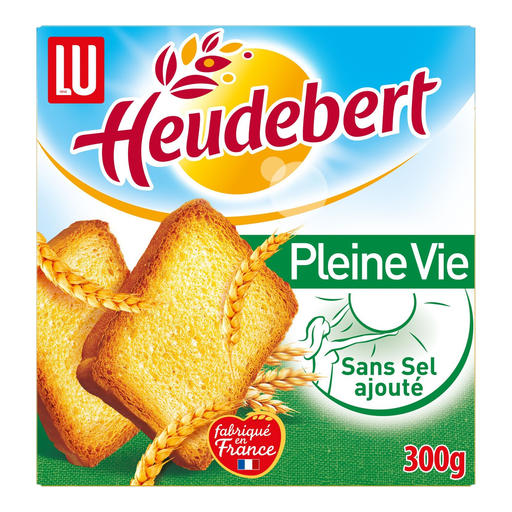 Image unavailable
LU Heudebert ‘Unsalted Rusks’, 300 g
A 300 g pack to compare for breakfast service. Its description suggests that no salt has been added, but salt appears in the ingredients list. Check the packaging before presenting it as an option for guests looking to manage their salt intake.
View on Joybuy
Frequently asked questions
Are wholemeal rusks suitable for a gluten-free buffet?
Not the Heudebert, Auchan and Bio Village wholemeal products reviewed: they list wheat or gluten. ‘Wholemeal’ describes the recipe, not the absence of gluten. Check the allergens for every product you serve.
Does ‘no added sugars’ mean ‘sugar-free’?
No. The relevant Auchan and Pasquier product listings state that they contain naturally occurring sugars. If this distinction matters for your buffet information, use the exact wording on the pack and check the ‘of which sugars’ line per 100 g.
How should you choose a format for breakfast service?
Compare the weight, number of slices and usual buffet consumption before opening the packs. Then follow the storage instructions for the product you buy, particularly those relating to moisture.
What should you check when informing guests about allergens in France?
For prepacked foods, the DGCCRF states that allergenic ingredients must be emphasised on the label. For a buffet, keep the information that matches the products actually being served, and check the information requirements that apply to hotel service.


