Hosts preparing several spreads
With already flavourful toppings, a plain wheat or mainly wheat rusk gives you a relatively subtle base to start with. Keep the toppings separate until serving if you want the rusks to stay crisp.


For richly flavoured spreads, start by comparing plain rusks made mainly with wheat: their recipe leaves more room for the topping. If ingredients matter more, look at a wholemeal or no added sugar option. Recipes with grains and seeds have a more pronounced flavour, but you’ll need to check the allergens carefully, particularly sesame. The term ‘digestive’ does not prove that a product has any effect on digestion.
Your choice depends as much on what you’ll serve on the rusks as on which ingredients your guests can eat.
With already flavourful toppings, a plain wheat or mainly wheat rusk gives you a relatively subtle base to start with. Keep the toppings separate until serving if you want the rusks to stay crisp.
To compare two packs, check the type of flour and the nutritional information per 100 g, particularly the fibre, sugars and salt. A ‘wholemeal’ or ‘no added sugar’ claim won’t answer all your questions on its own.
Wheat and gluten feature in several of the recipes reviewed. Depending on the product, you’ll also need to check for sesame and ‘may contain’ warnings for milk, egg, soya or nuts. For a shared buffet, keep the packaging so you can check exactly which product you’re serving.
First decide what role the rusk will play on your buffet, then check the ingredients and allergens on the specific pack you’ll be serving.
| Criteria | What to check | Who is this for? |
|---|---|---|
| Flavour and crunch | Type of grain and whether seeds are included; when the toppings will be added. | If I’m serving several well-seasoned spreads, I want a base whose flavour won’t overpower them. Around 40% of consumers put this role as a crisp base first. |
| Ingredients | Type of flour and nutritional values per 100 g, particularly fibre, sugars and salt. | To compare a wholemeal recipe with a classic one, I look at what’s in each pack rather than relying on the word ‘digestive’. Ingredients are the priority for around 40% of consumers. |
| Allergens | Highlighted ingredients and ‘may contain’ warnings on the pack you buy. | If a guest needs to avoid an ingredient, I need to be able to identify exactly which rusk I’m offering. Around 20% of consumers put checking allergens ahead of other criteria. |
Seeded recipes aren’t interchangeable with plain rusks: the Pasquier product listing published by Auchan specifically mentions sesame. For prepacked foods sold in France, the Directorate General for Competition Policy, Consumer Affairs and Fraud Control states that allergens must be emphasised in the ingredients list.
Wholemeal flour, fibre and no added sugar describe a product’s ingredients; these features alone don’t prove that it has any effect on digestion. The Directorate General for Competition Policy, Consumer Affairs and Fraud Control reminds consumers that food health claims are regulated.
When choosing, compare the ingredients and nutritional information for the exact product rather than assuming its name indicates a health benefit.
A seeded recipe may contain sesame; other rusks may carry warnings about possible traces of allergens, even if those allergens aren’t part of the recipe itself.
Check each pack and, if a guest needs to avoid an allergen, provide a separate base that is clearly labelled.
The storage guidance we reviewed recommends keeping rusks away from moisture. A moist topping left on a rusk for too long may also change its texture.
Keep the rusks somewhere dry and serve the toppings separately, or assemble the bites just before serving.
These brands offer useful products for comparing recipes; the details below apply to the products mentioned, not to each brand’s entire range.
Classic and wholemeal options to compare, depending on the flavour you want alongside your toppings.
Wheat rusks and a wholemeal, no added sugar option let you compare different ingredients.
The grains and seeds option is a good fit if you’re after a more pronounced cereal flavour.
A wholemeal wheat, no added sugar option for comparing its ingredients with those of a classic rusk.
An organic wholemeal rusk labelled ‘no added salt’ and ‘no added sugar’.
To serve with spreads, this selection brings together two Heudebert products and a wholemeal Swedish Rusk to compare with classic rusks. Check the ingredients on the pack you choose if salt, sugars or allergens are key to your purchase.
 Image unavailable
A plain option to consider as a base for richly flavoured spreads. The pack is listed as 300 g; check its ingredients list and allergen information before serving it to guests.
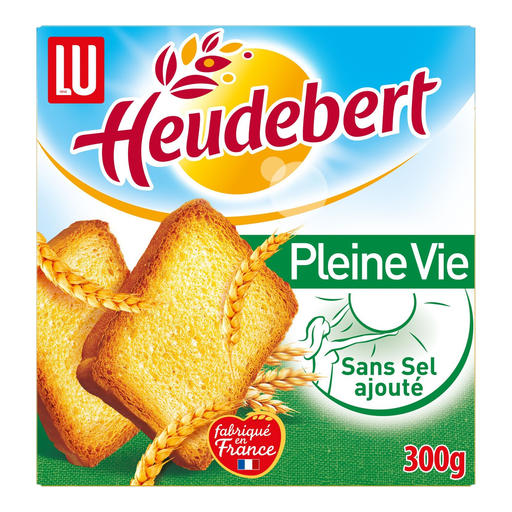 Image unavailable
Worth comparing if salt content is a factor in your choice of rusks to serve with toppings. ‘No added salt’ doesn’t mean salt-free: check the nutritional information per 100 g. Also check the pack for information about sesame.
 Image unavailable
This wholemeal Swedish Rusk is another crisp base to compare with a plain French rusk, particularly if you’re after a more pronounced cereal flavour. The pack is listed as 240 g; check the ingredients and trace warnings on the one you’ll be serving.
The term doesn’t prove that the rusks featured here have a digestive effect. The Directorate General for Competition Policy, Consumer Affairs and Fraud Control reminds consumers that food health claims are regulated. To choose between these products, check their ingredients and nutritional information.
A plain rusk made mainly with wheat is a good starting point if you want the topping to take centre stage. A recipe with grains and seeds is a better fit if you want the base itself to have more flavour; if so, check the ingredients, particularly for sesame.
Start with wheat and gluten, which are present in several of the products mentioned, then check the pack for sesame and warnings about milk, egg, soya or nuts. For prepacked foods sold in France, the Directorate General for Competition Policy, Consumer Affairs and Fraud Control states that allergens must be emphasised in the ingredients list.
Keep the rusks away from heat and moisture, following the storage guidance on the Auchan and Joybuy product listings we reviewed. If the toppings are moist, serve them separately or spread them on the rusks just before serving.