People preparing toppings
Whether you’re putting together breakfast or a stylish spread for drinks, you’ll want a crisp base in a suitable size for butter, jam, cheese or a spread.


For a beautifully laid table, start by choosing rusks that suit your topping and preferred serving style, rather than relying on the word ‘premium’. If ingredients are your priority, distinguish between wholemeal flour, organic certification and a recipe with no added sugars. These features can go together, but you’ll need to check the ingredients, nutritional information and allergens for the exact product.
Whether you’re putting together breakfast or a stylish spread for drinks, you’ll want a crisp base in a suitable size for butter, jam, cheese or a spread.
You’re looking for a wholemeal or organic recipe, or one with no added sugars, and want to compare its ingredients and nutritional information rather than relying on claims on the front of the pack.
You need to check the ingredients and any ‘may contain’ warnings on the specific pack. A recipe made with grains, an organic label or buckwheat as an ingredient isn’t enough to confirm that it meets your requirements.
Whether you’re serving rusks plain or with toppings, start with how you plan to use them, then compare the recipe and the information on the pack.
| Criterion | What to check | Who is it for? |
|---|---|---|
| Toppings and size | Look at the type of rusk or crispbread, whether it contains seeds and the size of the slices. | If I’m serving cheese or a spread, I want a base that’s the right size for the topping; around 36% of consumers would put this need first. |
| Wholemeal flour and organic certification | Check the proportion of wholemeal flour if it’s stated, and whether the product is certified organic. | If I’m mainly looking for a wholemeal or organic recipe, I need to distinguish between these two features; around 29% of consumers would prioritise this. |
| Sugars and nutritional information | Distinguish between no added sugars and the sugars listed in the nutrition information. Also compare fibre, salt and fat per 100 g. | I want to compare the nutritional information on packs rather than relying only on claims on the front; around 21% of consumers would make this their priority. |
| Allergens and traces | Read the ingredients, the highlighted allergens and any ‘may contain’ warnings on the pack you’re buying. | If an ingredient or possible trace is a concern, I need to rule out any unsuitable product before considering its taste; this would be the first criterion for around 14% of consumers. |
‘Premium’, ‘organic’ and ‘multigrain’ don’t, on their own, tell you the same things about ingredients, nutritional information or taste.
Choose according to how you plan to use the rusks, then read the ingredients list and nutritional information. If the pack displays a Nutri-Score, use it as an additional guide.
Depending on the product, wheat, gluten, sesame or other ingredients may be included in the recipe or mentioned in a ‘may contain’ warning. The product name alone won’t tell you.
Check the highlighted allergens and any ‘may contain’ warnings on the packaging of the specific product.
Exposure to heat or moisture can affect the crispness you want for topped slices.
Choose a pack size that suits how quickly you’ll use it, follow the storage instructions on the pack and check the date.
A brand to consider for classic or multigrain rusks for breakfast and toppings.
Worth exploring if you’re looking for organic or wholemeal rusks, or a product labelled ‘no added sugars’.
Its six-grain and seed product offers another option for breakfast toast.
Its crispbreads made with rice, buckwheat and quinoa are a different category from wheat rusks.
These Joybuy products include Swedish wholemeal rusks, classic rusks and crisp wheat slices to consider for breakfast or with toppings. Their names and ingredients aren’t interchangeable.
 Image unavailable
Worth considering if you’re looking for wholemeal rusks to serve with cheese or a spread. The Joybuy listing states that they contain 62% wholemeal wheat and provide 8.3 g of fibre per 100 g; it also lists gluten from wheat and barley. Check the pack for any other allergen information.
 Image unavailable
Worth considering for breakfast rusks with toppings such as butter or jam. If ingredients are a deciding factor for you, check the ingredients and allergens on this specific pack rather than assuming it has the same characteristics as another Heudebert product.
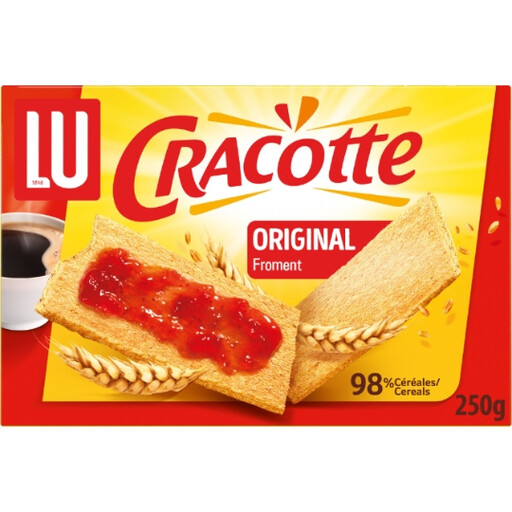 Image unavailable
Worth considering if you’d prefer crispy slices for toppings rather than classic rusks. The product name tells you it contains wheat; check the ingredients list and allergen information on the pack before serving it to your guests.
No. Wholemeal flour describes the recipe, not how well it goes with every topping. For your table, consider the size, ingredients and toppings you plan to serve. Seeded rusks and crispbreads have different ingredients, which you should check too.
No. The Carrefour Bio products described here contain wheat and wheat gluten. Even with rice or buckwheat crispbreads, check the ingredients and any ‘may contain’ warnings on the exact product. The Céréal Bio product mentioned is made in a facility that handles gluten.
Check the product name, ingredients, allergens, nutritional information, net weight, date and storage instructions. The DGCCRF states that allergenic ingredients must be highlighted on the label; also read any ‘may contain’ warnings on the pack you buy.