
Livraison le jour même ou le lendemain

Qualité garantie

Débloquez vos offres de bienvenue: Livraison GRATUITE | Jusqu'à -80 % | 30 jours d'essai gratuits à JoyPlus
Téléchargez l'application
A ruler with measurements may seem simple to choose, but a few details can make all the difference in everyday use. Hard-to-read markings, plastic that warps in a school bag or a ruler that slips on the page can make this essential tool frustrating to use, whether at school or in the workshop.
Before you buy, keep these three common pitfalls in mind:
For everyday school use, transparent plastic remains a lightweight, practical choice: it lets you see the sheet beneath the ruler. Nevertheless, check its resistance to twisting and impact. PET or reinforced-plastic models cope better with heavily packed school bags, provided they are cared for in accordance with the manufacturer’s recommendations.
An unbreakable ruler is not essential for every use. It is particularly useful for younger pupils, frequent travel and activities that involve a lot of handling. For technical drawing or DIY, aluminium offers better resistance to bending. However, an aluminium ruler has more rigid edges, so it is best handled carefully, particularly around children.
A 30 cm ruler is the most versatile option for exercise books, A4 sheets, geometry exercises and office tasks. A 20 cm model fits more easily into a small pencil case and is sufficient for everyday measurements.
You should also check:
A ruler marked in centimetres, millimetres and inches can be useful for DIY, engineering or projects based on international plans. In primary school, however, a simple, high-contrast scale helps to reduce reading errors.
A non-slip ruler makes it easier to draw straight, even lines, particularly on smooth paper. A soft grip, central opening or dedicated grip area can also improve comfort, provided it remains easy to clean.
For geometry, a geometry set containing a ruler, set squares and a protractor saves you from buying the instruments separately. For woodworking and construction work, a combination square adds angle, depth and marking functions. The right choice therefore depends less on the number of accessories than on the task you need to complete.
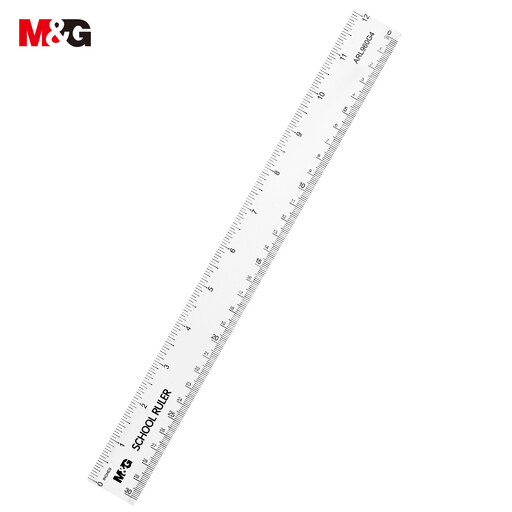
Why this choice suits this user: At 30 cm and with its lightweight design, it is suitable for exercise books, the office and first measurements, without requiring you to buy several separate accessories.
The transparent design makes alignment easier, while the centimetre and inch markings save you from converting every measurement.
Transparent plastic, 30 cm length, dual centimetre-and-inch scale and easy storage in a pencil case.
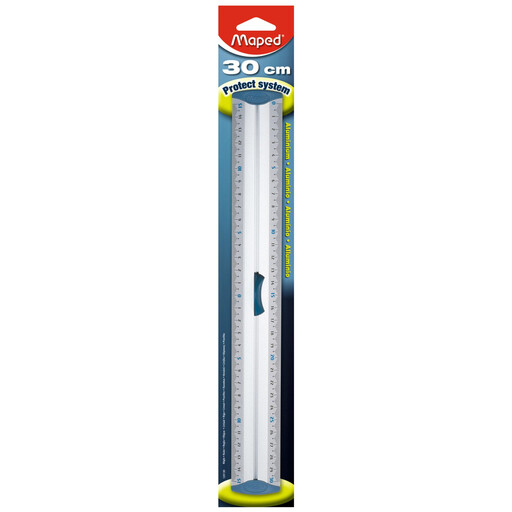
Why this choice suits this user: Its anodised aluminium construction is ideal for anyone looking for a durable ruler for school, the office or technical drawing.
Anodised aluminium helps to prevent bending during regular use. The protected ends reduce direct contact with the tips.
Anodised aluminium, 30 cm length, multiple scales and a slim design that is easy to carry.
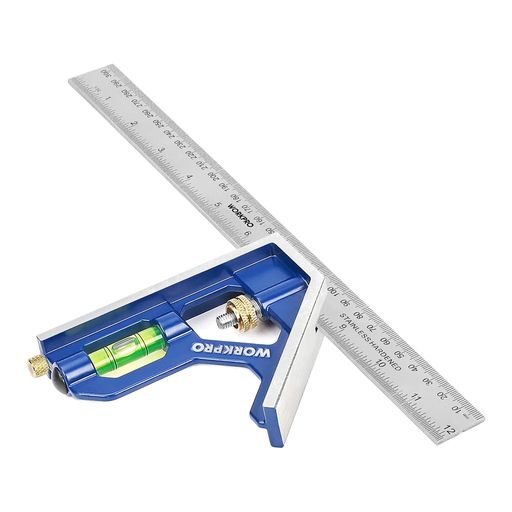
Why this choice suits this user: This tool is designed for joiners, carpenters, engineers and DIY enthusiasts who want to measure, check and mark with a single instrument.
This is more than a basic decorative ruler : the adjustable head, spirit level and integrated marker meet specific requirements.
300 mm ruler, metric and imperial scales, 45° and 90° angle measurements, spirit level and marking point.
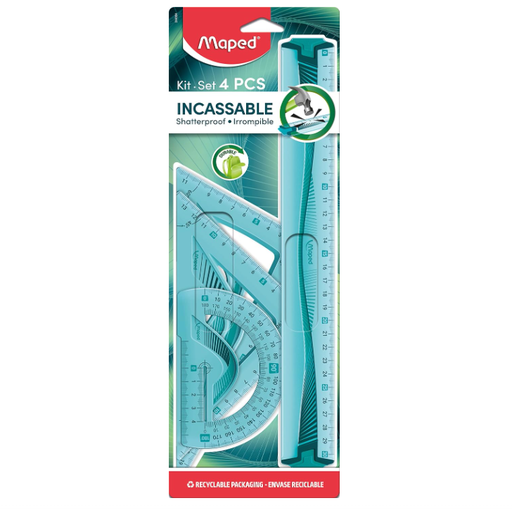
Why this choice suits this user: The set contains a 30 cm ruler, two set squares and a protractor: the ideal equipment for geometry lessons at secondary school and sixth form.
The UV-printed markings are designed to remain visible for longer, while the impact-resistant plastic helps to reduce the risk of breakage in a school bag.
Four instruments included, markings on both sides, non-slip grip and central opening for easier handling.
We have put together a complete, real-time selection of products that meet these demanding criteria, as well as European safety standards.
Clean your ruler with measurements using a soft, slightly damp cloth. Solvents and abrasive products may remove the markings or dull the plastic. Store it flat, away from heat sources and prolonged direct sunlight.
If it is intended for a child, regularly check the condition of the edges, flexible areas and any small removable parts. Instruments with angles or detachable components are not toys. Young children should use them under adult supervision.
A 30 cm school ruler is suitable for most exercise books, sheets of paper and geometry exercises. A 20 cm model is more compact, but has a more limited reach. For plans, boards or construction work, a longer ruler or combination square will often be more practical.
It generally offers better resistance to bending, but is more rigid and can sometimes be less suitable for young children. Transparent plastic makes it easier to align the ruler on the page, while aluminium is more suited to technical drawing and DIY.
A geometry set is practical if you need a ruler, protractor and two set squares for lessons. For occasional use, buying only the instrument you need helps to keep costs and clutter to a minimum.