
Livraison le jour même ou le lendemain

Qualité garantie

Débloquez vos offres de bienvenue: Livraison GRATUITE | Jusqu'à -80 % | 30 jours d'essai gratuits à JoyPlus
Téléchargez l'application
Buying a rubber basketball seems straightforward… until the first session on a rough surface, in the garden or with a child. Some models lose pressure quickly, others are too heavy for small hands or lack grip as soon as they get damp. The choice of ball, and also the hoop, directly affects playing comfort and the lifespan of the equipment.
Before placing an order, there are three pitfalls to avoid:
Here are the criteria to consider when choosing equipment suited to your court, your playing frequency and the user's profile.
The ball's circumference affects grip, control, dribbling and shooting accuracy. The dimensions stated on product pages are a good starting point, but recommendations from a club, association or league may vary.
For a children's basketball, always check the stated circumference and, when available, the weight. A smaller model is not only easier to hold: it also limits compensation and bad habits in the shooting motion.
Rubber is often preferred for outdoor courts because it withstands concrete, asphalt and uneven surfaces better than a cover designed exclusively for indoor use. A textured surface with well-defined grooves can also improve grip during dribbling.
For an outdoor basketball, look in particular for:
An indoor/outdoor basketball is particularly practical for families who alternate between the sports hall, the yard and the park. The feel of the game may, however, change depending on the floor surface. As for a model described as a waterproof basketball or water-resistant, it should still be rinsed and dried after use in damp weather. This feature does not mean it can be left in water or exposed to the elements for long periods.
Some models are delivered deflated for easier transport. A basketball with pump allows you to start playing more quickly, but check the exact contents of the package: the pump, needles and storage bag are not always included.
To extend the life of the ball:
How long the ball lasts depends on how often you play, the type of surface and storage conditions. A ball used every day on asphalt will not wear at the same rate as one taken out a few times a month, exclusively indoors.
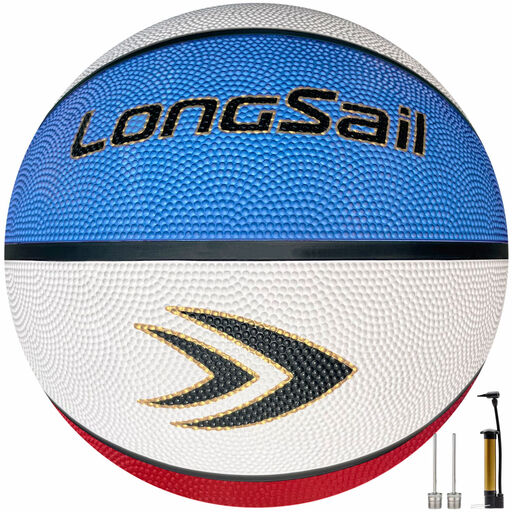
Why this choice suits this profile: Its approximately 22-inch size is ideal for young children and early sessions in the garden, yard or park.
Its size reduces the risk of choosing a ball that is too large for small hands. According to the product page, it comes with a pump, two needles and a bag.
Textured rubber cover, stated indoor and outdoor use, junior 22-inch size.

Why this choice suits this profile: Its adjustable height from 2.3 to 3.05 m allows it to adapt to different levels, from family practice sessions to more structured games.
The 15 cm click adjustment and the base that can be filled with water or sand provide concrete reference points for adjusting the height and ensuring stability.
Polycarbonate backboard 81 × 46 cm, steel frame and HDPE base. Assembly by an adult required.
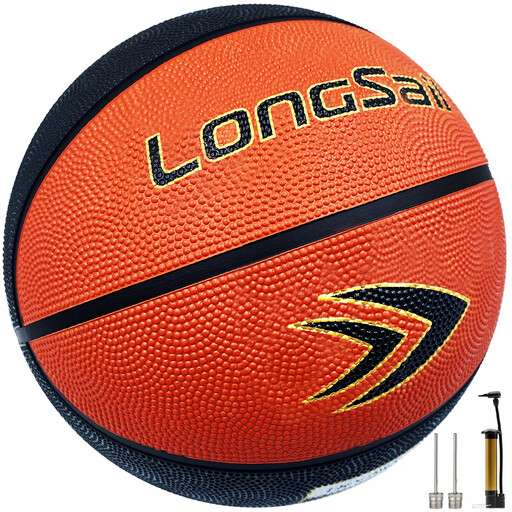
Why this choice suits this profile: Its 25.5-inch size is suitable for young players and regular sessions on a variety of surfaces.
The moulded rubber surface is stated to be scuff-resistant and water-resistant, making it easier to use outdoors, provided it is stored correctly.
Butyl bladder, textured surface, pump, needles and storage bag included according to the product page.
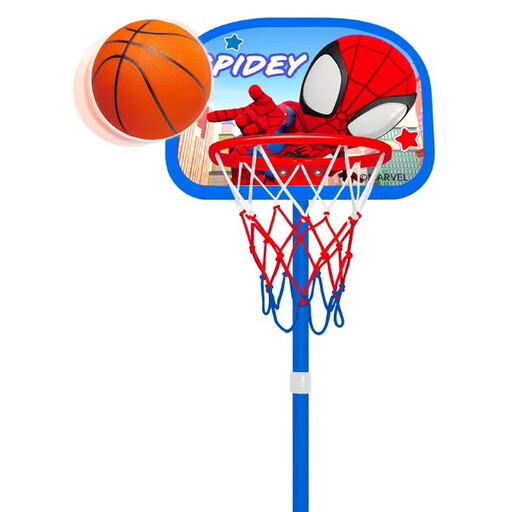
Why this choice suits this profile: This adjustable hoop from 122 to 155 cm accompanies early games at home, both indoors and outdoors.
The height adjusts without tools and the package includes an approximately 18 cm ball and a pump. The base must be weighted according to the instructions.
Backboard 33 × 46 cm, PP, PE and ABS materials, stated recreational indoor and outdoor use.
We have put together a comprehensive, real-time updated selection of products that meet these selection criteria as well as European safety requirements.
To start with, size 3 is generally suitable for young children. Size 4 will suit slightly older players. However, always check the recommendations from the school, club or relevant federation.
Yes, provided the product page states indoor and outdoor use. On a wooden floor, avoid models covered in dust or small gravel. Clean the ball before bringing it indoors to avoid marks.
Pressure varies depending on temperature, frequency of use and the condition of the valve. Check it before each session and re-inflate gradually if needed. Storing the ball away from heat and moisture helps preserve it for longer.