
Livraison le jour même ou le lendemain

Qualité garantie

Débloquez vos offres de bienvenue: Livraison GRATUITE | Jusqu'à -80 % | 30 jours d'essai gratuits à JoyPlus
Téléchargez l'application
A rubber basketball designed for both indoor and outdoor use needs to withstand very different surfaces: gymnasium flooring, tarmac, concrete, playgrounds or casual practice in the garden. Yet product listings often rely on vague promises like "all surfaces", "improved bounce" or "long-lasting waterproofing", without specifying the features that really matter when you're making your choice.
Before you order, check three things: the right size for the player, the cover material and the quality of the bladder. These factors directly affect grip, bounce consistency and how long the ball will last.
A size 7 basketball measures approximately 74 to 75 cm in circumference. It's generally suitable for teenagers from 13 years old and adults. For a child, however, this size can be difficult to control, even when it's described as "official".
Smaller sizes are often much easier to handle:
Age recommendations can vary from one club to another and depending on competitions. If the ball is for supervised training, check the rules of the relevant association or federation.
An indoor/outdoor basketball can be used both inside and outside, but that doesn't mean all covers wear at the same rate. A moulded rubber surface will generally cope better on concrete and asphalt than a softer cover designed primarily for the court.
For an outdoor basketball, go for a granular texture, deep channels and a cover described as abrasion-resistant. For regular use in a gym, a PU cover can offer a different feel, while still being usable outdoors if the manufacturer allows it.
A ball can gradually lose its bounce if the valve lets air escape or the inner bladder becomes misshapen. Models fitted with a butyl rubber bladder are designed to hold pressure better than a basic one, but no valve removes the need for regular checks.
Some balls are delivered deflated for easier transport. You'll therefore need to inflate them before the first session and check that the needle is compatible with the valve.
Moulded rubber is often preferred for its durability on rough surfaces. A textured surface with dimples and well-defined channels makes the ball easier to handle during passes, dribbling and shooting. For mixed use, the best compromise depends mainly on the court: a very durable outdoor ball can feel firmer on the gym floor.
PU models, like the Capelli Sport CS Size 7 Team I PU Indoor/Outdoor Basketball, have a polyurethane cover and deep channels. Its specification states it can be used on indoor floors as well as outdoor surfaces.
Circumference isn't everything. Inflation pressure, material and internal structure also affect how the ball feels. For the sizes featured in this selection:
The specifications for several models indicate a pressure range of 7 to 9 psi, which is roughly 0.48 to 0.62 bar. Always follow the manufacturer's recommended pressure and avoid over-inflating, which can put strain on the seams and valve.
After an outdoor session:
A waterproof basketball or one described as water-resistant can be handy near a pool or on a damp surface. That doesn't mean it can be left submerged or stored while still wet.
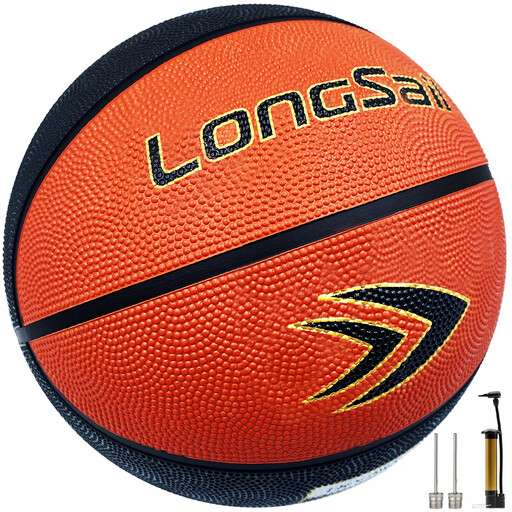
Why this choice suits this profile: its size 4 format is easier for a young player to handle, while the rubber cover works well for both indoor training and games on concrete or asphalt.
The listing specifies the 25.5-inch circumference, the rubber cover and multi-surface use, rather than relying on a general promise.
Textured surface, butyl bladder, pump, two needles and storage bag included.
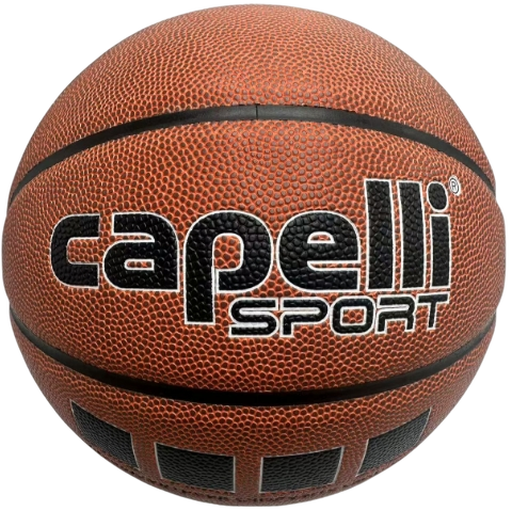
Why this choice suits this profile: this size 7 ball is aimed at adults and teenagers who want the feel of PU for regular sessions on the court as well as outdoors.
The listing clearly distinguishes the PU, deep channels and butyl bladder, while also stating a reference pressure.
Size 7 at 29.5 inches, granular texture and design stated for both indoor and outdoor courts.
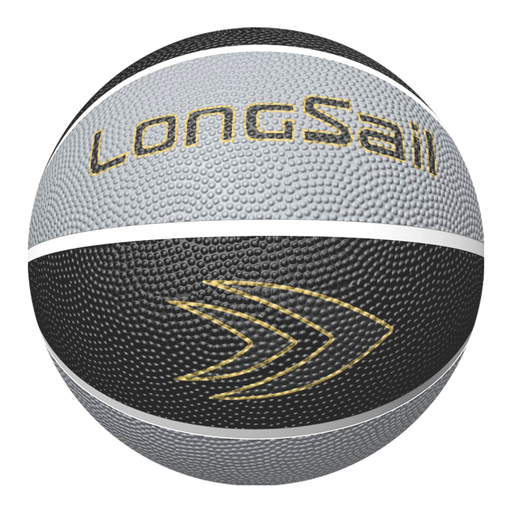
Why this choice suits this profile: its size 7 and textured rubber cover are ideal for frequent training on outdoor courts, especially concrete and asphalt.
The description details the dimpled surface, deep channels, butyl bladder and nylon reinforcement, rather than just claiming durability as a slogan.
Size 7, surface described as scuff-resistant, hand pump, needles and bag included.

Why this choice suits this profile: its 22-inch size makes first dribbles, passes and shots easier for children who are discovering basketball.
Size 3 is clearly stated, with a circumference of approximately 57 cm. That way, you can't end up with an adult ball that's too big.
Rubber or composite cover depending on the listing, butyl bladder, pump, needles and carry bag included.
We've put together a comprehensive list, updated in real time, of products that meet these demanding selection criteria and European safety standards.
The range stated on several listings is between 7 and 9 psi, which is roughly 0.48 to 0.62 bar. Use a pump with a needle and adjust the pressure according to the recommendations for your specific model. A ball that's over-inflated becomes harder to control and can put strain on the seams.
It all depends on how often you play, the playing surface and storage conditions. Concrete and asphalt cause more wear than a gym floor. Cleaning the ball, avoiding direct sunlight and storing it in a dry place helps preserve its cover and markings.
A kit that includes a pump and needles is handy if the ball is delivered deflated. It lets you start playing quickly and top up the pressure at home. For a club or heavy use, though, check the pump's build quality and keep a spare needle handy.